
Samsung Patents Technology to Teach Security Systems to Spot Fake Fingerprints and Face Scans
Teaching an AI to spot a fake fingerprint or face scan is tricky when you don't have enough real fakes to practice on. Samsung's solution: make the fakes yourself, then test them before using them as training data.
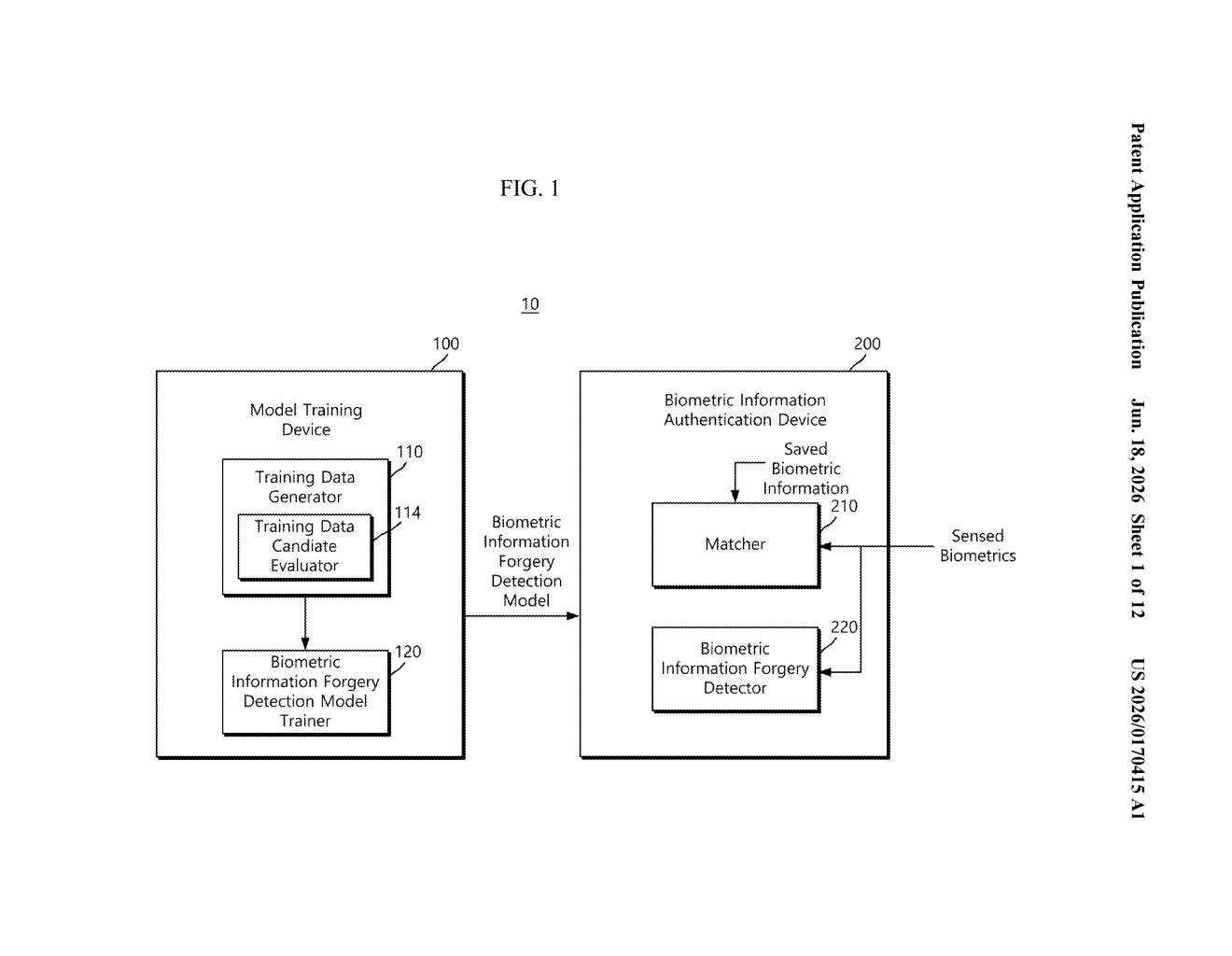
How Samsung's forgery-detection AI learns from fake biometrics
Imagine a security guard who's never actually seen a counterfeit ID — they'd be terrible at spotting one. AI systems that check your fingerprint or face scan have the same problem: to get good at catching fakes, they need lots of examples of fakes to study. The trouble is, high-quality forged biometric data is hard to come by.
Samsung's patent describes a system that automatically generates synthetic fake biometric samples to use as training material. It takes one person's fingerprint identity and grafts it onto another person's image texture — creating a convincing forgery that never came from a real attack. Think of it as building a fake-ID factory specifically so the AI bouncer gets better practice.
Before any of those generated fakes get used to train the detector, a quality-check step filters out the ones that aren't convincing enough. Only the fakes that pass the bar make it into the training set — which means the AI learns from good fakes, not sloppy ones.
How the generative model swaps identity from image style
The patent outlines a training pipeline for a biometric forgery detection model — AI designed to flag when a fingerprint, face scan, or similar biometric has been tampered with or synthetically generated.
Here's how the process works step by step:
- Data selection: The system picks two source samples — one that contributes its non-biometric qualities (things like image texture, lighting, or background noise) and one that contributes its actual biometric identity (the fingerprint pattern or facial geometry).
- Extraction and transfer: A deep learning generative model (think of it as an AI image editor working at a structural level) separates these two layers and recombines them — layering the texture of one sample onto the identity of another to produce a plausible fake.
- Quality evaluation: The generated candidates are then scored on two dimensions: whether the biometric identity survived the transfer intact, and whether the overall image quality meets a preset threshold.
- Selection: Only candidates that pass both checks get promoted to actual training data.
The net result is a self-replenishing source of realistic synthetic forgeries that can be used to improve how well the detector model catches real-world spoofing attempts.
What this means for biometric security on Samsung devices
Biometric authentication — face ID, fingerprint unlock, iris scanning — is now the default way hundreds of millions of Samsung device owners prove who they are. As these systems get more common, so do attacks that try to fool them with printed photos, silicone fingers, or AI-generated faces. A detector trained only on real-world attacks will always be playing catch-up.
By generating and vetting its own training fakes, Samsung's approach could let its security systems stay ahead of spoofing techniques that haven't even appeared in the wild yet. If this method makes it into Galaxy devices or Samsung's enterprise security stack, your face unlock or fingerprint reader could get meaningfully harder to fool — without Samsung needing to collect real attack data to do it.
This is solid, unglamorous security infrastructure work — the kind of patent that quietly matters more than the flashier AI features Samsung announces on stage. Generating high-quality synthetic training data for biometric attack detection is a real and underappreciated problem, and a quality-gating filter on the generated fakes is a sensible touch that separates this from a generic GAN data-augmentation patent.
There are more where this came from
We read every patent application Big Tech publishes and send you the ones worth knowing. Plain English, free, every week.
Want this weekly breakdown for a company we don't cover? Patentlyze Pro →