
Samsung Patents a Robot That Chooses Its Own Best Vantage Point to Map a Room
Most home robots build their maps from a single camera angle — and if that view is cluttered or featureless, the robot gets lost. Samsung's new patent teaches a robot to scan a room at multiple heights simultaneously and pick whichever slice gives it the clearest picture.
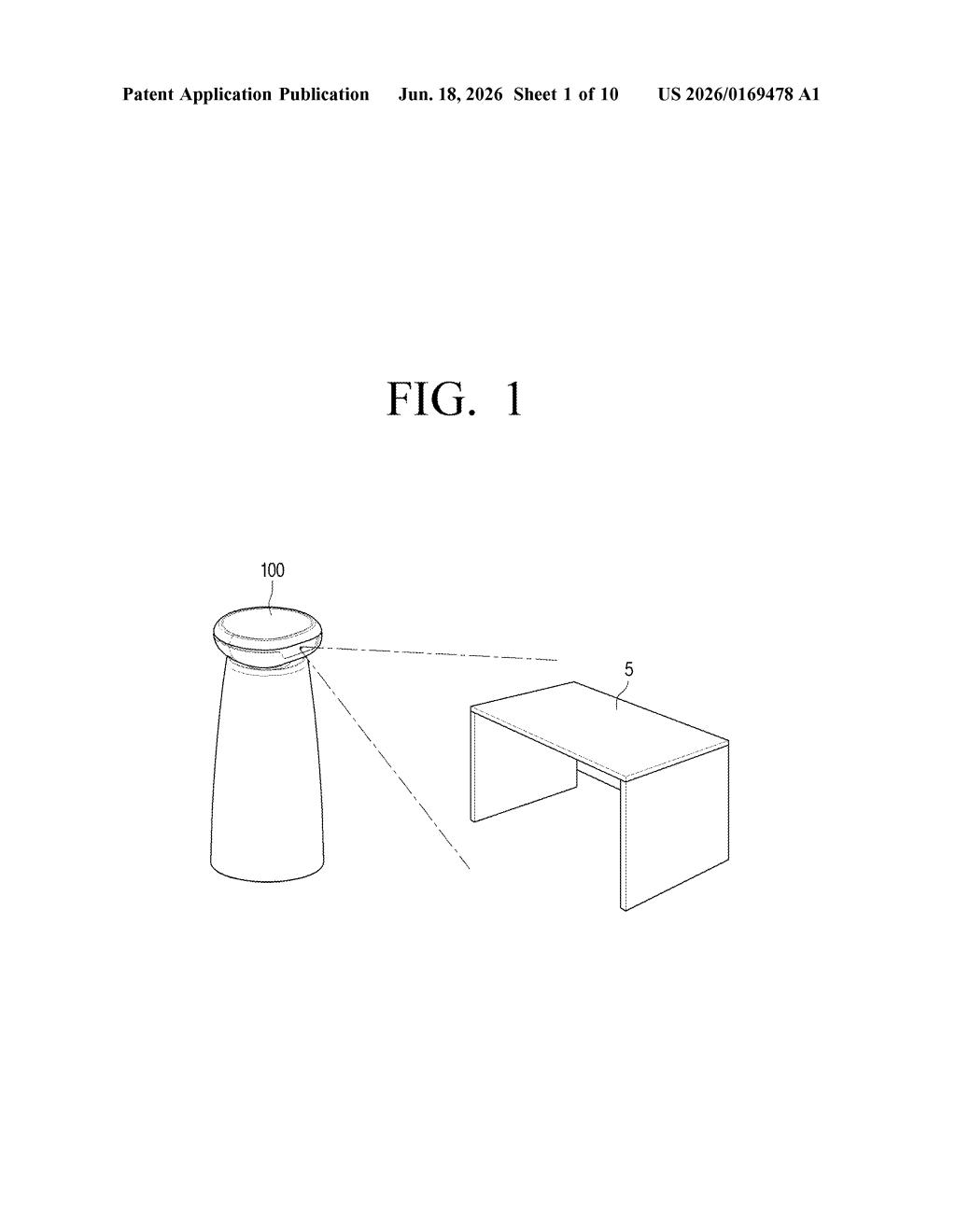
How Samsung's robot decides which 'slice' of a room to trust
Imagine trying to navigate a room using only a photo taken at knee height — you'd see mostly chair legs and sofa bases, not the landmarks that actually help you figure out where you are. That's the problem many home robots run into when their single fixed camera happens to land at a useless level.
Samsung's patent describes a robot that uses a depth camera to capture a full 3D picture of its surroundings, then slices that picture into several horizontal layers — think of it like looking at a stack of pancakes and picking the one with the most toppings. Each layer gets a score based on how many useful, distinctive features it contains.
The robot then builds its navigation map from whichever layer (or layers) scored highest, and uses that map to figure out exactly where it is as it moves around your home. If the furniture layout changes — or the robot ends up in a cluttered corner — the system can compare its current view against the stored map and still find its place.
How the depth camera scores and selects height layers
The patent centers on a depth camera that captures distance information for every point in the robot's field of view, not just a flat 2D image. From that data, the processor carves out multiple scan data sets, each corresponding to a different predetermined height level — essentially horizontal cross-sections of the room at, say, ankle height, table height, and counter height.
Each scan data set is then evaluated for a feature score (a measure of how many distinct, recognizable landmarks that layer contains — edges, corners, distinct objects). Layers that are mostly open floor or blank wall score low; layers rich with furniture edges and doorframes score high.
- Only scan data sets that meet or exceed a critical score threshold are used to build the area map.
- The robot continuously compares its live depth readings against the stored map.
- It localizes itself by finding whichever stored map frame most closely matches what the camera currently sees.
This means the robot isn't locked into one fixed camera height — it dynamically picks the most information-rich slice of its depth data, which should make localization more reliable across different room layouts and clutter levels.
What this means for home robots that get lost easily
Home robots — whether vacuums, delivery bots, or general-purpose assistants — live and die by their ability to know where they are. When a robot loses its position, it either freezes, retraces its entire path, or (worst case) starts bumping into things. Better map quality at the source means fewer of those embarrassing failures.
For Samsung, which has been pushing deeper into home robotics with products like the Ballie concept robot, this patent signals real engineering work on the mapping reliability problem — not just making robots faster or cuter. If this approach works as described, you'd end up with a robot that stays oriented even in a messy room or after furniture gets rearranged, which is the everyday scenario where current robots most often fail.
This is solid, unglamorous engineering work on one of the hardest parts of home robotics: knowing where you are when the world is messy. The multi-height scoring idea is genuinely practical — it addresses a real failure mode that anyone who's owned a robot vacuum has likely seen. Whether Samsung turns this into a shipping product is another question, but the underlying idea is worth watching.
There are more where this came from
We read every patent application Big Tech publishes and send you the ones worth knowing. Plain English, free, every week.
Want this weekly breakdown for a company we don't cover? Patentlyze Pro →