
Samsung Patents a Robot That Picks Up Its Own Sensor to See Around Obstacles
Most robots go blind when something blocks their sensors. Samsung's new patent describes a robot that solves that problem by picking up its own sensor and moving it to a better vantage point — like a person lifting a camera over a crowd.
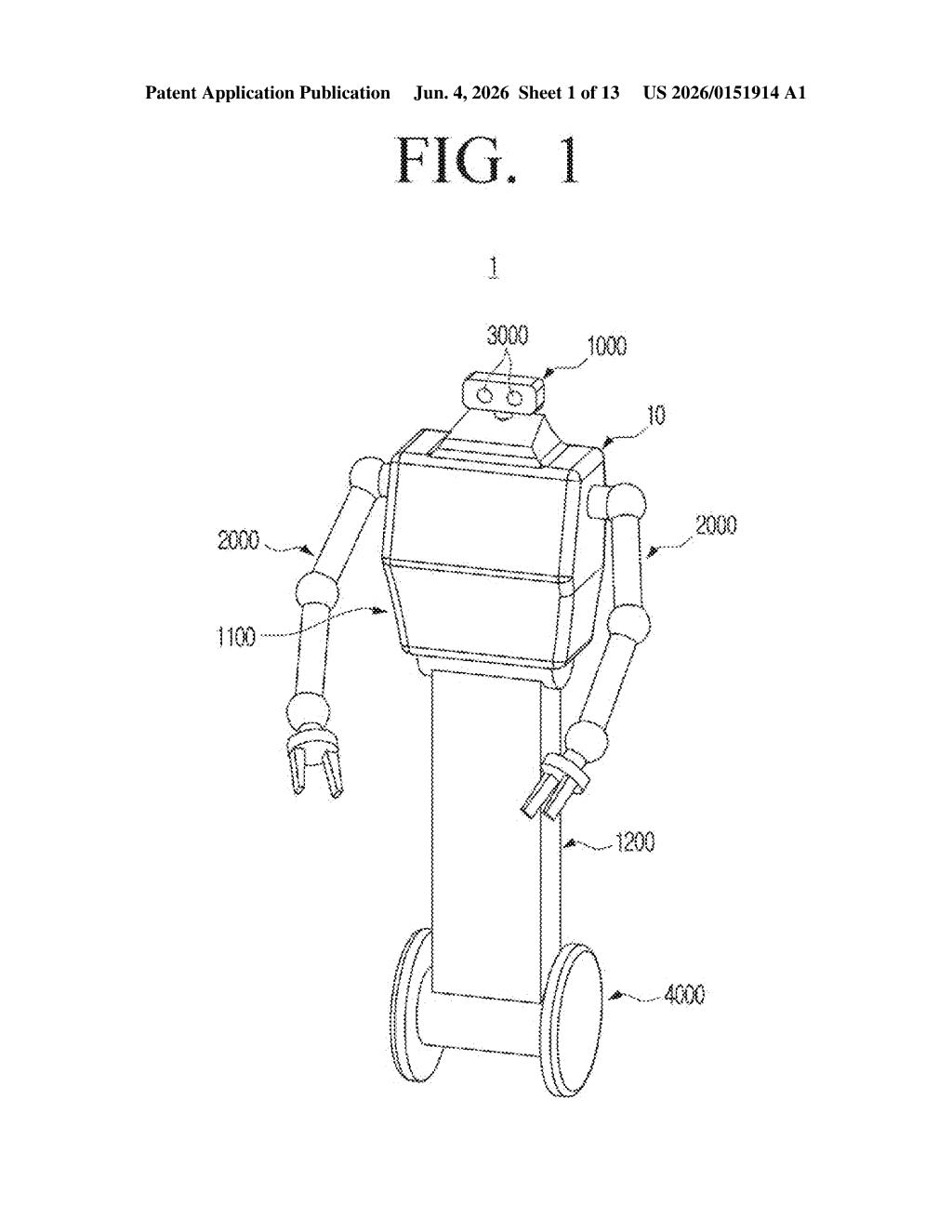
What Samsung's self-repositioning robot sensor actually does
Imagine a robot trying to sort packages on a cluttered shelf, but a big box is blocking its view of the item it needs to grab. Normally, the robot either guesses, fails, or stops and asks for help. Samsung's patent describes a different approach: the robot just moves its own eyes.
The sensor — a camera or depth sensor — is attached to the robot's body with a detachable mount. When the robot detects that its target is obscured by an obstacle, one of its arms reaches over, unclips the sensor, and physically repositions it to get a clear angle. The robot then uses the new sensor reading to figure out exactly what's going on behind or around the obstruction.
This means the robot isn't limited to a single fixed point of view. It can adapt its perception the same way you'd tilt your head or hold up your phone to peek around a corner — without needing extra sensors bolted all over its body.
How the robot arm detaches and aims the sensor
The patent describes a multi-arm robot with a detachably mounted sensor — think a depth camera or similar perception device — that clips onto the robot's main body. Under normal conditions, the robot uses that sensor to identify targets and carry out tasks with its other arms.
The key mechanism kicks in when the robot's software detects target occlusion (meaning: something is blocking the sensor's line of sight to the object it's working with). At that point, the system directs one of the robot arms to:
- Grip the sensor and physically detach it from the body mount
- Move the sensor to a new position in 3D space
- Reorient its sensing direction toward the obscured target
- Capture a new reading from that vantage point
The robot then uses the updated sensor data — captured from the repositioned location — to assess both the target object and whatever was blocking it. This allows the system to resume or adjust its task with accurate, current spatial information rather than stale or incomplete data.
Notably, the patent frames this as a software-driven behavior, not just a hardware trick. The processor decides when occlusion has occurred, which arm to use for sensor retrieval, and where to move the sensor — making it an adaptive perception loop rather than a pre-programmed sequence.
What this means for warehouse and home robots
Fixed sensors are one of the quiet limitations holding back general-purpose robots. A robot with a camera in one spot will always have blind spots, and in real-world environments — cluttered warehouses, home kitchens, construction sites — things are constantly getting in the way. This patent sketches out a path toward robots that solve that problem without being covered in redundant sensors, which adds cost, weight, and complexity.
For Samsung's robotics ambitions specifically, this is relevant context. The company has been investing heavily in humanoid and service robot platforms. A robot that can dynamically reposition its own perception hardware would be meaningfully more capable in unstructured environments — the exact settings where Samsung wants its next-generation home and industrial robots to operate.
This is a genuinely clever mechanical idea dressed up in straightforward patent language. Using an arm to reposition a sensor is the kind of elegant, low-overhead solution that actually ships in real products — it doesn't require exotic hardware, just smart coordination software. Worth watching as Samsung's robotics lineup matures.
There are more where this came from
We read every patent application Big Tech publishes and send you the ones worth knowing. Plain English, free, every week.
Want this weekly breakdown for a company we don't cover? Patentlyze Pro →