
IBM's New Patent Moves Malware Scanning Off the Main Server to a Dedicated Device
IBM wants to take the heavy lifting of malware scanning off your main server and hand it to a dedicated storage device — one built specifically to hunt for threats without slowing down everything else.
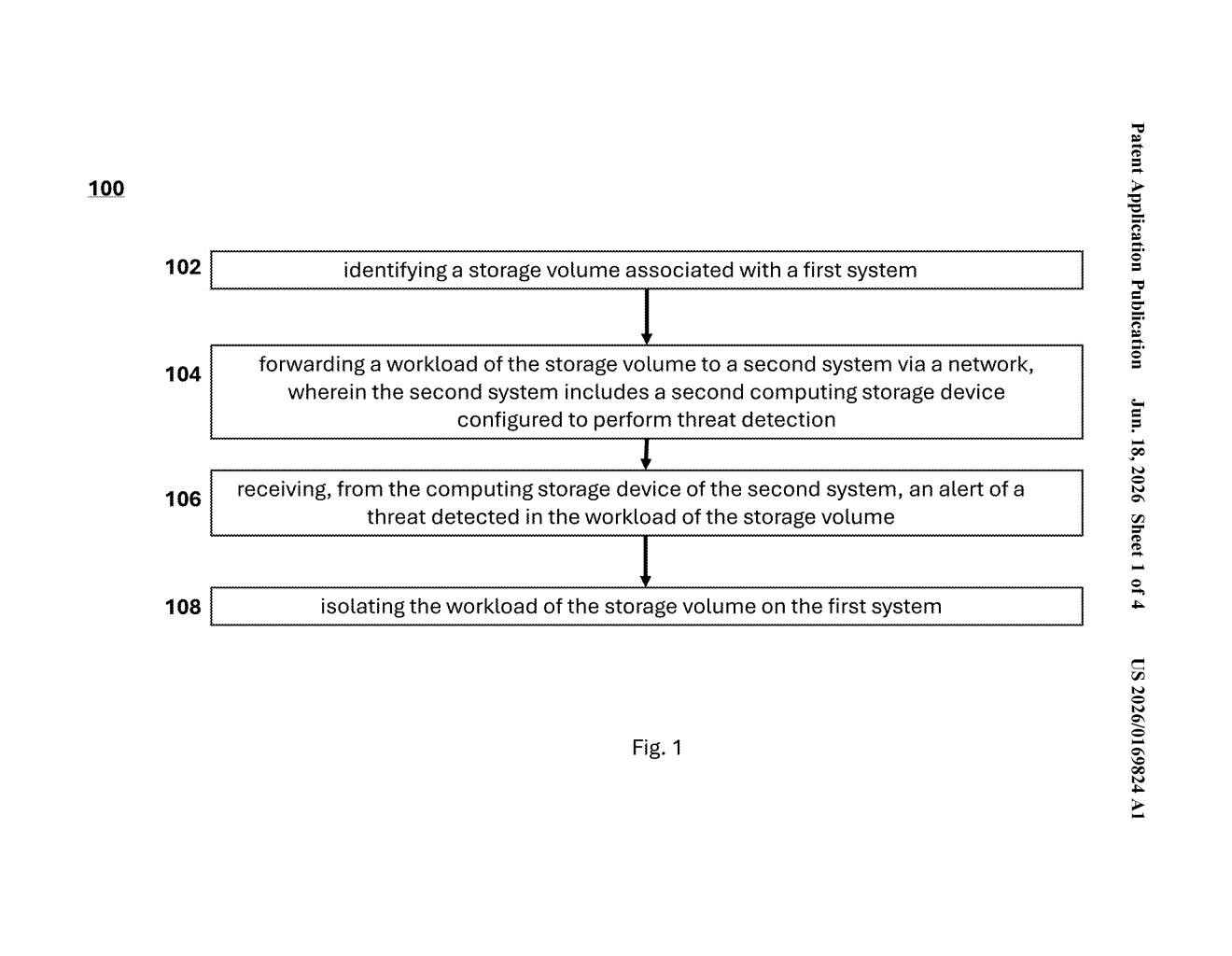
What IBM's storage-based threat scanner actually does
Imagine your office runs a busy server storing thousands of files. Right now, scanning all those files for viruses or ransomware means the same machine doing the scanning is also the one trying to keep the office running — and that creates a slowdown.
IBM's patent describes a different setup: instead of scanning files on the main server, you send a copy of the data workload over the network to a second device that's purpose-built for threat detection. That second device does all the scanning work on its own storage hardware, so your main server stays focused.
If the second device finds something dangerous, it sends an alert back, and the original system immediately locks down the affected storage — cutting off access before the threat can spread. Think of it like a quarantine station at a border crossing: suspicious cargo gets flagged and held before it ever enters the building.
How the workload handoff and isolation sequence works
The patent describes a three-step security workflow built around what IBM calls a computational storage device — a piece of hardware that can run processing tasks (like threat scanning) directly on the storage unit itself, rather than sending data up to a central processor.
Here's how the sequence works:
- Identify: The system picks out a specific storage volume on the primary machine — essentially a defined chunk of disk space — and flags it for inspection.
- Forward: The workload (the active data and operations on that volume) is sent across a network to a second system whose storage device is configured to run threat-detection algorithms internally.
- Respond: If the scanning device finds a threat, it fires an alert back to the first system, which immediately isolates the affected workload — cutting it off from the rest of the environment.
The key architectural idea is separation: the machine under potential attack is not the same machine doing the threat analysis. That means a compromised host can't interfere with its own security scan — a weakness in many conventional setups where malware can disable local antivirus tools.
What this means for enterprise server security
For enterprise IT teams managing large server farms, keeping security scanning from eating into production performance is a constant headache. By pushing the scan work onto dedicated storage hardware on a separate system, IBM's approach aims to keep primary workloads fast while still running continuous threat detection.
The isolation step is the clincher: the moment a threat is confirmed, the affected storage volume gets locked down automatically — no waiting for a human to respond. In ransomware scenarios, where speed of containment directly determines how much data gets encrypted, that kind of automatic quarantine at the storage layer could make a real difference for enterprise cloud and hybrid infrastructure operators.
This is a focused, practical patent — not flashy, but it addresses a genuine problem in enterprise security architecture. The idea of isolating scanning work on purpose-built computational storage is a logical extension of where hardware-accelerated security is already heading. IBM is carving out a specific claim in that space.
There are more where this came from
We read every patent application Big Tech publishes and send you the ones worth knowing. Plain English, free, every week.
Want this weekly breakdown for a company we don't cover? Patentlyze Pro →