
IBM Patents an AI System That Rewrites Incomplete Bug Reports Before They Waste Anyone's Time
Every software team has a graveyard of bug reports so vague they're useless — 'it doesn't work' filed by someone who never answered a single follow-up. IBM's latest patent wants an AI to fix that before the ticket even gets submitted.
What IBM's AI bug-report checker actually does
Imagine you're a developer and someone files a bug report that just says "the app crashes sometimes." No steps to reproduce it, no system info, no error messages. That report goes nowhere — it either sits in a queue forever or gets sent back with a wall of clarifying questions.
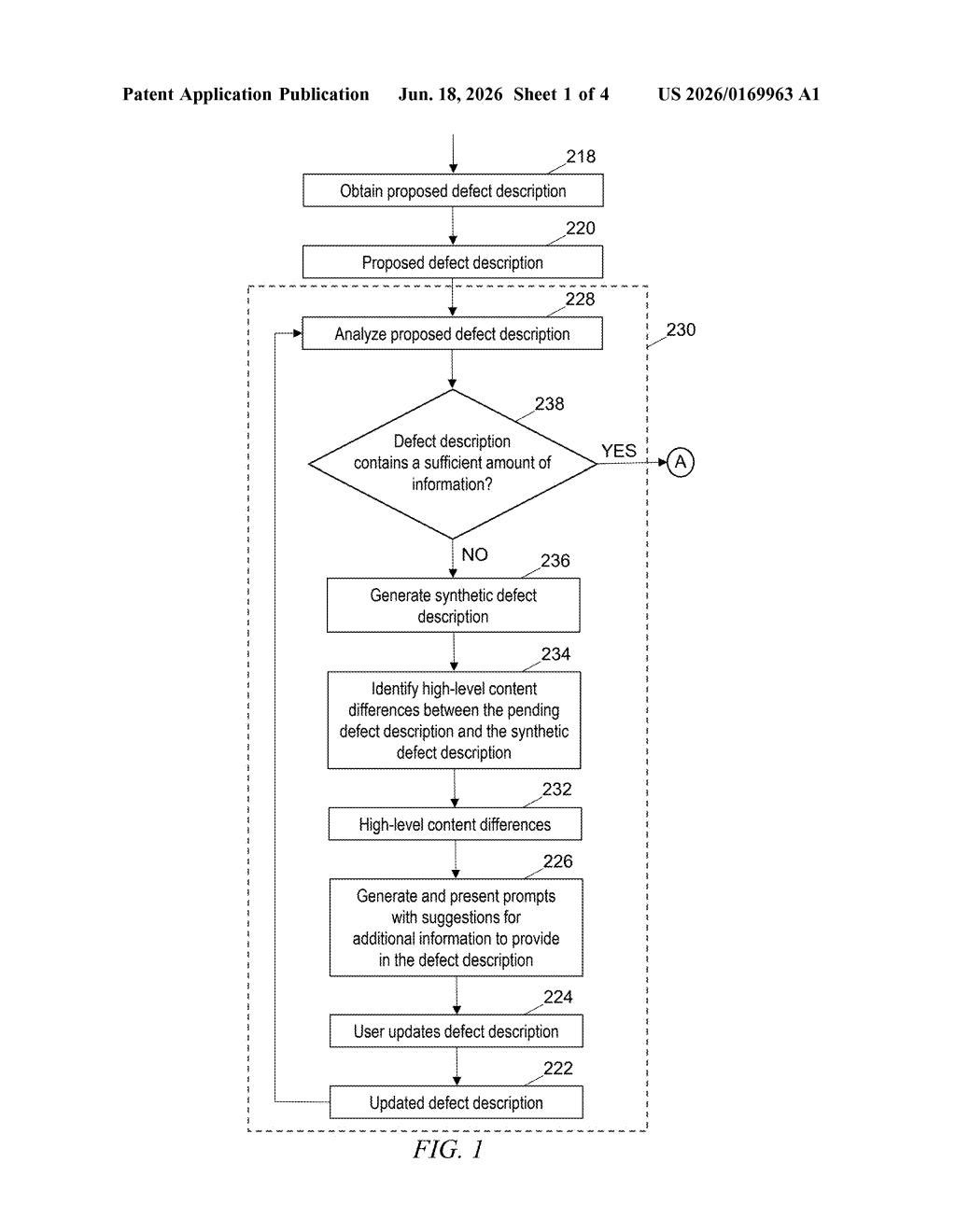
IBM's patented system would intercept that kind of report before it becomes anyone's problem. When you write a bug description, an AI checks whether you've included enough detail — things like which parts of the system are involved — by comparing your report against a database of past, resolved bug reports. If yours falls short, the AI drafts a more complete version and shows you what's missing, prompting you to fill in the gaps.
The system also checks whether someone has already reported the same bug. If a near-identical report already exists, yours gets flagged as a duplicate instead of being filed separately. The goal is to stop two of the most common time-sinks in software development: incomplete tickets and duplicate reports clogging the queue.
How the system scores, searches, and rewrites defect reports
When a developer or user submits a bug report, the system runs it through several checks in sequence:
- Sufficiency check: The proposed description is compared against historical defect data to see whether it includes all the system components that are typically needed to diagnose that kind of problem. Think of it as a completeness score based on what's worked in the past.
- Similarity search: The system searches an existing database of defect reports to find any that describe the same problem. If a match above a set similarity threshold is found, the new report is flagged as a potential duplicate rather than filed fresh.
- Synthetic rewrite: If the report is too thin on detail, the AI generates a synthetic updated defect description — essentially a fleshed-out version of what you wrote — using the patterns it found in historical data.
- Gap analysis and prompts: The system then compares your original description to its synthetic version, identifies the high-level differences (what's missing or unclear), and generates plain-language suggestions asking you to add that missing information before final submission.
The end result is a final defect report that only gets created if the description is both sufficiently detailed and genuinely new — not a duplicate of something already in the system.
What this means for software teams drowning in bad tickets
Bug tracking is one of those problems that sounds administrative but quietly destroys engineering velocity. Studies of large software teams consistently find that a significant share of filed tickets are either duplicates or so incomplete they require multiple back-and-forth rounds before anyone can act on them. Both scenarios burn time that engineers would rather spend fixing actual bugs.
For IBM, which sells enterprise software and services to large organizations with complex IT environments, this kind of tooling fits naturally into its broader AI-for-IT-operations push. If this system were embedded in a ticketing platform — think Jira, ServiceNow, or IBM's own products — it could meaningfully reduce the triage load on senior engineers who currently spend time chasing down reporters for basic details. Whether it ships as a standalone product or as a feature inside existing IBM tooling, the practical target is clear: the help desk and the engineering backlog.
This is genuinely useful, unglamorous work. Duplicate and incomplete bug reports are a real, chronic problem in software development, and applying AI to catch them at submission rather than after the fact is a sensible approach. It won't make headlines at a keynote, but it's the kind of patent that could quietly save engineering teams hours every week if it ships in a product people actually use.
There are more where this came from
We read every patent application Big Tech publishes and send you the ones worth knowing. Plain English, free, every week.
Want this weekly breakdown for a company we don't cover? Patentlyze Pro →