
New PlayStation Controller Patent Fixes Analog Stick Sensitivity
If you've ever adjusted your controller's stick sensitivity and felt like the curve wasn't quite right, Sony has filed a patent that rethinks the math behind how those adjustments are applied — from inside the controller itself, before the signal even reaches your console.
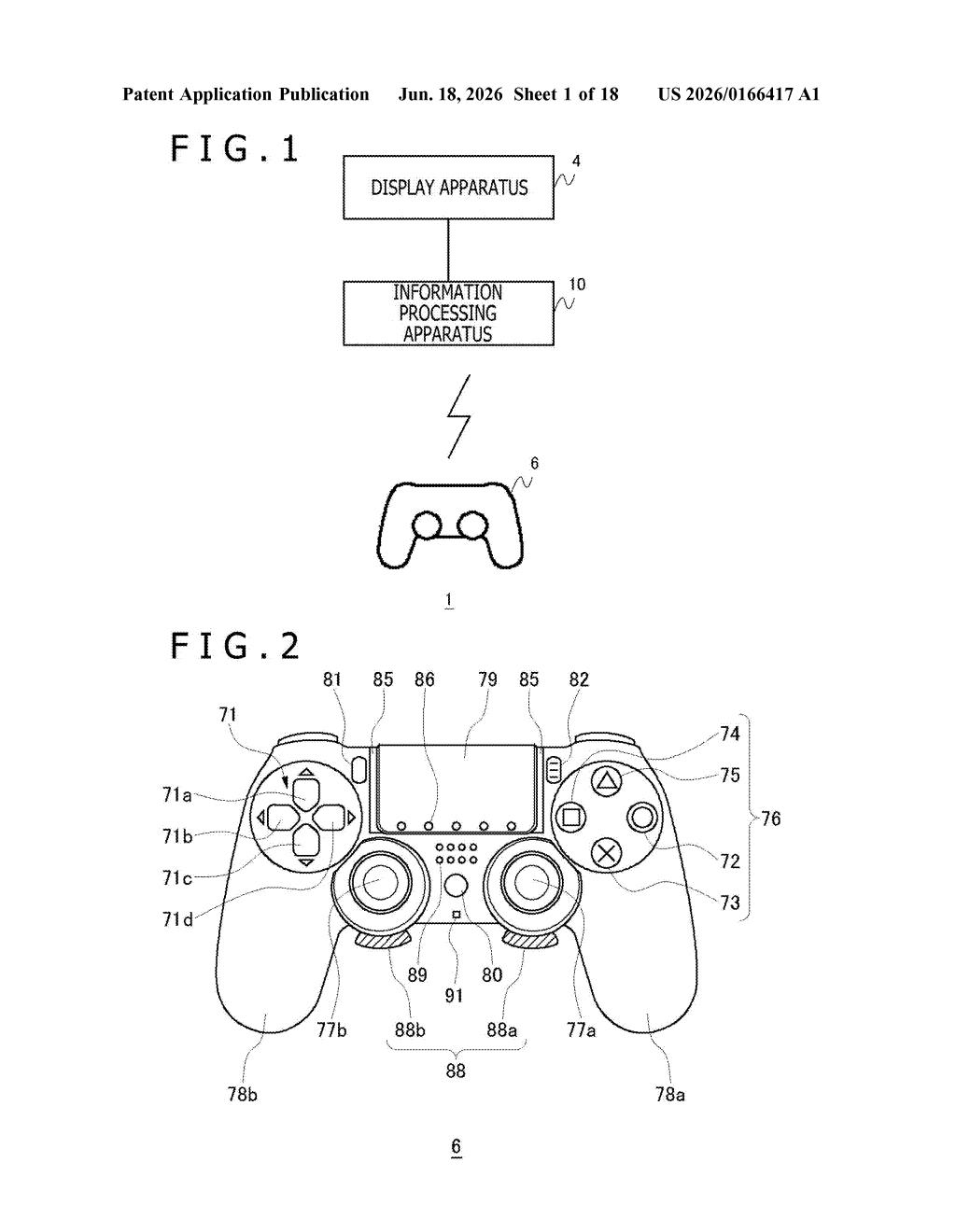
What Sony's analog stick sensitivity fix actually does
Imagine you're playing a shooter and you've cranked up your aim sensitivity so small stick movements feel bigger. The problem with most controllers is that this kind of adjustment can distort diagonal movement — you might find your character drifts slightly off-axis, or the stick feels inconsistent depending on which direction you push it.
Sony's patent describes a controller that handles this smarter at the hardware level. Instead of just scaling your stick input by a flat multiplier, the controller temporarily converts the stick's position into a different kind of measurement — think of it like switching from a city-grid map to a compass bearing — applies your sensitivity setting there, then converts back. This round-trip keeps the geometry of your stick movement clean.
The key detail is that this all happens inside the controller, before any data is sent to the PlayStation console or PC. Your games and apps receive a clean, already-adjusted value, with no extra work required on their end.
How the coordinate conversion pipeline works
The patent describes a four-step process baked into the controller's own hardware:
- Step A — Read the stick: The controller reads your thumbstick's position as an X/Y coordinate pair (an orthogonal coordinate system — the same grid you learned in high school math).
- Step B — Convert to polar coordinates: The X/Y value is converted to a distance-and-angle format (called a polar or alternative coordinate system). Think of it as describing the stick's position as "how far pushed" and "in what direction" rather than "how far left/right and up/down."
- Step C — Apply the sensitivity curve: The controller applies your saved sensitivity setting to the "how far pushed" component in this distance-and-angle space. Because direction and distance are now separate values, scaling the distance doesn't accidentally warp the direction.
- Step D — Convert back: The adjusted distance-and-angle value is converted back into X/Y coordinates, which are then packed into the standard controller data packet sent to your console or PC.
The patent stores your sensitivity preferences in the controller's own memory, meaning the adjustment happens at the source. The receiving device — a PlayStation console, a PC, or any other host — gets a value that already reflects your settings without needing to know anything about them.
What this means for competitive and casual PlayStation players
For competitive players, analog stick accuracy is genuinely important. Diagonal aiming drift and non-linear sensitivity behavior are real complaints among players who fine-tune their settings. By doing the coordinate conversion inside the controller rather than in game software, Sony's approach means the fix works consistently across every game, not just titles that implement their own stick calibration.
This also hints at where Sony might be taking future DualSense or Pro controller features. High-end third-party controllers — like the Xbox Elite or Sony's own DualSense Edge — already market per-stick sensitivity tuning as a premium feature. A patent like this suggests Sony is thinking carefully about how to make that tuning mathematically cleaner, which could eventually matter to both casual players who just want smoother camera control and competitive players who need precision.
This is genuinely interesting controller engineering, even if it won't make headlines at a press conference. The coordinate-conversion approach is an elegant fix for a real geometric problem, and doing it in the controller's firmware rather than asking game developers to handle it is the right call. It's the kind of quiet infrastructure work that makes a real difference in feel — exactly what separates a good controller from a great one.
There are more where this came from
We read every patent application Big Tech publishes and send you the ones worth knowing. Plain English, free, every week.
Want this weekly breakdown for a company we don't cover? Patentlyze Pro →