
Qualcomm Patents a Multi-Scale Lidar Motion Tracker for Self-Driving Cars
To drive safely, a self-driving car doesn't just need to see the world around it, it needs to understand how everything in that world is moving. Qualcomm's latest patent targets exactly that problem, with a system that reads motion out of raw 3D sensor data at multiple scales simultaneously.
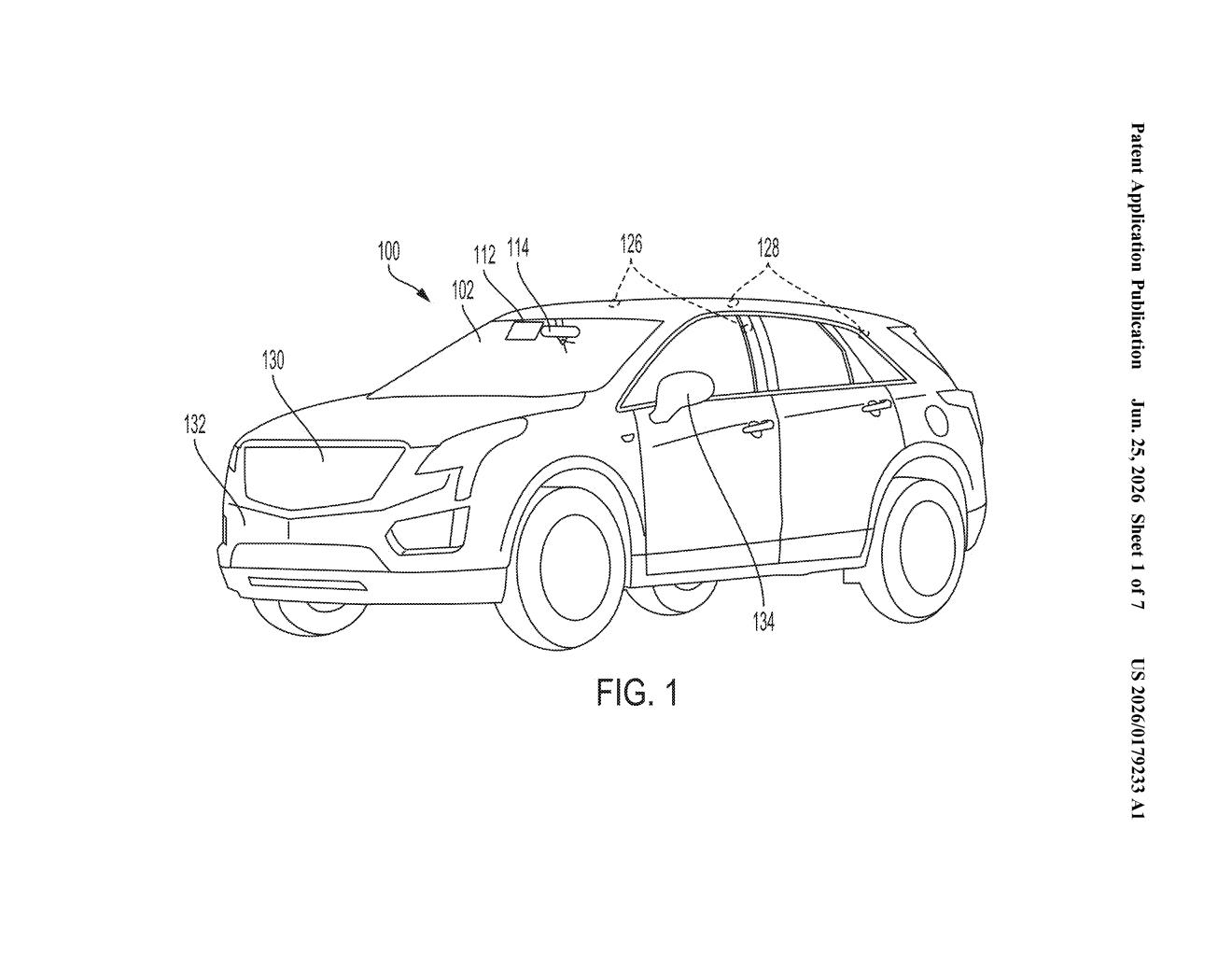
How Qualcomm's lidar system reads moving objects in 3D
Imagine you're driving and a cyclist drifts into your lane. Your brain doesn't just notice the cyclist is there, it instantly estimates how fast they're moving and where they'll be in two seconds. Self-driving cars need to do the same thing, but using laser sensors called lidar that produce clouds of millions of tiny 3D data points.
Qualcomm's patent describes a method for analyzing two back-to-back lidar "snapshots" of the world and figuring out exactly how every part of the scene moved between them. The key trick is breaking each snapshot into overlapping patches at two different scales, like zooming in and zooming out at the same time, so the system can pick up both tiny local movements and big sweeping ones.
The result is something called a scene flow, essentially a 3D map of motion. Each point in space gets tagged with a direction and speed vector. A car can then use that map to predict what pedestrians, cyclists, and other vehicles are about to do next.
How the dual-patch encoder builds a motion picture from point clouds
The system works with point cloud data, the raw output of lidar sensors. A lidar fires thousands of laser pulses per second and records where each one bounces back, building a dense 3D outline of everything nearby. One scan is called a point cloud, and the patent works with a sequence of them over time.
For each incoming point cloud, the method creates two sets of patches (think of patches as small, overlapping 3D neighborhoods sampled from the full cloud). One set uses larger patches that capture broad context; the other uses smaller patches that capture fine local detail. Using both sizes together gives the model information at multiple levels of granularity simultaneously.
Those patches, combined with data from the next point cloud in the sequence, feed into a neural network that produces a latent representation (a compact, learned summary of the scene and its motion). From that representation, the system outputs the scene flow: a per-point 3D velocity vector describing where each detected object or surface moved.
Key components the patent describes include:
- Multi-scale patch extraction from a single point cloud
- Cross-frame motion encoding between consecutive point clouds
- A learned latent space that jointly encodes shape and motion
- A final scene flow output used for downstream driving decisions
What this means for Qualcomm's self-driving chip ambitions
Scene flow is a foundational capability for any autonomous driving stack. Without accurate motion estimation, a vehicle's prediction module is essentially guessing. Better scene flow means more reliable answers to the question every self-driving system must answer: where will that object be when I get there? The multi-scale patch approach addresses a known weakness in earlier lidar networks, which often struggled when fast-moving objects appeared small in the point cloud.
For Qualcomm, this patent fits squarely into its push to sell Snapdragon Ride and related automotive compute platforms to carmakers. A proprietary, on-chip scene flow pipeline could be a meaningful differentiator when pitching automakers who want a single-vendor solution for perception and prediction workloads.
This is solid, specific engineering work on a genuine bottleneck in autonomous driving perception. Multi-scale patch encoding for point clouds is a real research direction, not a trivial tweak. Whether Qualcomm can turn a perception patent like this into a chipset-level moat against Nvidia and Mobileye is a much bigger question, but the underlying idea is worth taking seriously.
There are more where this came from
We read every patent application Big Tech publishes and send you the ones worth knowing. Plain English, free, every week.
Want this weekly breakdown for a company we don't cover? Patentlyze Pro →