
Qualcomm Patents a Headset That Drops to Low-Power Tracking When You Stop Moving
Tracking where your head is in 3D space is one of the biggest battery drains in any AR or VR headset. Qualcomm's new patent describes a system that automatically dials back that work when the headset detects you don't really need it.
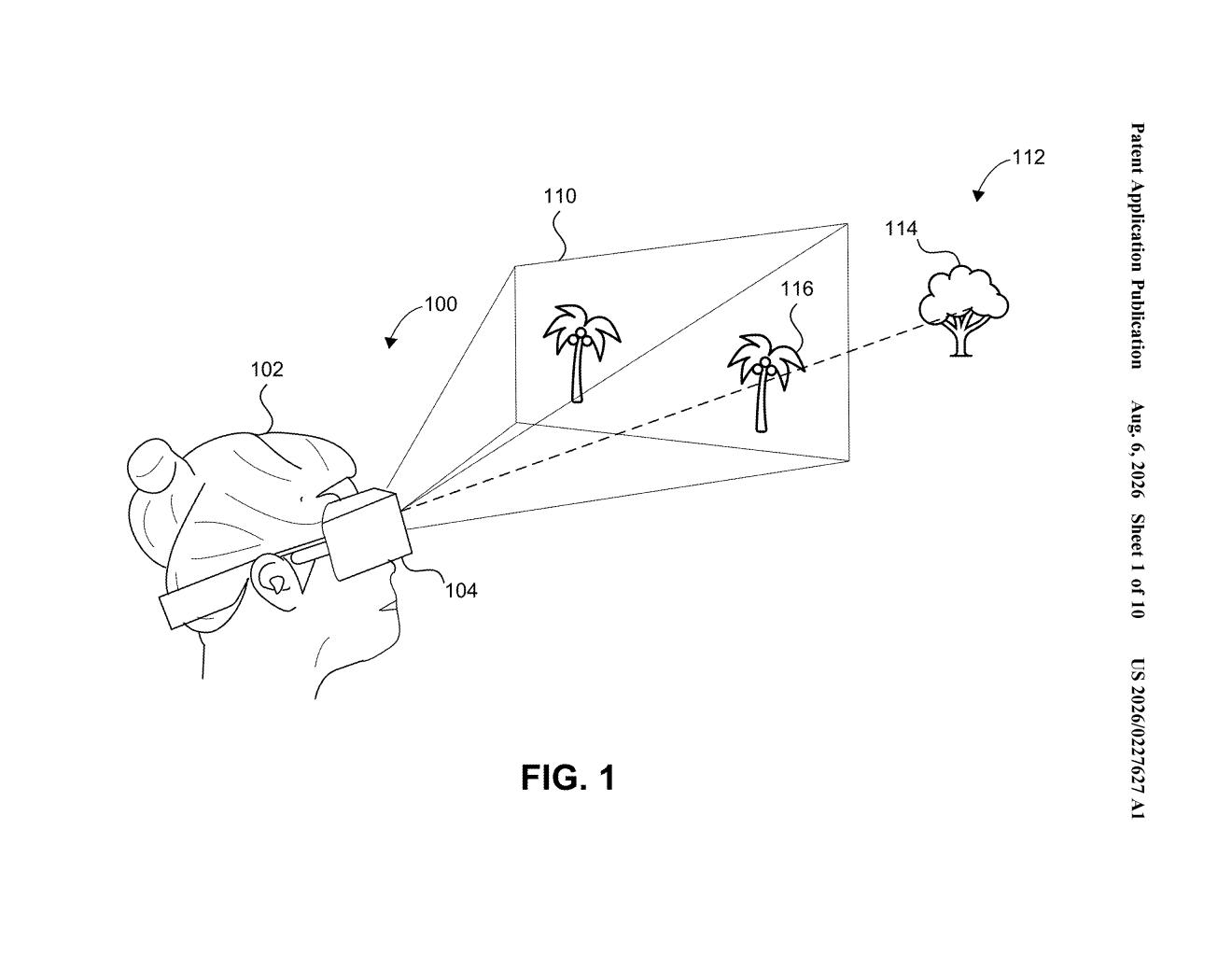
What Qualcomm's two-mode headset tracking actually does
Imagine you're wearing an AR headset and you sit down to watch a video for a few minutes, barely moving your head. The headset's cameras are still scanning the room, building a map of your surroundings, burning through battery the whole time. That's the problem this patent targets.
Qualcomm's idea is to give the headset two tracking modes. The full mode uses cameras to figure out exactly where you are in a room, including your position and which way you're facing. The lighter mode drops the camera work and relies only on the small motion sensors already inside the headset, which use far less power. When the system detects that your position has become predictable enough, it switches down to the lighter mode automatically.
Think of it like a car that switches off cylinders on the highway when it doesn't need full engine power. The headset keeps working; it just stops doing the expensive part when the situation doesn't call for it.
determine a pose of a head-mounted device (HMD) according to a six-degrees-of-freedom (6DoF) pose-determination mode of operation, wherein the pose of the HMD comprises a position of the HMD and an orientation of the HMD and wherein the 6DoF pose-determination mode of operation includes processing image data captured at the HMD to determine the pose of the HMD; …
Translation: The headset constantly tracks your exact position and rotation using built-in cameras.
How the 6DoF-to-3DoF mode switch is triggered
The patent describes a processor inside a head-mounted device (HMD) that can operate in two distinct tracking modes and switch between them based on what the headset's current situation calls for.
Six-degrees-of-freedom (6DoF) mode is the full-fat option. It uses image data from the headset's onboard cameras to figure out both your position (where you are in a room) and your orientation (which direction you're facing). This is computationally expensive because the system has to process live camera frames and match them against a map of the environment.
Three-degrees-of-freedom (3DoF) mode drops position tracking entirely and only calculates orientation, using data from an inertial measurement unit (IMU), which is a gyroscope-and-accelerometer chip that measures how the device is moving or rotating. IMU processing is far cheaper than camera-based mapping.
The switch is triggered by a pose constraint: a condition the system checks based on the current 6DoF reading. When that condition is satisfied (for example, your position has been stable for a period), the system drops to 3DoF. The patent doesn't lock this to any single trigger; the constraint is flexible by design.
… responsive to determining that the pose constraint is satisfied, determining an orientation of the HMD according to a three-degrees-of-freedom (3DoF) orientation-determination mode of operation, wherein the 3DoF orientation-determination mode of operation includes processing inertial-measurement unit (IMU) data to determine the orientation.
Translation: When you sit still, the system switches to a simpler sensor mode to save power.
What this means for battery life in AR and VR headsets
Battery life is one of the sharpest pain points in standalone AR and VR headsets. Continuous camera-based spatial tracking is a primary contributor to that drain. A system that intelligently backs off to sensor-only mode when full tracking isn't needed could meaningfully extend how long a headset lasts on a charge, without the user noticing any difference during calm or stationary moments.
For Qualcomm specifically, this matters because its Snapdragon XR chips power many of the headsets on the market, from Meta's Quest line to various enterprise AR devices. A tracking technique that reduces compute load is something Qualcomm could build into its chip-level software stack, making it relevant to any device running its silicon.
This is a sensible, focused engineering patent rather than a vision-of-the-future filing. The core insight, that you don't always need expensive camera tracking when a cheap motion sensor will do, is straightforward and practically valuable. It won't make headlines at a product launch, but the kind of work it represents is exactly what closes the gap between AR headsets people try at a demo and ones they actually wear all day.
There are more where this came from
We read every patent application Big Tech publishes and send you the ones worth knowing. Plain English, free, every week.
The drawings
10 drawing sheets from US 2026/0227627 A1 · click any drawing to enlarge


Want this weekly breakdown for a company we don't cover? Patentlyze Pro →
Be the first to weigh in