
New Patent Teaches Two Devices to Precisely Measure Distance
Your phone and your laptop already swap wireless signals to guess how far apart they are, but those guesses can be off by enough to cause real problems. Google's new patent describes a way for two devices to learn a correction specifically tuned to each other.
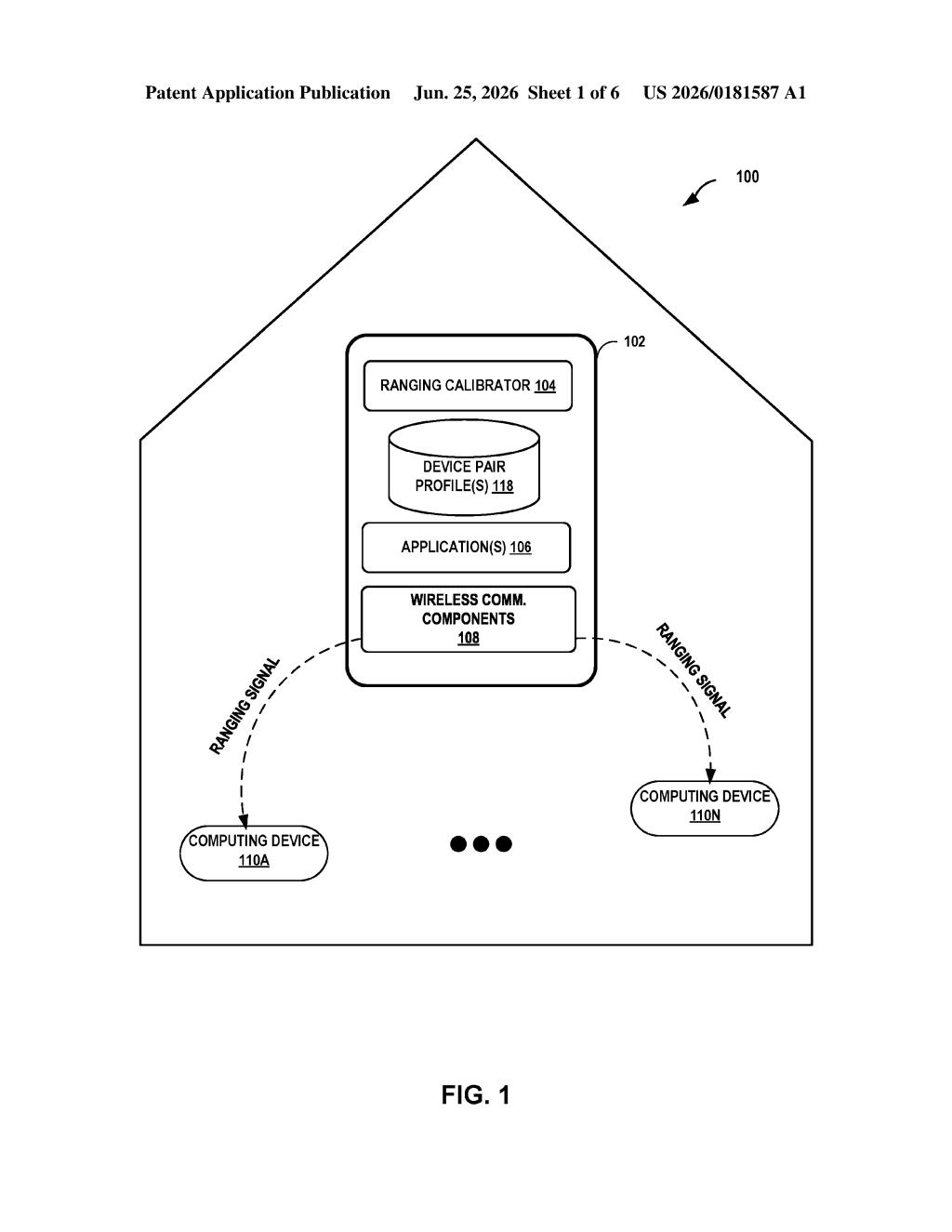
What Google's device-pair distance calibration actually does
Imagine your phone is supposed to automatically lock your laptop when you walk away, or unlock it when you sit back down. That trick depends on the two devices having an accurate read on how far apart they are. The problem is that wireless distance measurements are inherently a little noisy, and different device combinations can be off in different ways.
Google's patent describes a calibration step where the two devices place themselves at a known distance, take a wireless ranging measurement, and then calculate how far off that measurement was. That error value becomes a personalized correction profile saved specifically for that pair of devices.
From that point on, whenever those two devices need to know their distance, they apply the correction automatically. The result is a more accurate number, which means proximity-triggered actions (like locking, unlocking, or transferring a task from one screen to another) fire at the right moment instead of too early or too late.
How the offset profile corrects ranging signal errors
The patent describes a method built around what it calls a device-pair calibration profile, a stored correction value unique to a specific combination of two devices.
Here's the basic flow:
- The first device sends a ranging signal (a short-range wireless pulse, likely UWB or similar) to the second device and records a signal metric (the raw timing or signal-strength data that gets converted into a distance estimate).
- It compares that estimated distance to a set distance (a known, ground-truth distance established during a calibration step, for example by placing both devices a measured meter apart).
- The gap between those two numbers becomes an offset distance, essentially a correction factor.
- That offset is saved as a profile tied to that exact device pair.
All future distance calculations between those two devices apply the offset automatically, producing a corrected distance figure. That figure then drives whatever proximity-triggered actions the system has configured, such as screen unlocks, smart-home responses, or content handoffs between screens.
The key insight is that the calibration is per-pair, not global. Two different phones paired with the same laptop can each have their own correction profile, accounting for the fact that their hardware and antenna placement may introduce different kinds of error.
What this means for proximity-triggered features on Google devices
Proximity-based features are already shipping across Google's product lineup: Pixel phones can unlock Chromebooks when nearby, and Android's Fast Pair ecosystem relies on devices knowing roughly where each other are. Small but consistent measurement errors in those systems can make features feel unreliable, triggering too early in a crowded room or not at all when you're sitting right next to your device.
A per-pair calibration profile addresses that without requiring better hardware. It's a software-layer fix that could improve the reliability of features you already use, and it creates a foundation for tighter proximity automation as Google expands its connected-device ecosystem.
This is unglamorous infrastructure work, but it's exactly the kind of thing that separates a proximity feature that feels polished from one that feels flaky. Google's connected-device story depends on devices trusting each other's location estimates, and this patent is a sensible way to make those estimates more trustworthy without a hardware redesign.
There are more where this came from
We read every patent application Big Tech publishes and send you the ones worth knowing. Plain English, free, every week.
Want this weekly breakdown for a company we don't cover? Patentlyze Pro →