
Samsung Patents a System That Connects New Hardware Using a Simple Setup Document
Every time an engineer plugs a new piece of hardware into a system, someone has to write custom software to talk to it. Samsung's latest patent wants to make that step automatic.
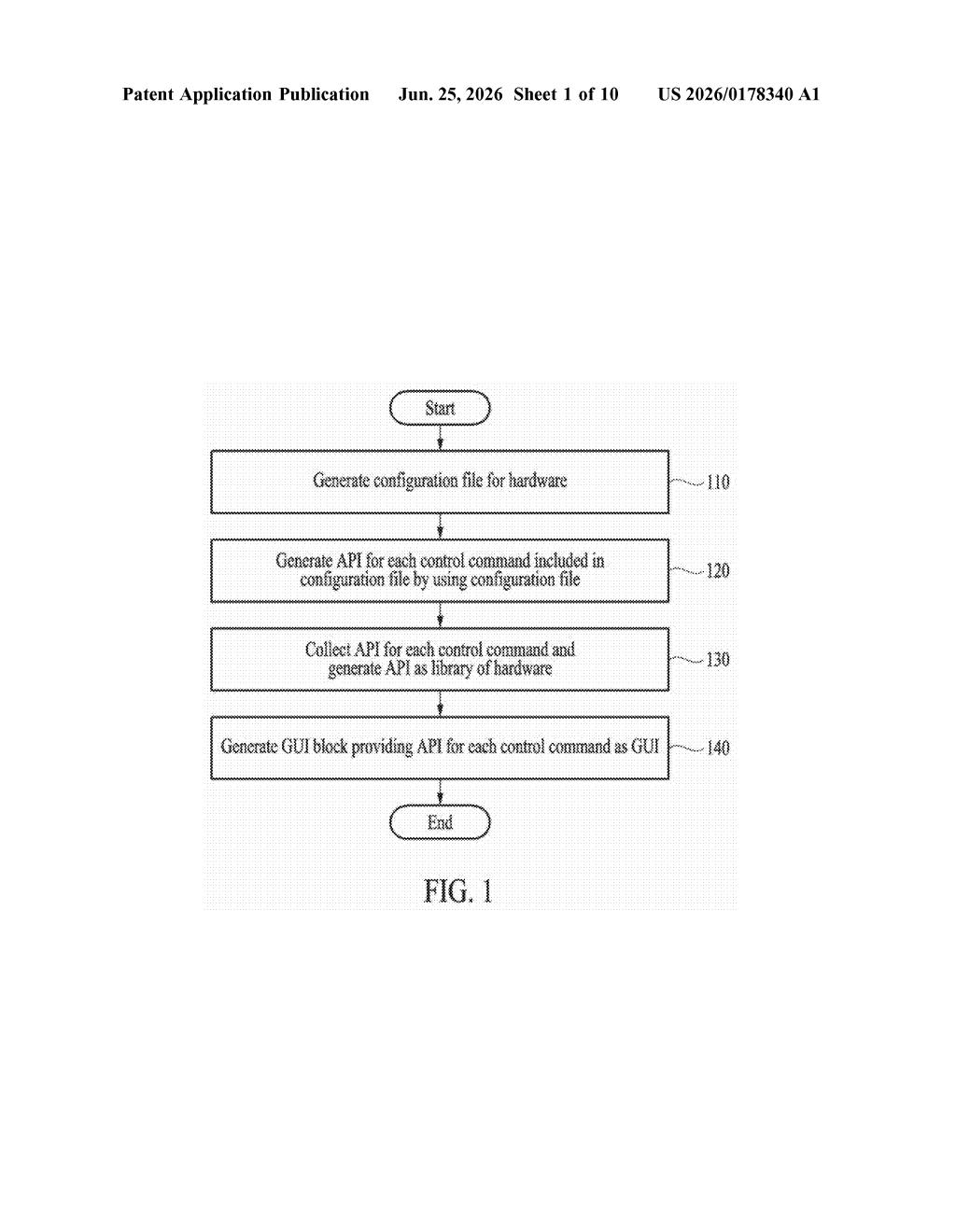
What Samsung's auto-hardware setup system actually does
Imagine you buy a new printer, camera, or sensor and instead of waiting for a developer to write software that knows how to control it, the device just hands over a simple instruction sheet and the software writes itself. That's the idea here.
Samsung's patent describes a system where any hardware device comes with a configuration file, a small document listing the device's name, how to connect to it, and what commands it can accept. The system reads that file and automatically generates the software hooks (called APIs) that other programs need to actually control the device.
Right now, connecting new hardware to a software platform usually means manual coding work. Samsung's approach would skip that step entirely, letting any compatible device slot in without a developer having to write a custom integration from scratch.
How the config file becomes a working software interface
The patent describes a two-step process. First, a configuration file is created for a piece of hardware. That file contains three things: the hardware's model name (so the system knows what it's dealing with), connection information (the address or protocol needed to reach it), and a list of control commands (the specific actions the hardware can perform, like "start," "stop," or "set temperature").
Second, the system reads that configuration file and automatically generates an API (Application Programming Interface, meaning a standardized set of software functions) for every command in the file. Each control command gets its own callable interface, so any application on the platform can immediately send instructions to the hardware without knowing anything about its internals.
The core value is abstraction. Instead of a developer hand-coding a driver or integration layer every time a new device is added, the config file acts as a universal translator. The system does the translation work.
- Config file inputs: model name, connection info, control commands
- Output: auto-generated API endpoints per command
- Effect: new hardware becomes software-accessible without manual coding
What this means for device integration at scale
In enterprise or industrial environments, where dozens or hundreds of different hardware devices (sensors, cameras, actuators, robots) need to be integrated into a single software platform, the manual coding work adds up fast. A config-file-driven approach could cut integration time from days to minutes per device.
For Samsung, which makes everything from factory automation equipment to smart home devices, a standard like this could mean any Samsung hardware automatically works with any Samsung software platform the moment it's plugged in. That's a real competitive advantage in industrial IoT and smart building markets, where interoperability is a constant pain point for customers.
This is foundational plumbing, not a flashy consumer feature. But foundational plumbing at Samsung's scale, across factories, data centers, and smart homes, is genuinely worth watching. If Samsung builds this into a product platform, it could make hardware integration as simple as dropping in a text file, which would be a meaningful time-saver for anyone managing large device fleets.
There are more where this came from
We read every patent application Big Tech publishes and send you the ones worth knowing. Plain English, free, every week.
Want this weekly breakdown for a company we don't cover? Patentlyze Pro →