
Microsoft Patent Reveals AI Model That Predicts User Content Interactions in Advance
Microsoft has patented an AI system that watches what you've been doing inside an app, converts that activity log into plain language, and then uses it to predict how likely you are to interact with a specific piece of content.
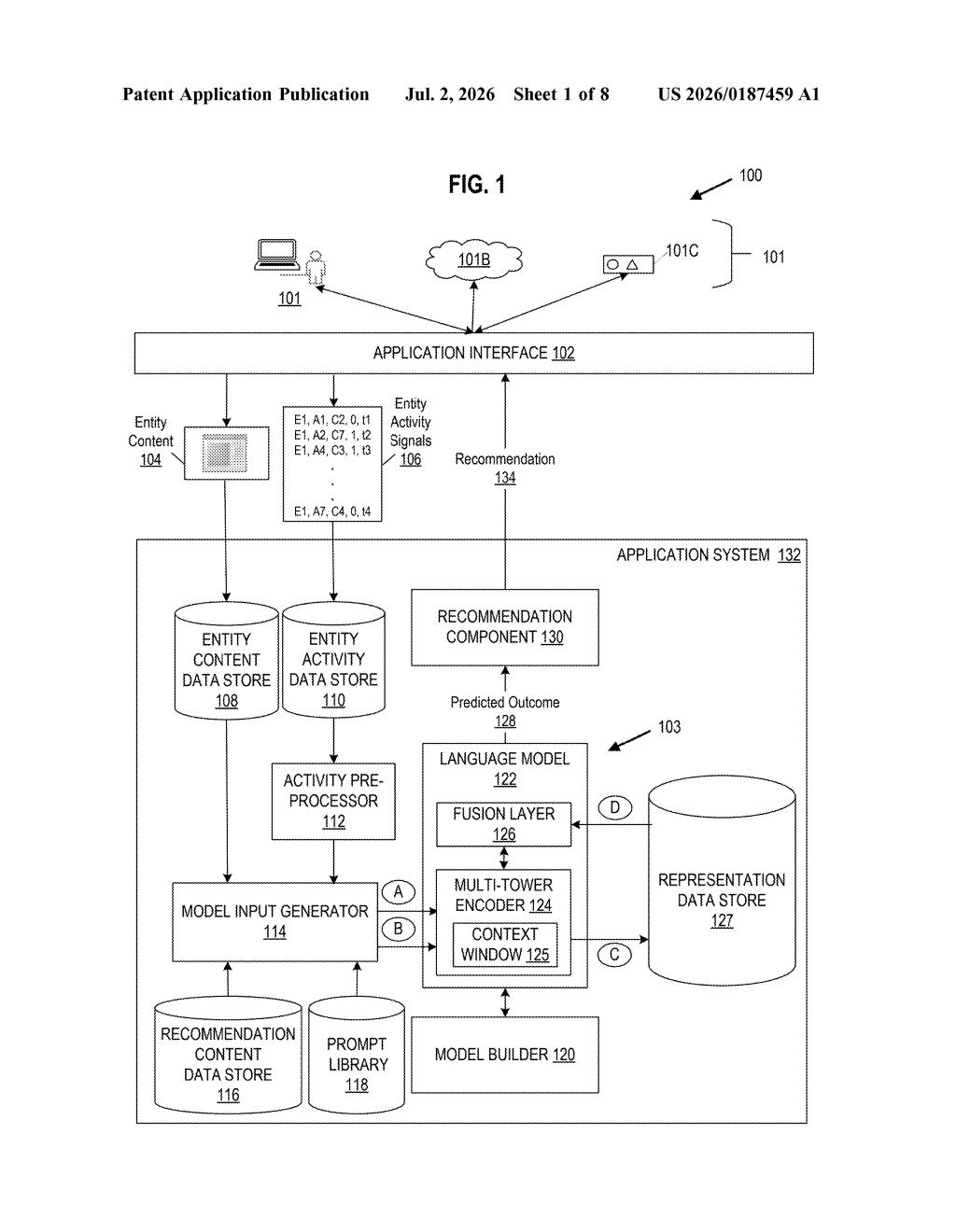
How Microsoft's AI guesses what you'll click on next
Imagine you've spent the last hour in Word opening a budget file, searching for a colleague's name, and skimming through a shared document. Microsoft's patented system would take that trail of activity and describe it in plain English, something like 'user opened a financial document, searched for a contact, then reviewed a team report.' It then uses that description to judge how likely you are to click on or engage with a new piece of content it's thinking about showing you.
The goal is smarter, more context-aware recommendations. Instead of just knowing what files exist or what's trending across the company, the AI also knows what you've been doing leading up to this moment. That combination, your recent behavior plus the content itself, gets fed into a prediction engine that outputs a probability score.
Think of it as a recommendation system that reads the room. Rather than suggesting random documents, it factors in your recent workflow before deciding what to surface next.
Inside the dual-encoder and fusion model setup
The system takes two types of inputs and runs them through separate processing channels before combining them.
Input channel one: your activity log. The patent describes an 'activity' as a piece of digital content shown to you by an app, plus whatever signal the app received back from you (a click, a scroll, a search). A log of these activities is converted into a natural language description, essentially a sentence or paragraph summarizing what you've been doing. That text goes into the first of two encoder towers (a neural network branch that turns text into a numeric representation the model can reason over).
Input channel two: candidate content. The second piece of content, the thing the system is evaluating whether to recommend, goes directly into the second encoder tower. This branch doesn't need a text conversion; it processes the content's own features directly.
The fusion step. The outputs of both encoder towers, now both in numeric form, are combined by a 'fusion sub-model.' This merging layer compares the two representations and produces a final predicted outcome: the likelihood that the user will interact with the candidate content.
The architecture is sometimes called a 'dual-encoder' or 'two-tower' model. It's a well-established pattern in recommendation systems, but Microsoft's version adds the explicit step of narrating activity logs in natural language before encoding them, which is the novel part of the claim.
What this means for Microsoft 365 and Copilot recommendations
For anyone who uses Microsoft 365, Copilot, or Teams, this kind of system sits directly behind the 'recommended files' and 'suggested content' features you already see. A model that understands your recent activity as a narrative, not just a raw click history, could make those suggestions noticeably more relevant. If you just finished reviewing a contract, it's much more useful to surface related legal documents than to push whatever is simply popular across your organization.
From a strategy angle, Microsoft is clearly investing in making its AI assistant layer context-aware at a deep level. Copilot's value depends heavily on whether its suggestions feel timely and useful rather than generic. A patent like this signals that Microsoft is building the infrastructure to make those predictions tied to real in-session behavior, not just profile data.
This is important infrastructure work. The 'translate your activity log into natural language before passing it to a language model' idea is a genuinely practical way to bridge the gap between user behavior signals and the kind of reasoning large language models do well. It's not a flashy consumer feature, but it's exactly the kind of plumbing that would make Copilot recommendations feel less random.
There are more where this came from
We read every patent application Big Tech publishes and send you the ones worth knowing. Plain English, free, every week.
Want this weekly breakdown for a company we don't cover? Patentlyze Pro →