
Google Patents a Way to Let AI Chips Talk to Each Other Without a Central Coordinator
When you're training a massive AI model, getting dozens of chips to cooperate without a traffic jam is one of the hardest engineering problems there is. Google's latest patent tackles that by letting the chips sort it out themselves.
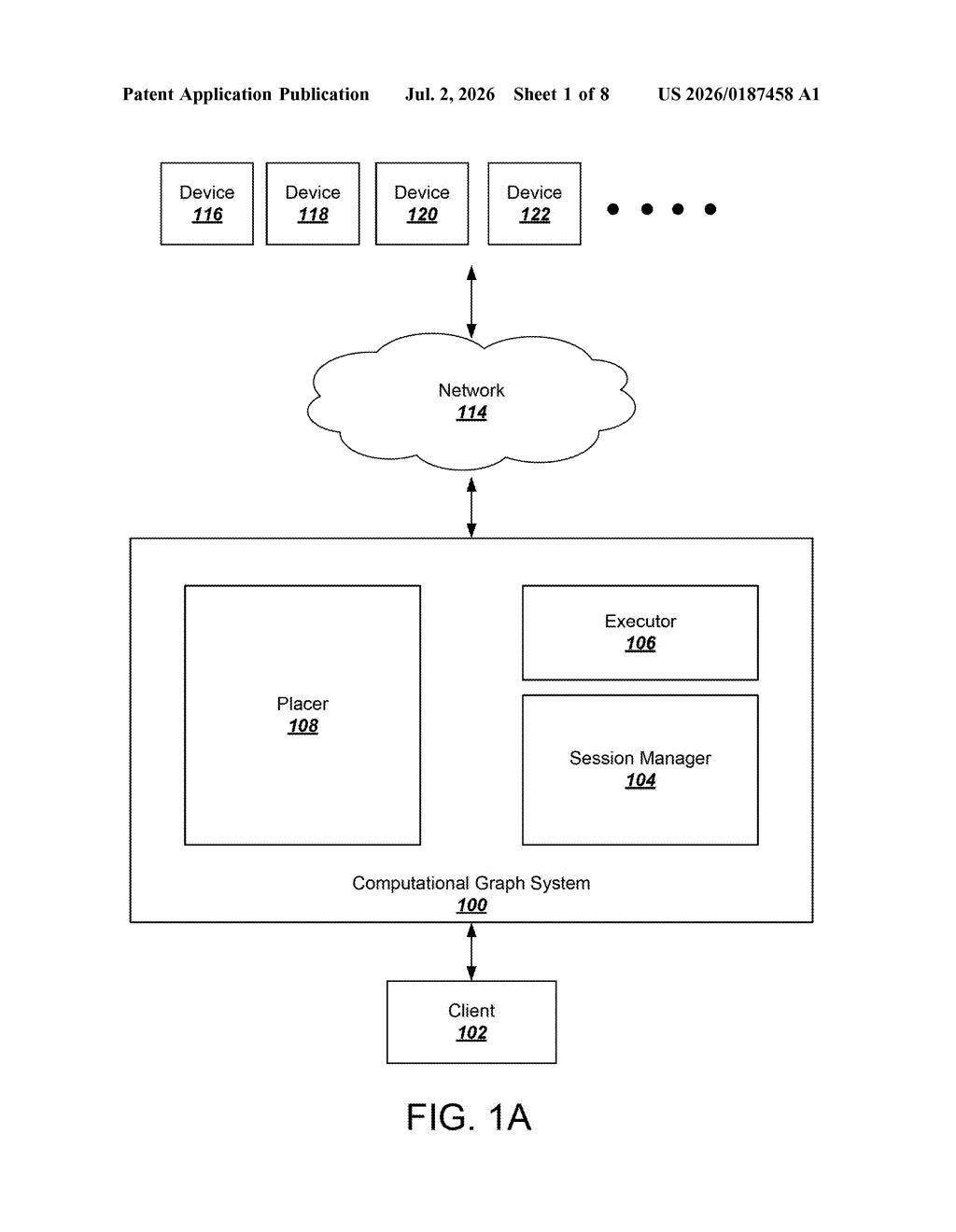
How Google's chips split up AI work on their own
Imagine a huge construction project where every worker has to call the foreman before talking to another worker. That constant back-and-forth with the foreman creates a bottleneck. Google's patent describes a way to cut the foreman out of the loop entirely.
When a big AI job gets split across multiple computer chips, each chip traditionally relies on a central system to coordinate who sends data to whom. Google's approach rewrites the job instructions so that each chip already knows exactly who it needs to talk to and when. The chips then handle that communication directly, in pairs, without waiting for permission from anything else.
The result is that the central system is free to handle other tasks while the chips are doing their work. It's a cleaner division of labor that could make large AI training runs faster and less wasteful of expensive hardware time.
How send and receive nodes replace central coordination
The patent centers on something called a computational graph, which is the map of operations an AI system needs to perform. When a job is too large for one chip, the graph gets split into smaller pieces called subgraphs, each assigned to a different device.
The core invention is inserting special send nodes and receive nodes directly into each subgraph. A send node is an instruction that says "when you finish this operation, push the result to device X." A receive node on the other side says "wait for data from device Y before continuing." Together they form a self-contained handshake between exactly two devices.
Because the coordination logic is baked into the graph itself, the backend (the central scheduling system that normally manages all communication) no longer needs to supervise each data transfer. It can move on to other work while the chips execute.
- Computational graphs get modified before execution to include communication instructions
- Paired send/receive nodes handle device-to-device transfers directly
- The backend is freed from acting as a communication middleman
- Devices execute their subgraphs in a self-sufficient manner
What this means for large-scale AI training infrastructure
At the scale Google operates, training a large AI model might involve hundreds or thousands of chips running in parallel. Any inefficiency in how those chips exchange data multiplies quickly into wasted time and wasted energy. A system where chips negotiate data transfers directly, without waiting on a central coordinator, can keep more of that hardware productively busy.
For you as a user, this kind of infrastructure work shows up indirectly: faster model training can mean quicker updates to products like Google Search or Gemini. The patent is also a window into how seriously Google is investing in the plumbing that makes large-scale AI possible, well below the layer most people ever see.
This is unglamorous but important work. The inventors include Jeff Dean and Sanjay Ghemawat, two of the most significant figures in Google's infrastructure history, which signals this is not a throwaway filing. Distributed training bottlenecks are a real and expensive problem, and baking coordination logic into the graph itself is a clean architectural solution.
Get our take in your Top Stories
Liked this breakdown? Add Patentlyze as a preferred source on Google, and our plain-English take shows up more often in your Top Stories the next time Google patent news breaks.
There are more where this came from
We read every patent application Big Tech publishes and send you the ones worth knowing. Plain English, free, every week.
Want this weekly breakdown for a company we don't cover? Patentlyze Pro →