
IBM Patents a Login System That Authenticates You by Your Daily Habits
What if your password was replaced by the way you move through your day? IBM is patenting a system that learns your personal routine and uses it as a continuous authentication check.
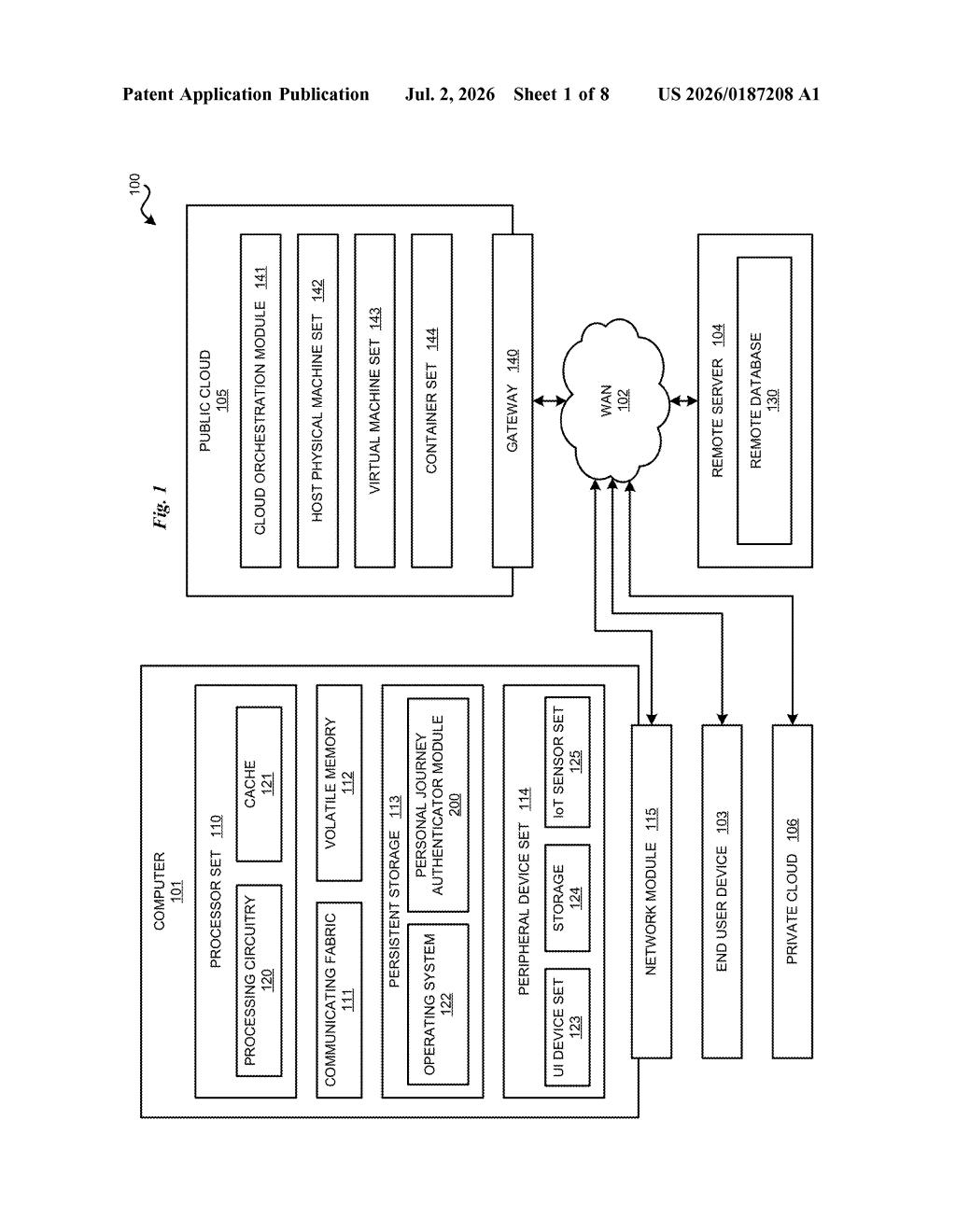
How IBM's behavior-pattern login system works
Imagine a security system that watches how you typically use a space or application over time, say which apps you open first thing in the morning, in what order you check your messages, or how you navigate a building. Over time, it builds a picture of your normal routine.
Now imagine that same system checking whether your current behavior matches that learned routine. If something looks off, it can flag the account, lock a door, or ask you to verify your identity. No password required, and no single login moment to steal.
That's the idea behind this IBM filing. Rather than relying on a token or a code you enter once, the system treats your personal pattern of behavior as the credential itself. A mismatch between what you usually do and what's happening right now becomes the trigger for a security response.
How the system builds and compares event sequences
The patent describes a two-phase process. In the first phase, the system runs a data collection process that records how a user interacts within a defined "space," which could be a physical location tracked by sensors, a software environment, or a combination of both. From that raw data, it extracts discrete events and stitches them into a personal journey: an ordered sequence that represents the user's typical behavior pattern.
In the second phase, triggered by some condition (like a login attempt, an access request, or an unusual activity flag), the system collects a fresh batch of behavioral data. It then does two things in parallel:
- Generates a predicted sequence based on what the user's learned pattern says should happen next
- Generates an actual sequence from the newly observed behavior
Those two sequences are compared using a similarity metric (essentially a numerical score measuring how closely the real behavior matches the prediction). If the score falls below a set threshold, the system initiates a "responsive action," which could mean denying access, requiring additional verification, or sending an alert.
The approach is sometimes called continuous authentication because the check is ongoing rather than a single gate at login.
What this means for passwordless and passive security
Passwords are a single point of failure. Steal one credential and you're in. Behavioral authentication is harder to steal because it's not a static secret; it's a pattern that exists only in how a real person moves through their day. For enterprises managing access to sensitive systems, a system like this could catch an attacker who has valid credentials but is behaving nothing like the person those credentials belong to.
For everyday users, the appeal is a world where you never consciously log in at all. The tradeoff is privacy: building this kind of profile means collecting and storing a detailed record of your behavior over time. How IBM handles data minimization and user consent in any real implementation would be the key question.
This is a genuinely interesting authentication idea, and IBM is not the only company working in this space. The hard problems are not in the core concept (comparing sequences is well-understood) but in everything else: how noisy the behavioral data is, how often the system makes false positives, and whether users will accept the level of monitoring required. The patent reads like a solid foundational claim rather than a finished product.
There are more where this came from
We read every patent application Big Tech publishes and send you the ones worth knowing. Plain English, free, every week.
Want this weekly breakdown for a company we don't cover? Patentlyze Pro →
Be the first to weigh in