
IBM Patents a System for Controlling Who Sees Your Metaverse Spaces on Social Media
IBM has filed a patent for a system that automatically figures out who should see a virtual environment, then shares it only with the right slice of a user's social network. Think of it as privacy settings for your metaverse room, but chosen by software rather than you.
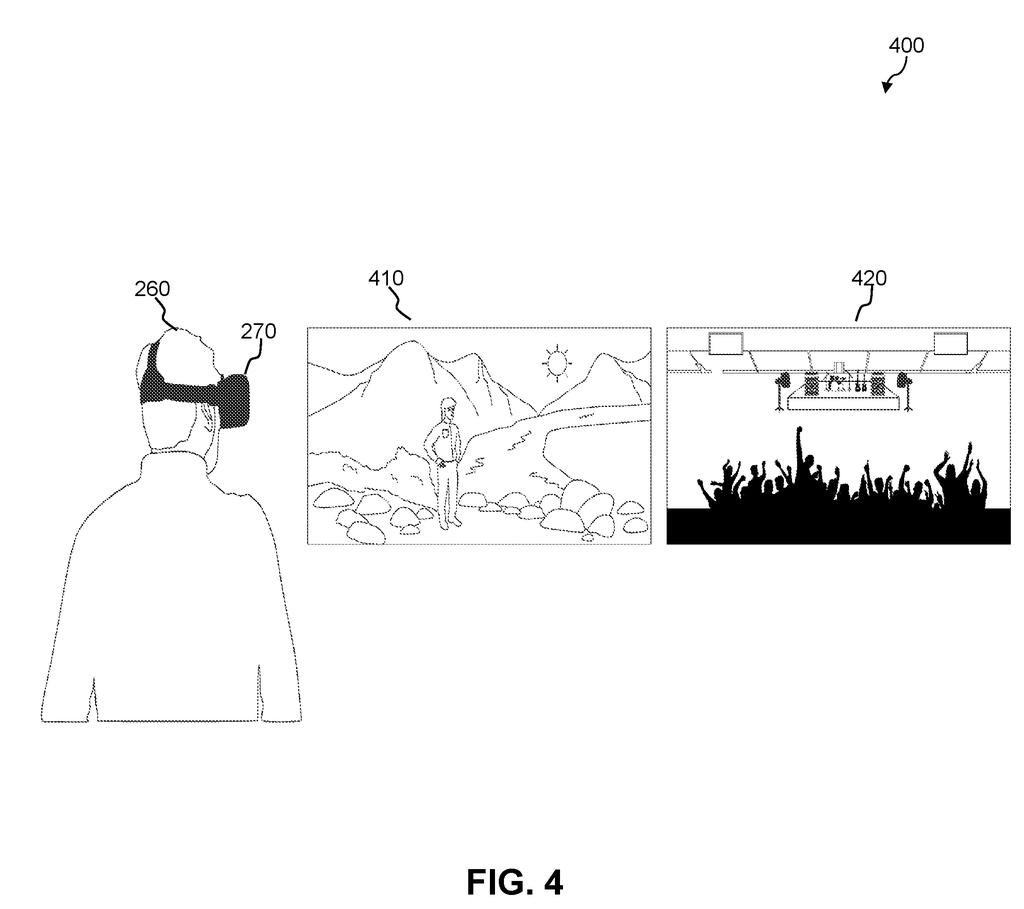
What IBM's virtual-environment audience zoning actually does
Right now, sharing anything from a virtual or metaverse space to social media is a blunt instrument. You post something and it goes to everyone, or you manually pick a list. IBM wants software to handle that sorting automatically.
The system described in this patent analyzes a virtual environment, figures out its context (what kind of space it is, what's happening inside it), and then applies what IBM calls "secure social-media zoning." That zoning determines which subset of your social network should actually see the space or activity inside it.
In practice, a work collaboration room might go only to professional connections, while a casual virtual hangout goes to friends. The system decides those boundaries based on the content and context it detects, not a manual rule you had to set up ahead of time.
… determining, by the computing device, a plurality of contextual information and a secure social-media zoning associated with the virtual environment based on the analysis …
Translation: The system figures out the rules and boundaries for who is allowed to look at the virtual space.
How IBM maps social network structure onto metaverse spaces
The patent describes a three-step software process running on a computing device.
- Analysis: The system examines a virtual environment, reading signals about what kind of space it is and what is happening inside it.
- Contextual determination: From that analysis, the system extracts "contextual information" and assigns a "secure social-media zoning" label. The zoning defines an audience drawn from a "derivative" of the user's social network, meaning a subset or filtered version of their full contact list.
- Presentation: The virtual environment is then shared out to that specific audience slice, not the user's entire social network.
The key mechanism is the audience derivation step. Rather than the user specifying "share with these 12 people," the software infers the appropriate audience from the content itself. This is similar to how spam filters classify incoming email automatically, applied here to outgoing virtual-space sharing.
The patent does not specify exactly what signals the analysis step uses to determine context. It could include spatial layout, who else is present, activity type, or metadata attached to the environment. The claim is written broadly enough to cover many approaches.
… wherein the secure social-media zoning comprises an audience comprising a derivative of the social media network …
Translation: This means the people allowed inside are a specific subset of your overall friends list.
What audience-zoned metaverse sharing means for privacy
Privacy controls in social media have always lagged behind the actual complexity of people's social lives. You have work contacts, old friends, family, and strangers all mixed together, and most platforms offer only crude sorting tools. Applying that same problem to virtual environments, where the stakes around who can see what could be even higher, makes some form of automatic zoning genuinely useful rather than cosmetic.
That said, this patent describes a software layer that assumes a functioning metaverse platform underneath it, and those platforms have not reached mainstream adoption. IBM is not primarily a consumer social-media or metaverse company, so the most plausible near-term application is enterprise: controlling which colleagues see which virtual collaboration rooms. It is part of a broader wave of new Big Tech patents applying access-control thinking to virtual and mixed-reality spaces, a category that will matter more as remote collaboration tools grow more immersive.
That makes this IBM's 306th filing in our IBM coverage since May, a run that includes an AI threat query writer and an image rebuilder.
This filing describes pure software logic, meaning no new devices or chips need to be built before anyone can ship something real. The main prerequisite is a working virtual meeting or shared online space sitting underneath, which IBM would need to either build or partner with.
The most believable near-term version of this is an enterprise meeting tool that automatically figures out who in a company should see a given virtual room's content, without a manager manually setting permissions each time. IBM already sells infrastructure to large organizations, so that context gives this idea a reasonable home.
The consumer version, where this connects to everyday social networks, depends on large-scale virtual worlds that most people do not yet use regularly, making that path longer and less certain from what the document describes.
Get our take in your Top Stories
Liked this breakdown? Add Patentlyze as a preferred source on Google, and our plain-English take shows up more often in your Top Stories the next time IBM patent news breaks.
There are more where this came from
We read every patent application Big Tech publishes and send you the ones worth knowing. Plain English, free, every week.
The drawings
6 drawing sheets from US 2026/0253046 A1 · click any drawing to enlarge


Want this weekly breakdown for a company we don't cover? Patentlyze Pro →
Be the first to weigh in