
AMD Patents a Faster Way for Chips to Handle AI's Favorite Number Format
AI models crunch through billions of numbers every second, and the format those numbers come in can make or break a chip's performance. AMD is patenting dedicated circuitry to handle one of the most popular AI number formats more efficiently.
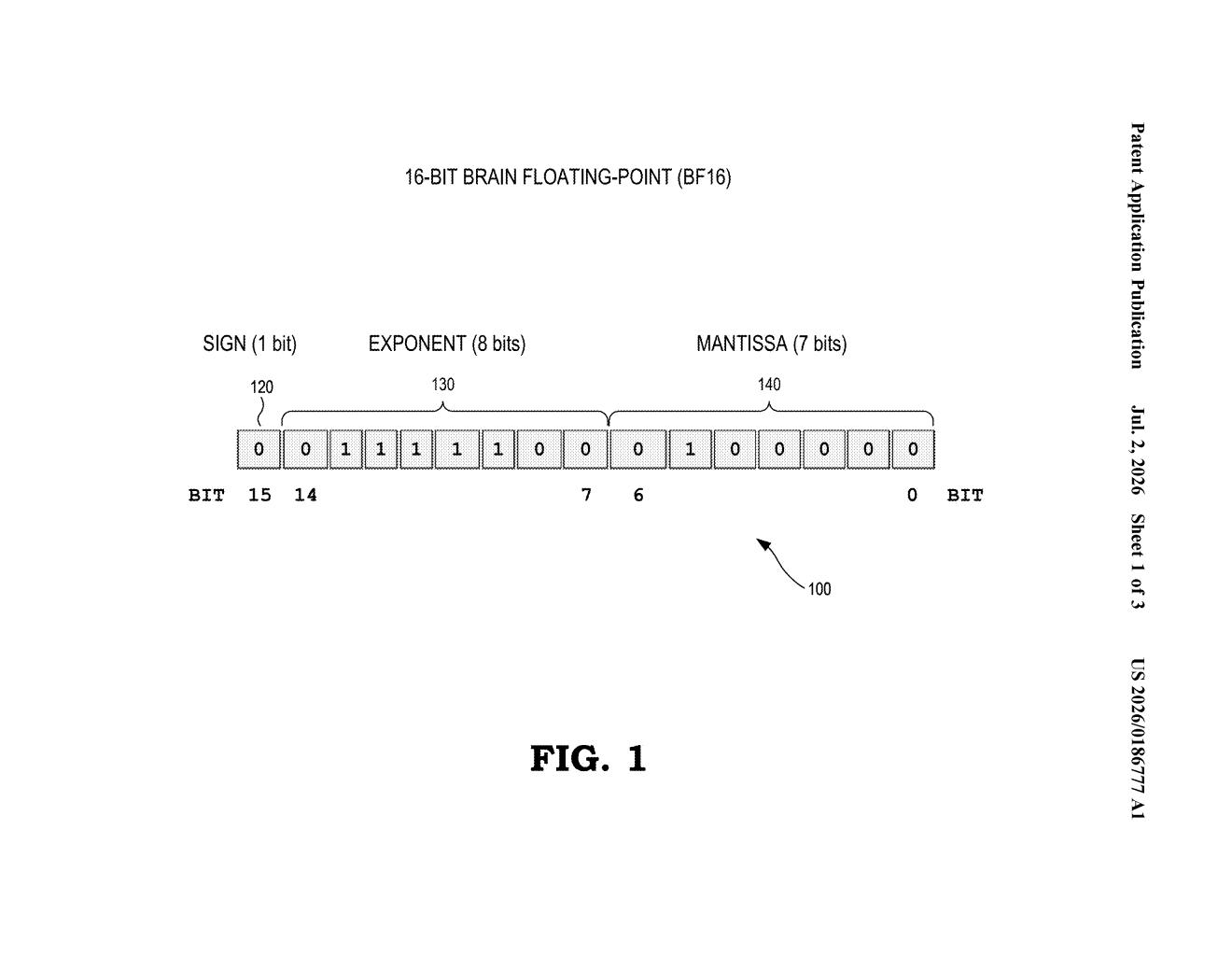
What BF16 is and why AMD's chips care about it
Imagine every number in an AI model is written on a sticky note. Full-precision numbers get a big sticky note with lots of detail, but they take up a lot of space and slow things down. A format called BF16 (brain floating-point 16-bit) uses a much smaller sticky note that still captures the general size of the number well enough for AI training to work. It's a deliberate trade-off, and almost every major AI chip uses it today.
The problem is that doing math with these smaller notes requires some careful bookkeeping. When you add two BF16 numbers together, their internal scales have to be lined up first, or the answer comes out wrong. And when you convert a BF16 number into a different format for, say, storing a final result, you need to round it carefully so you don't lose important information.
AMD's patent describes dedicated circuitry inside a processor that handles both of those jobs automatically. You send in a BF16 number and an instruction, and the chip figures out whether to do arithmetic or convert the number, applies the right adjustments, and hands back an answer stored and ready for the next step.
How AMD's circuit aligns exponents and scales precision
The patent covers a processing unit that accepts a BF16-formatted data element (a 16-bit number using the brain floating-point standard, which trades mantissa bits for a wider exponent range compared to standard FP16) and an instruction that says either "do arithmetic" or "convert this number."
For arithmetic operations (addition, subtraction, multiplication), the circuit reads the exponent of each BF16 number. Floating-point math requires both numbers to share the same scale before you can add or subtract them, so the hardware aligns those exponents, then carries out the operation and stores the result in on-chip registers.
For conversion operations, the circuit needs to translate a BF16 value into a different format, such as the full 32-bit float (FP32) used for storing high-precision model weights, or a reduced-precision format used in inference. The patent describes precision-aware scaling and rounding, meaning the hardware adjusts how much detail it preserves based on the size of the number's exponent, rather than applying a one-size-fits-all rounding rule.
The output in both cases lands in operations registers, small on-chip storage slots that feed directly into the next instruction, keeping data moving through the pipeline without extra memory trips.
What this means for AMD's AI chip ambitions
BF16 has become the default number format for training large AI models, used by Google's TPUs, Nvidia's Hopper GPUs, and AMD's own Instinct accelerators. Any inefficiency in how a chip handles BF16 arithmetic shows up directly as slower training runs and higher electricity bills at scale. Dedicated, hardware-level handling of the exponent alignment and conversion steps described here can shave cycles off operations that run trillions of times during a single model training job.
For AMD, this matters because the company is actively competing with Nvidia in the data-center AI chip market. Having tight, purpose-built BF16 execution units is table stakes for any serious AI accelerator. This patent suggests AMD is continuing to refine that layer of its silicon, which could show up in future generations of the Instinct MI-series cards.
This is infrastructure work, not a flashy announcement, but it's the kind of detail that separates competitive AI chips from also-rans. BF16 handling is a known bottleneck, and patenting a specific approach to exponent alignment and precision-aware conversion tells you AMD is paying close attention to where its AI accelerators spend their time. Worth tracking, but don't expect a press release about it.
Get our take in your Top Stories
Liked this breakdown? Add Patentlyze as a preferred source on Google, and our plain-English take shows up more often in your Top Stories the next time AMD patent news breaks.
There are more where this came from
We read every patent application Big Tech publishes and send you the ones worth knowing. Plain English, free, every week.
Want this weekly breakdown for a company we don't cover? Patentlyze Pro →