
AMD Patents a Chip That Runs Two AI Systems in Sync to Score Similarities
AMD has patented a chip design that runs two neural networks in parallel, using identical weights at exactly the same moment, so the chip can directly compare two images, sounds, or data samples without the usual back-and-forth.
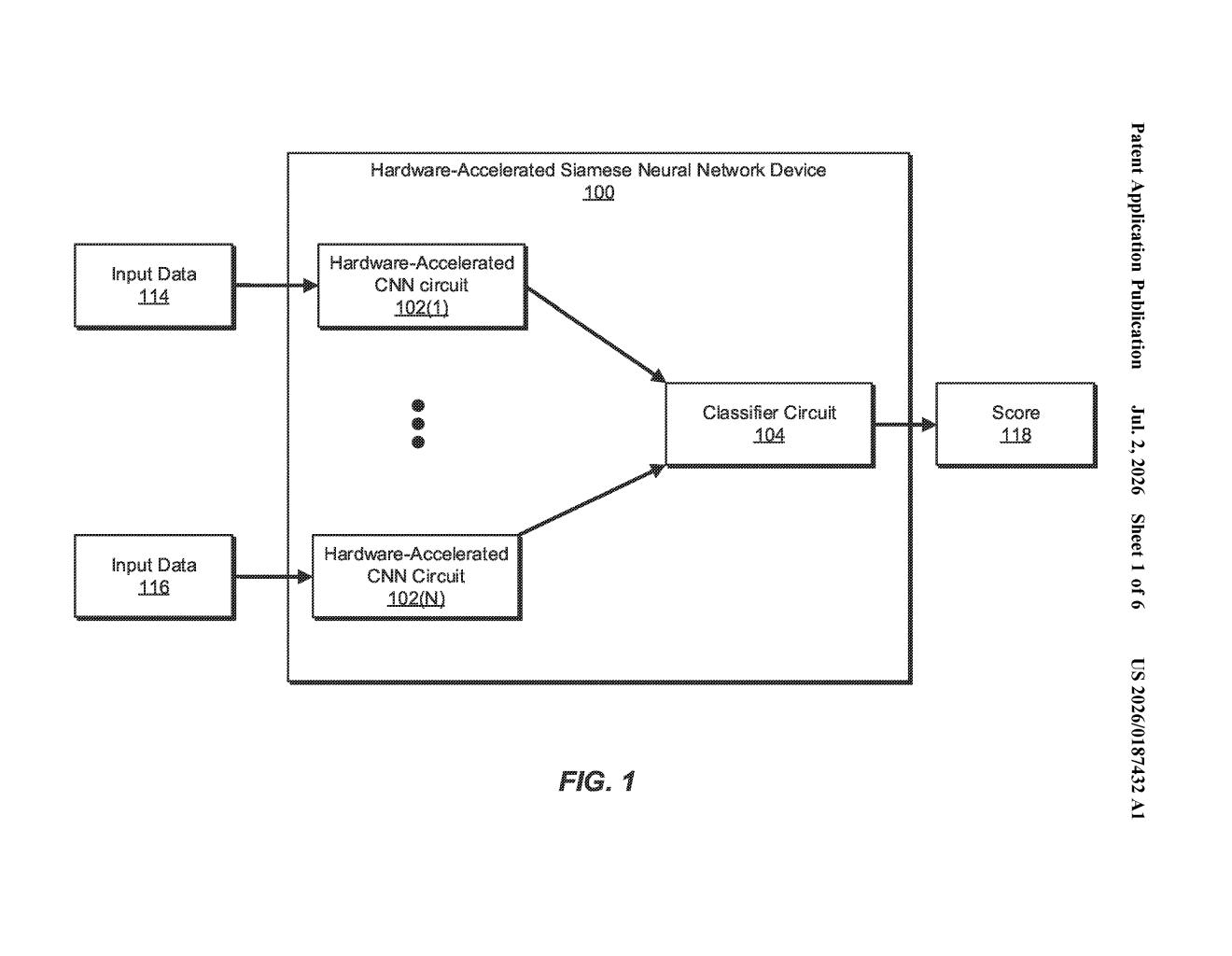
What AMD's side-by-side neural network chip actually does
Imagine you're trying to find out if two passport photos are the same person. Today, AI systems typically run one photo through a neural network, then the other, and compare the results afterward. That two-step process adds time and complexity.
AMD's patent describes a chip that processes both photos at the same time, using two mirrored neural networks that share the exact same settings (called weights). Because both networks are in sync, the chip can make a direct, real-time comparison and spit out a score that says how similar the two inputs are.
The design is aimed at tasks where similarity comparison is the whole point: facial recognition, fingerprint matching, finding duplicate images, or even spotting fraud by comparing transaction patterns. Running it in dedicated hardware, rather than in software on a general-purpose chip, makes the whole process considerably faster.
How the systolic array processes both inputs at the same time
The patent centers on a siamese neural network (a type of AI architecture designed to compare two inputs by running them through identical, weight-sharing networks) built directly into silicon.
The key hardware component is a systolic array (a grid of small processors that pass data through in a wave-like pattern, commonly used in AI accelerators like Google's TPU). AMD's design packs two convolutional neural network (CNN) circuits into this array, one for each input. The critical detail: both circuits apply the same weight to their respective inputs simultaneously, not sequentially. Weights are the learned numerical parameters that define what a neural network has figured out during training.
After both inputs have been processed in parallel, a classifier circuit takes the two resulting representations and produces a similarity score. That score tells you how alike the two original inputs are.
The design avoids the common workaround of running one input, storing the result, then running the second input. Instead:
- Both CNN circuits share weight memory, cutting hardware duplication
- Parallel execution means the comparison is done in roughly half the time
- The classifier is co-located on the same device, avoiding data round-trips
What this means for face recognition and AI search hardware
Siamese networks are the backbone of a wide range of real-world AI applications: face verification, signature authentication, medical image comparison, and content-based image search. Right now, most of these systems run on general-purpose GPUs or CPUs, which were not designed with the two-input comparison pattern in mind. Dedicated hardware that handles both inputs at once could make these systems faster and more power-efficient.
For AMD, this fits into a broader push to compete in the AI accelerator market, where Nvidia currently dominates. A chip optimized for similarity-matching tasks could find a home in data centers running identity verification, security cameras, or large-scale media indexing, places where your face, fingerprint, or file gets compared against millions of stored records in milliseconds.
This is a focused, practical hardware patent rather than a moonshot. Siamese networks are a well-understood AI technique, and AMD is essentially asking for protection on a specific implementation that bakes the two-network comparison pattern into a systolic array. That's genuinely useful work for anyone building identity or matching hardware, but the novelty here is in the silicon layout, not in any new AI idea.
Get our take in your Top Stories
Liked this breakdown? Add Patentlyze as a preferred source on Google, and our plain-English take shows up more often in your Top Stories the next time AMD patent news breaks.
There are more where this came from
We read every patent application Big Tech publishes and send you the ones worth knowing. Plain English, free, every week.
Want this weekly breakdown for a company we don't cover? Patentlyze Pro →