
AMD Patents a Two-Word Wake System That Won't Trigger Unless You're Actually Looking
Your smart speaker fires off when the TV says something that sounds like 'Hey [assistant]' — and AMD thinks it has a fix that goes beyond just adding a second wake word.
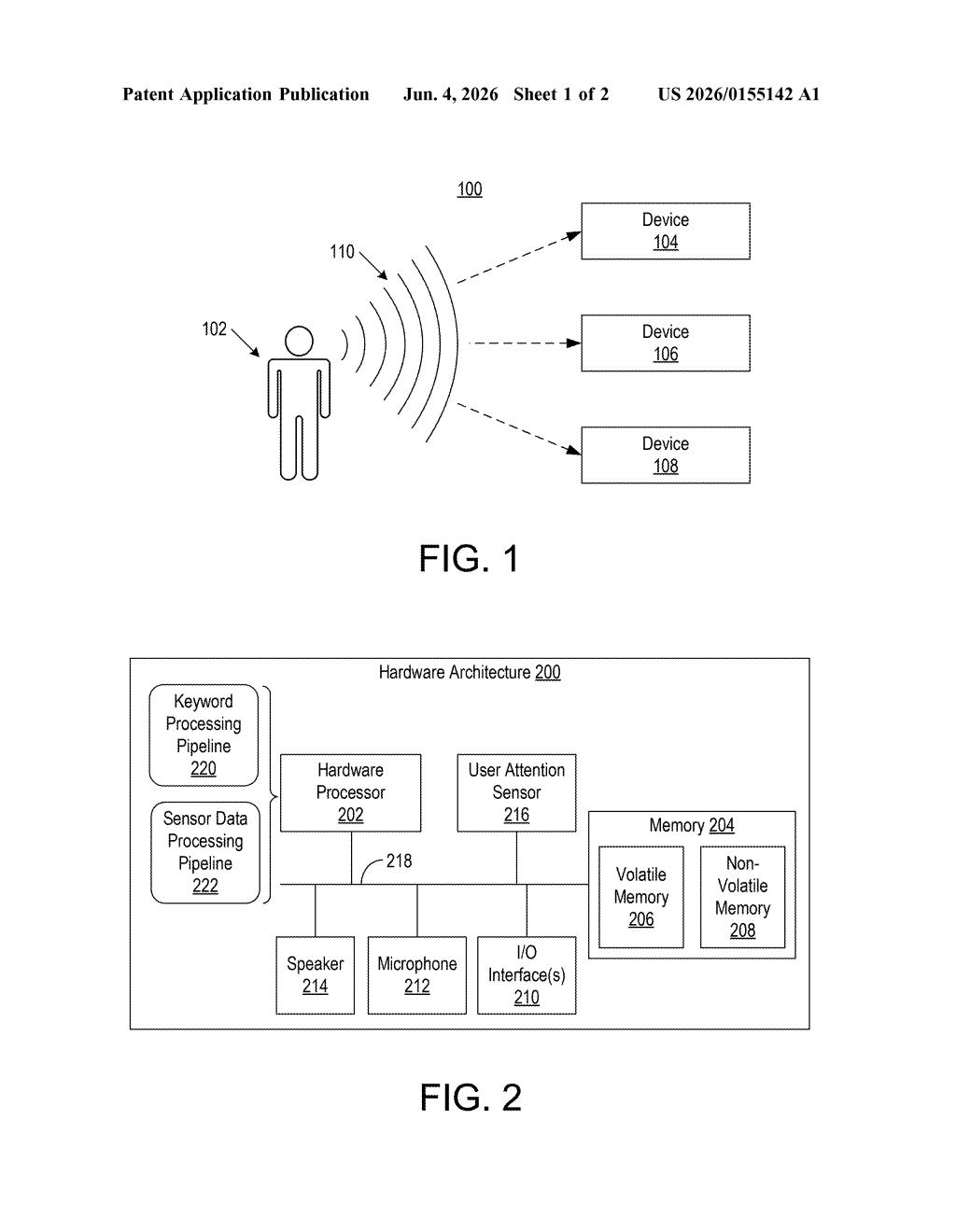
What AMD's two-step voice activation actually does
Imagine you're watching TV and the show's dialogue accidentally triggers your voice assistant. Frustrating, right? That kind of false positive is one of the most common complaints about always-on devices, and it's also a privacy concern — your device is listening and acting when you didn't intend it to.
AMD's patent describes a system that requires two things to happen before your device wakes up: you say a two-part keyword phrase (think: two distinct trigger words in sequence), and the device confirms you're actually paying attention to it — via a sensor that checks things like where your eyes or face are pointing.
So the TV can accidentally say the first word, but unless the device also sees you looking at it, nothing happens. Both conditions have to be true at the same time. It's a layered gate, not just a longer password.
How the keyword-plus-attention pipeline filters false triggers
The patent describes a multi-keyword activation pipeline that works in two sequential stages, with an added attention check layered on top.
- Stage 1: The hardware processor listens for a first keyword. When it hears it, instead of waking up immediately, it enters a heightened-monitoring state.
- Stage 2: The processor now listens for a second keyword and simultaneously watches sensor data from a user attention sensor — which could be a camera, proximity sensor, IR sensor, or eye-tracking hardware — for evidence that a human is directing attention at the device.
- Activation: Only when both the second keyword is detected and the attention signal is confirmed does the device initiate the requested operation.
The key design insight here is that the attention check runs in parallel with the second-keyword detection rather than as a separate sequential step. This avoids adding noticeable latency to the user experience while still dramatically raising the bar for an accidental trigger.
The patent is filed under AMD's hardware processor umbrella, suggesting this is intended as a silicon-level feature — something baked into the chip rather than handled purely in software.
What this means for always-on voice assistants
False-positive wake events are a real problem — not just annoying, but a genuine privacy issue, since they can cause a device to record and transmit audio without the user intending it. A two-factor trigger (voice + attention) raises the bar significantly without requiring users to change their behavior much.
For AMD, this is interesting territory. The company is increasingly building AI-processing capabilities into its client chips (Ryzen AI, for instance), and always-on audio processing is a natural fit for low-power neural processing units. If AMD ships this in consumer silicon, it could become a differentiating spec for laptops and edge devices competing on privacy and accuracy — areas where Intel and Qualcomm are also actively filing.
This is a genuinely useful idea, not just a checkbox patent. The combination of sequential keywords plus an out-of-band attention signal is a clean engineering solution to a problem that has annoyed anyone who owns a voice-activated device. Whether AMD can get device makers to actually use it depends on hardware integration — you need that attention sensor to exist — but the concept is solid and well-scoped.
There are more where this came from
We read every patent application Big Tech publishes and send you the ones worth knowing. Plain English, free, every week.
Want this weekly breakdown for a company we don't cover? Patentlyze Pro →