
AMD Patents Technology That Keeps Its Chips Working Without Waiting for Instructions
Most AI chips sit around waiting for a CPU to tell them what to do next. AMD's new patent flips that relationship, letting the accelerator chip figure out for itself when a task is ready to run.
How AMD's accelerator chip decides its own workload
Imagine a busy kitchen where the head chef (a computer's main processor) has to personally hand every single ingredient to each cook on the line, one at a time, even when some cooks are standing idle. That's roughly how most AI chips work today, and it creates bottlenecks.
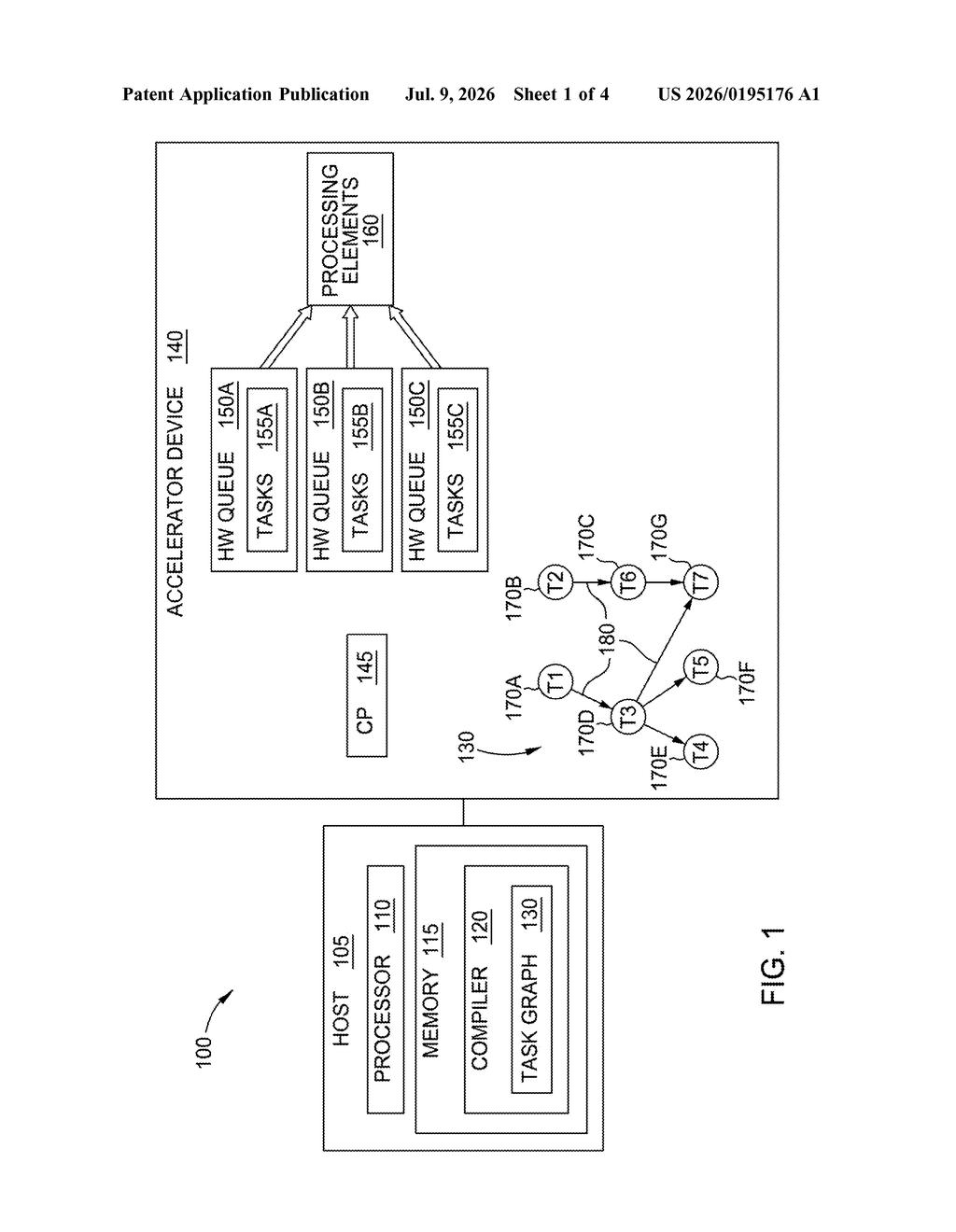
AMD's patent describes a different setup. Instead of the main processor constantly pushing tasks onto the chip, a small dedicated brain inside the accelerator chip watches a list of tasks and their dependencies, and only sends a task to a processing unit when all the prep work it needs is already done.
The result is that the chip stops waiting on the CPU to babysit the work queue. The accelerator can keep its processing units busy on its own terms, which is especially useful for the complex, chained computations that show up in AI workloads and graphics rendering.
How the on-chip command processor resolves dependencies
The patent describes what AMD calls a pull-based dispatch model for accelerator chips (like GPUs or dedicated AI processors). Today, most chips use a push-based model: the host CPU shoves tasks into the chip's work queues and has to keep track of which tasks depend on which other tasks completing first.
AMD's design moves that bookkeeping onto the chip itself. A dedicated block of circuitry called the command processor (CP) lives inside the accelerator and receives a graph of tasks along with their data dependencies (essentially a map of "Task B can't start until Task A finishes"). The CP watches the state of those dependencies and only places a task into a hardware queue once every prerequisite has been resolved.
The key components are:
- Processing elements: the actual compute units doing the math
- Hardware queues: holding areas for tasks that are cleared and ready to run
- Command processor: the on-chip scheduler that manages dependency tracking and dispatch
Because the compiler (the software tool that translates code into chip instructions) encodes the dependency graph upfront, the hardware doesn't have to figure it out at runtime. The CP just follows the map.
What this means for GPU and AI chip efficiency
The main practical benefit is keeping a chip's processing units busy. When a CPU has to manage task dependencies from the outside, any delay in that communication, even a tiny one, can leave parts of the accelerator sitting idle. Moving that logic onto the chip cuts out the round-trip and lets the accelerator run more continuously.
For AMD, this is relevant across its GPU lineup and its growing family of AI accelerators competing with Nvidia. AI workloads in particular are full of chained operations where one layer's output feeds the next, so smarter on-chip scheduling can directly translate into faster inference and training times. This is the kind of low-level infrastructure work that rarely makes headlines but determines which chips win benchmark comparisons.
This is a solid piece of chip architecture work, not a headline grabber. The push-to-pull dispatch concept is well understood in academic literature, so AMD's job here is mostly showing they've implemented it in silicon with compiler support. The patent's real value is in the details of how the command processor handles dependency resolution, which could meaningfully improve throughput on AI workloads if it ships in a future Instinct or RDNA product.
Get our take in your Top Stories
Liked this breakdown? Add Patentlyze as a preferred source on Google, and our plain-English take shows up more often in your Top Stories the next time AMD patent news breaks.
There are more where this came from
We read every patent application Big Tech publishes and send you the ones worth knowing. Plain English, free, every week.
Want this weekly breakdown for a company we don't cover? Patentlyze Pro →