
Microsoft Patents a Layered Capacitance Sensor for Body-Proximity Antenna Detection
Microsoft is quietly working on a way for devices to sense when your hand is near their antenna — and automatically adjust transmit power before your body absorbs too much radio energy.
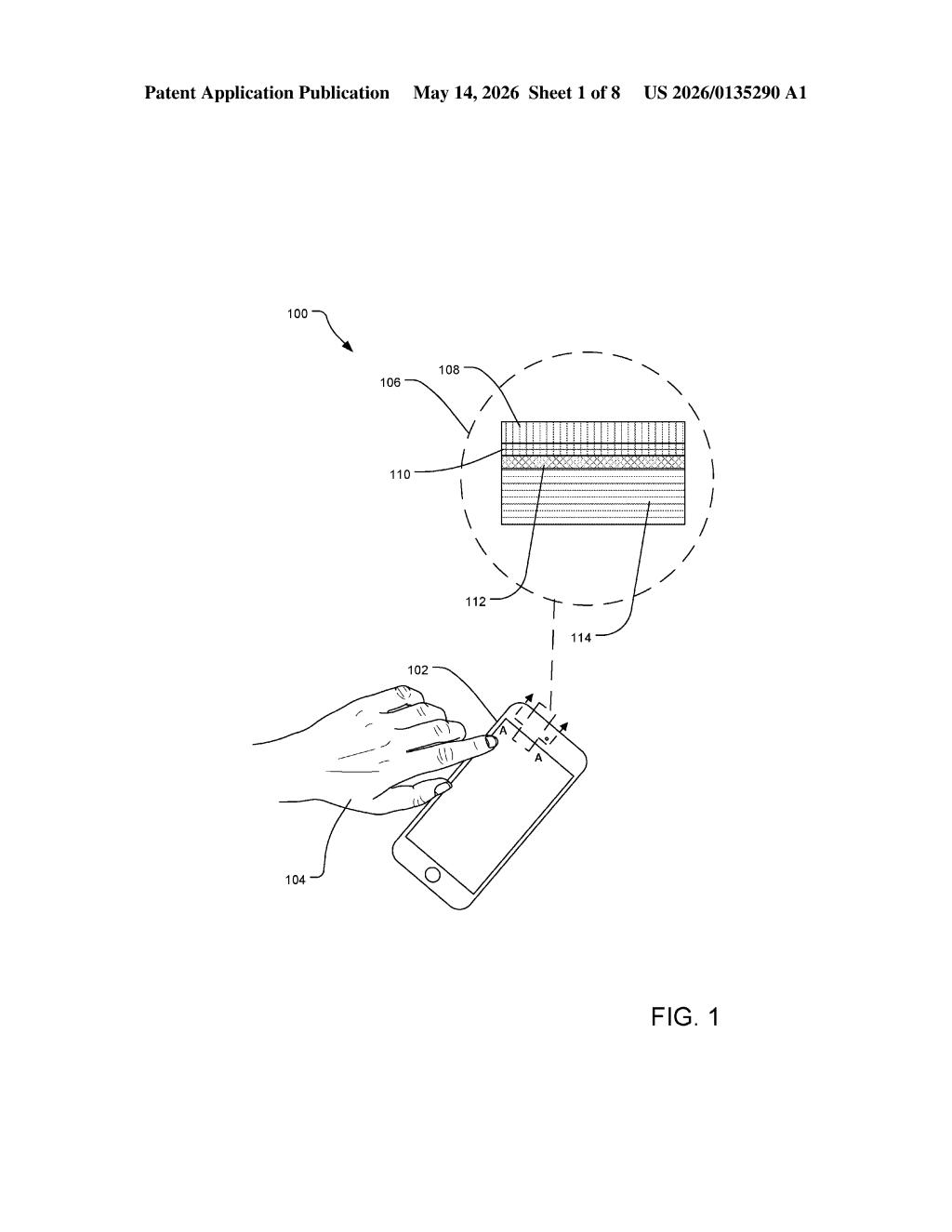
What Microsoft's proximity-sensing antenna stack actually does
Imagine your phone's antenna blasting full-power radio signals right when your hand is cupped around it. That's actually a real problem — regulators require devices to limit how much radio energy gets absorbed by the human body, a measure called SAR (Specific Absorption Rate). The closer your hand is to the antenna, the worse it gets.
Microsoft's patent describes a clever sandwich of layers built into a device's cover glass. A resistive element — a thin strip of material more conductive than plain glass — sits just under the surface. When your hand or any conductive object gets close, it subtly changes the electrical field in a measurable way, letting the device know something is nearby. That's capacitive coupling: no physical contact needed.
Under that sits a dielectric gap layer — essentially an electrical buffer — that keeps the proximity sensor from interfering with the antenna below it. The whole thing works together so the device can detect "hand nearby" and dial back its antenna power accordingly, keeping you within safe exposure limits without killing your signal.
How the resistive layer capacitively couples with your hand
The patent describes a three-layer stack integrated into a device housing or cover:
- Cover layer: Contains the cover glass and a resistive element — a material more electrically conductive than glass (think indium tin oxide or a similar thin-film conductor) that acts as the proximity sensor.
- Dielectric gap layer: A middle layer of electrically insulating material that separates the sensor from the antenna. This prevents the resistive element from shorting or loading the antenna, which would wreck its RF performance.
- Antenna layer: The actual RF antenna responsible for transmitting signals — for cellular, Wi-Fi, or other wireless protocols.
The detection mechanism relies on capacitive coupling — the same principle your touchscreen uses. When a conductive object (like a human hand) enters proximity of the resistive element, it changes the capacitance measurably, even without touching the surface. The system reads that change as a proximity event.
The dielectric gap layer is the key engineering insight here. Without it, placing a conductive sensing element directly above an antenna would detune the antenna or cause cross-interference. The insulating gap maintains the antenna's designed impedance while still allowing the proximity signal to register above it.
What this means for SAR limits and wireless device design
Regulatory bodies like the FCC require consumer devices to meet strict SAR limits — the rate at which body tissue absorbs radio frequency energy. Devices often have to back off transmit power in certain configurations to stay compliant, which can hurt signal quality. A real-time proximity sensor means a device could only back off when a hand is actually present, preserving full power the rest of the time.
For Microsoft's Surface tablets, laptops with built-in LTE/5G modems, or even HoloLens-style headsets worn close to the body, this kind of sensor is practical infrastructure — not flashy, but it directly affects how aggressively a device can transmit in real-world use. It's also a design problem that gets harder as 5G mmWave antennas multiply and shrink.
This is solid, unglamorous engineering — the kind of patent that quietly ships inside a Surface Pro with 5G and no one writes a headline about it. The layered approach to isolating a proximity sensor from the antenna it's protecting is genuinely clever, and the problem it solves (dynamic SAR management) is real and growing as more devices pack mmWave radios into tight enclosures. Worth a read if you care about RF hardware design.
There are more where this came from
We read every patent application Big Tech publishes and send you the ones worth knowing. Plain English, free, every week.
Want this weekly breakdown for a company we don't cover? Patentlyze Pro →