
Meta Patents a Multi-Wavelength Trick to Fix Holographic Display Speckle
Holographic displays look incredible in demos — until you notice the grainy, shimmering noise called speckle. Meta's latest patent tackles that problem head-on with a surprisingly elegant optical trick.
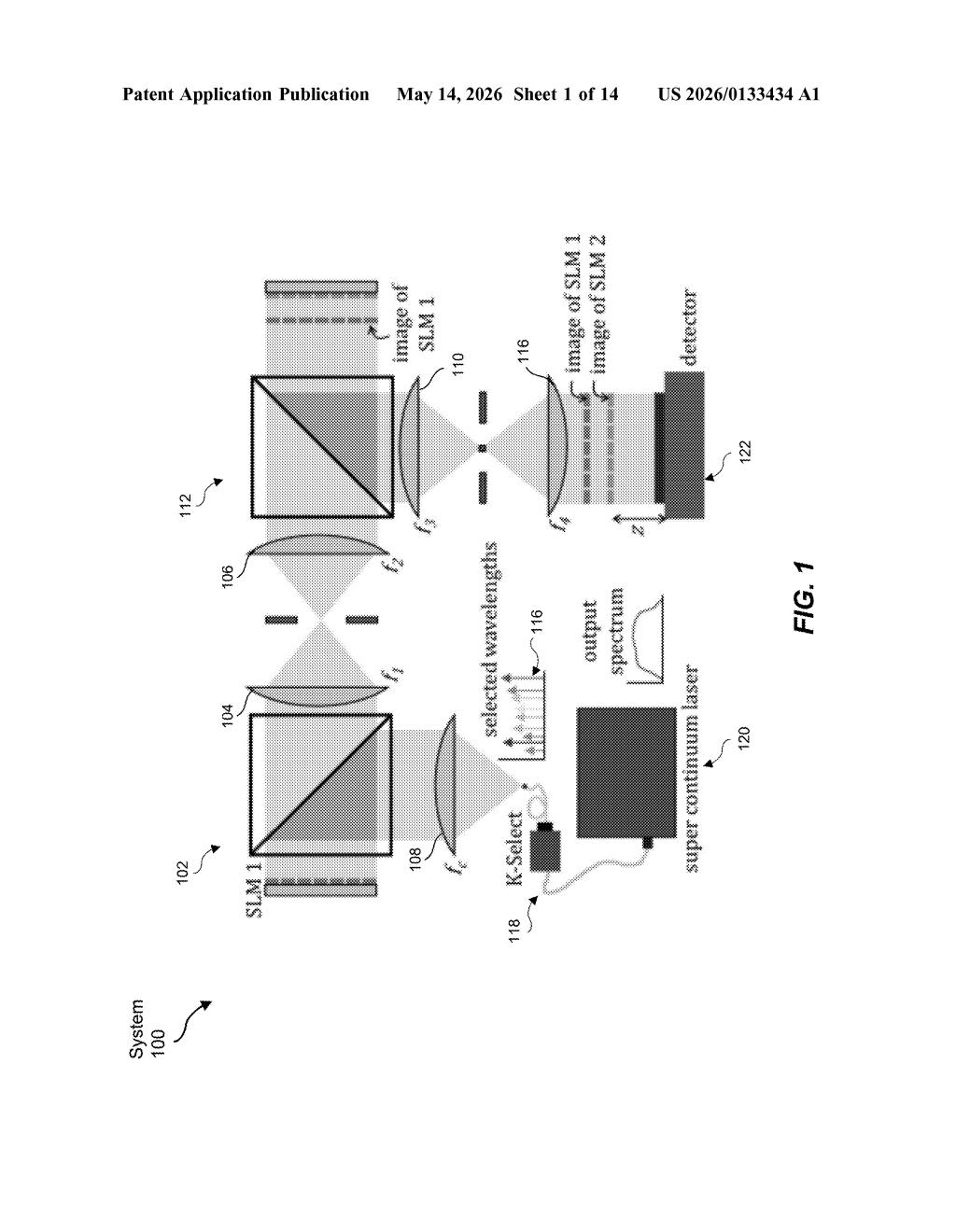
What Meta's laser-speckle fix actually does for AR displays
Imagine watching a hologram and instead of a crisp, clean image, you see a distracting sand-like graininess flickering across everything. That's speckle — a side effect of using coherent laser light to create holograms. It's one of the biggest unsolved annoyances in making holographic AR glasses actually pleasant to wear.
Meta's patent describes a system that fights speckle by using multiple laser wavelengths at the same time. Instead of one tightly-tuned laser, the display fires several slightly different shades of, say, red simultaneously. Because each wavelength creates its own unique speckle pattern — and those patterns don't line up with each other — they blend together and cancel much of the noise out.
The clever part is that the system doesn't just throw wavelengths at the problem randomly. It computes custom display patterns for each wavelength specifically designed to decorrelate the speckle. Your eye then sees the averaged-out result, which looks much smoother than any single wavelength could achieve on its own.
How Meta decorrelates speckle fields across discrete wavelengths
The patent covers a holographic display architecture built around four key pieces working in concert:
- Illumination subsystem: One or more emitters paired with wavelength-selection elements (think tunable filters or acousto-optic devices) that can produce several discrete wavelengths — all mutually incoherent, meaning their light waves don't interfere with each other in a correlated way.
- Modulation stage: A spatial light modulator (SLM) — essentially a programmable optical element that shapes the wavefront of the laser light to encode the holographic image.
- Display optics: Lenses and waveguides that direct the modulated light to the image plane where you're actually looking.
- Control circuitry: The brain of the system, which computes wavelength-aware modulation patterns — separate hologram calculations for each wavelength, each engineered so the resulting speckle fields are statistically decorrelated from one another.
The key timing detail: all selected wavelengths illuminate the SLM concurrently within a single integration interval (the window of time your eye or a camera integrates light). Because the wavelengths are mutually incoherent, their intensities incoherently sum at the image plane — they add up in power rather than amplitude, smoothing out the random noise. The patent explicitly targets integration into near-eye display systems, pointing squarely at AR/VR headsets.
What this means for the future of Meta's AR headsets
Speckle isn't just an aesthetic problem — it's a core barrier to making holographic waveguide displays comfortable for extended use. Any headset that uses laser-based holographic optics (which offer better depth cues and efficiency than LCD or OLED panels) has to solve this. Meta has been investing heavily in holographic near-eye displays through its Reality Labs division, and this patent represents a concrete architectural approach to one of the field's thorniest hardware challenges.
For you as a future AR headset wearer, this work matters because it's the kind of unglamorous optical engineering that determines whether a device feels like a consumer product or a research prototype. A speckle-free holographic display would be a significant step toward glasses you'd actually want to wear all day.
This is genuinely interesting foundational work, not a hand-wavy software patent. The combination of wavelength-aware hologram computation and simultaneous multi-wavelength illumination is a real engineering approach to a well-documented optical physics problem. Whether Meta ships this in a product anytime soon is another question, but the technical thinking here is solid and worth following.
There are more where this came from
We read every patent application Big Tech publishes and send you the ones worth knowing. Plain English, free, every week.
Want this weekly breakdown for a company we don't cover? Patentlyze Pro →