
Salesforce Patents a System That Keeps Product Info in Sync Across Every Platform
If you've ever seen a product listed at different prices or with different descriptions on two different websites, you've felt the problem Salesforce is trying to fix. This patent describes a system that keeps a single, authoritative copy of a product's information and automatically pushes changes everywhere at once.
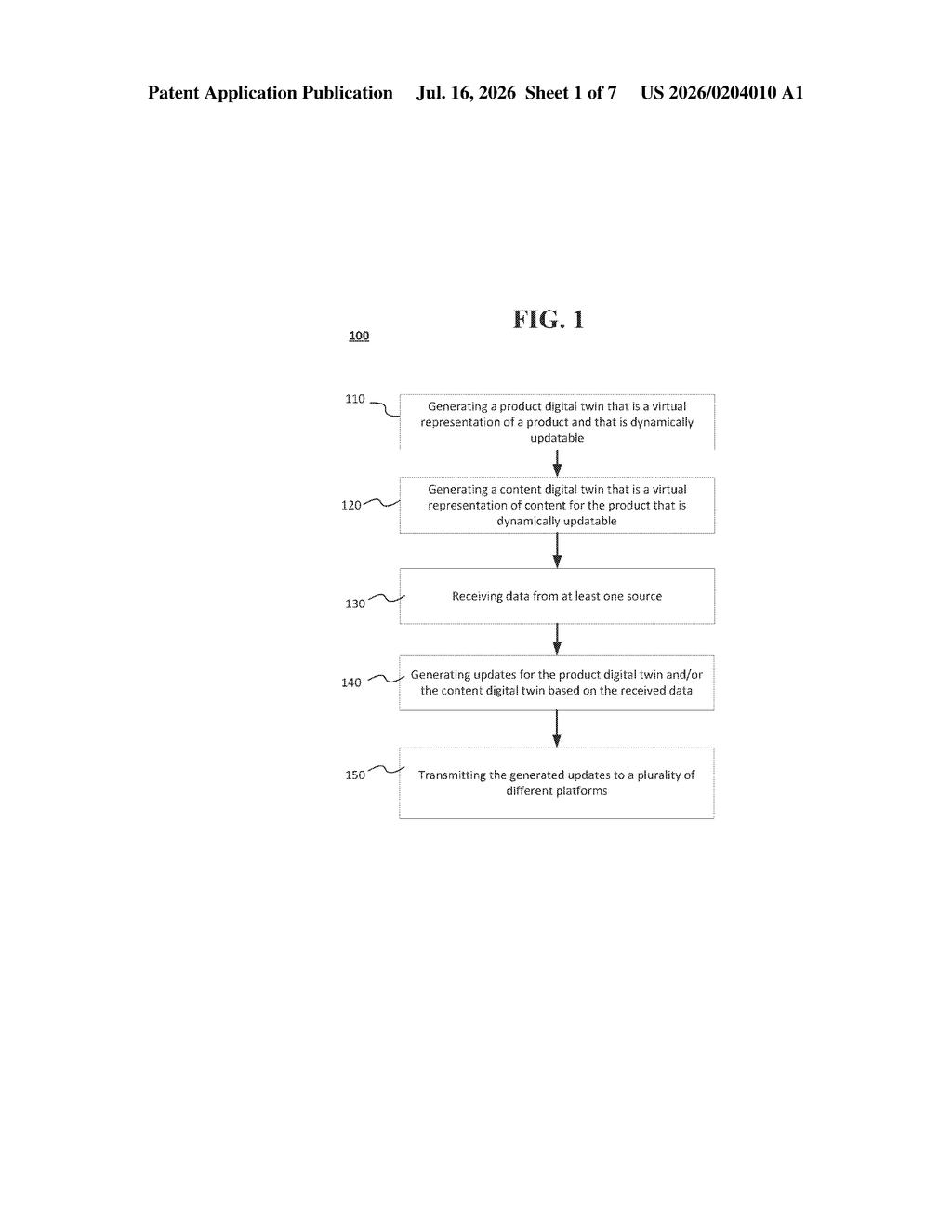
What Salesforce's product digital twin actually does
Imagine a shoe brand sells through its own website, Amazon, a mobile app, and a handful of retail partners. Every time the price changes or a new photo goes up, someone has to update each platform separately. Mistakes happen. Customers see conflicting information. It's a mess.
Salesforce's patent describes a way to fix that by creating what it calls a "digital twin" for each product: a single master record sitting on a server that holds everything about that product and its marketing content. When something changes, the server pushes that update to every connected platform at the same time, automatically.
Think of it like a Google Doc that every storefront is reading at once. Change the document, and every reader sees the new version immediately. You, as the shopper, would theoretically never encounter a stale description or an out-of-date price again.
How the twin system pushes updates across platforms
The patent defines two types of digital twins: a product digital twin (a virtual model of the product itself, covering things like price, specifications, and inventory status) and a content digital twin (a virtual model of the marketing material around that product, such as descriptions, images, and promotional copy).
Both twins live on a central server and are described as dynamically updatable, meaning they can change in real time as new data arrives. That data can come from multiple sources: an internal inventory system, a pricing engine, a marketing tool, or an external supplier feed.
- The server ingests incoming data from one or more connected sources.
- It generates updates to the relevant digital twin (product, content, or both).
- Those updates are then transmitted out to a plurality of different platforms, meaning any number of storefronts, apps, or partner sites connected to the system.
The key idea is that the twin acts as the single source of truth. Platforms don't maintain their own copies of the data; they pull from the twin. This eliminates the version drift that happens when each platform manages product information independently.
What this means for retailers and their customers
For brands and retailers, managing product data across dozens of channels is genuinely expensive and error-prone. A system that automates that synchronization could reduce the staff time spent on manual updates and cut down on the customer complaints that come from stale or wrong listings. Salesforce, whose platform already sits at the center of many companies' sales and marketing operations, would be in a natural position to offer this as part of its Commerce Cloud or marketing tools.
For you as a shopper, the practical benefit is simple: the price you see on one site would match the price you see everywhere else, and product details would stay accurate when stock runs low or specs change. It won't make headlines, but consistent product information is one of those quiet things that makes online shopping less frustrating.
This is a sensible, workmanlike patent from a company that already manages enormous amounts of business data. The 'digital twin' framing is trendy borrowed vocabulary from manufacturing and IoT, applied here to something much simpler: a sync engine for product catalogs. It's not exciting, but it addresses a real and widespread pain point for any brand selling across multiple channels, and Salesforce has the customer base to actually deploy this at scale.
There are more where this came from
We read every patent application Big Tech publishes and send you the ones worth knowing. Plain English, free, every week.
Want this weekly breakdown for a company we don't cover? Patentlyze Pro →
Be the first to weigh in