
Salesforce Patents a System for Building Screen Elements From a Single Master Design
Every major software platform eventually faces the same headache: the same button, form, or card looks different depending on where it's rendered. Salesforce is filing a patent for a system that tries to solve that by generating UI components from a single, standardized definition.
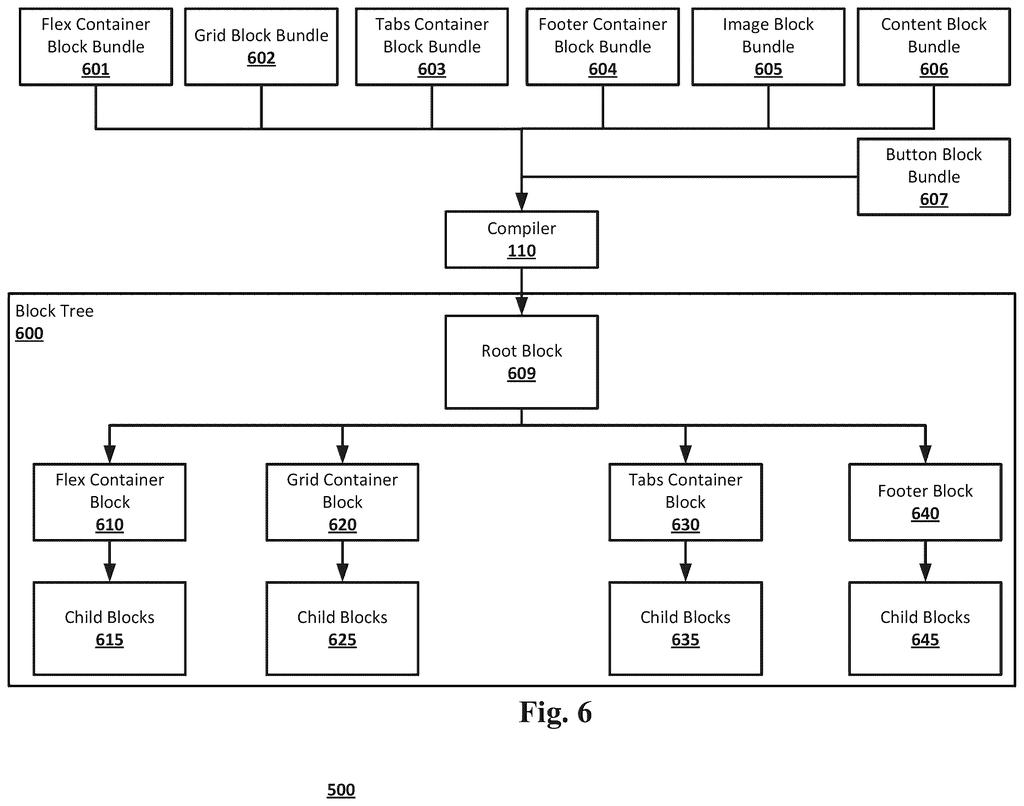
How Salesforce wants to standardize its UI building blocks
Every time a developer at a company using Salesforce adds a new button or input form to their app, that element has to work correctly inside email editors, web dashboards, mobile views, and more. Getting it looking and behaving consistently across all of those places is time-consuming and easy to get wrong.
Salesforce's patent describes a system that bundles everything needed to define a UI component, what it looks like, how it can be customized, and rules for checking it's valid, into one package. That package then gets processed automatically to produce a finished component that works wherever it needs to.
The idea is that instead of writing separate versions of the same element for each platform, a developer writes one definition and the system handles the translation. That means fewer inconsistencies and less manual back-and-forth between teams.
receiving a block bundle comprising a schema definition that defines a structure and properties for a user interface component, editor configurations comprising specifications of customizations of the user interface component, renditions comprising renderer-specific implementations of the user interface component, and validation rules; …
Translation: The system takes in a complete package that includes layout rules, design settings, platform specific code, and checks.
How the block bundle becomes a finished UI component
The patent describes a pipeline built around something it calls a block bundle: a self-contained package that includes four key pieces of information about a UI component.
- Schema definition: a blueprint that describes the component's structure and properties (think of it like a recipe listing all the ingredients and their types).
- Editor configurations: specs for how the component can be customized by whoever is building with it.
- Renditions: platform-specific versions of the component, because a calendar widget behaves differently in a web browser versus a mobile app.
- Validation rules: a checklist the finished component must pass before it's considered ready.
From the schema, the system generates an intermediate structure called a block tree (a hierarchical map of the component's parts and how they relate). It then runs that tree through renderers (software that handles the translation into platform-specific output) using the renditions supplied in the bundle.
Once transformed, the block tree is checked against the validation rules. If it passes, the system outputs the finished UI component. If it fails, the process catches errors before they reach users.
A block tree may be generated by performing transformations on the structure for the block tree using renderers and the renditions.
Translation: The system builds out the final user interface structure by applying specific rendering tools to the blueprint.
What this means for developers building on Salesforce
For developers building apps or workflows on Salesforce, this kind of system could mean significantly less time spent reconciling why a component looks broken in one view but fine in another. The validation step alone, catching problems automatically before deployment, addresses one of the more tedious parts of UI development.
For Salesforce as a platform, it also points toward tighter control over how third-party developers build on top of its tools. A standardized component format makes it easier for Salesforce to enforce quality and compatibility across its ecosystem, which matters as its product suite keeps expanding into new surfaces like AI-driven interfaces and embedded analytics.
This is the 86th Salesforce filing in our Salesforce coverage since May, extending a data-cleanup thread that includes duplicate company names and unified sales panels.
This patent describes plumbing: a standardized way to define, build, and validate the reusable buttons, forms, and widgets that make up Salesforce's software interfaces. Getting that plumbing right saves engineers from reinventing the same work on every new screen they ship.
From a ship-path view, this is pure software with no new hardware required and no outside partners needed. The shortest route to a product is an update to Salesforce's existing developer tools, which means it could roll out as an internal change that most users would never notice directly but would benefit from indirectly through fewer bugs and faster feature releases.
For anyone outside Salesforce's engineering teams, this filing sits at the useful-but-invisible end of the spectrum. The real proof will come in whether the validation layer catches real errors reliably once it hits production, and that verdict only arrives over time.
There are more where this came from
We read every patent application Big Tech publishes and send you the ones worth knowing. Plain English, free, every week.
The drawings
11 drawing sheets from US 2026/0277629 A1 · click any drawing to enlarge


Want this weekly breakdown for a company we don't cover? Patentlyze Pro →