
Samsung Patents a Display That Reorganizes Shared Info Screens Around Your Viewing Habits
When you share what's on your screen with another device, Samsung wants the accompanying info panels to reflect what you actually care about, not just a generic dump of data in a fixed order.
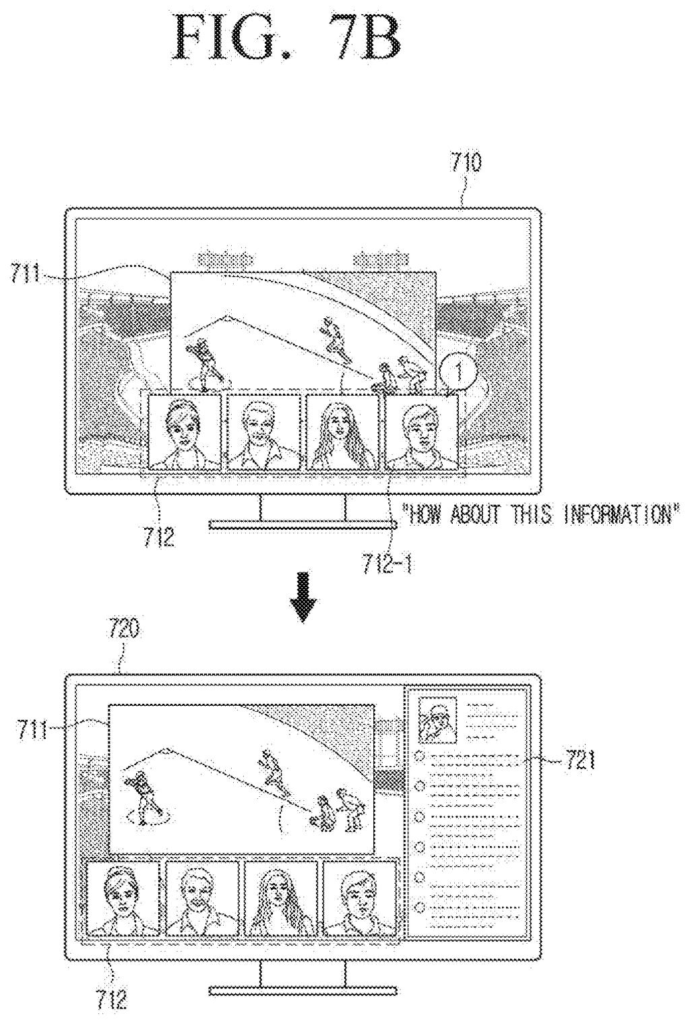
What Samsung's personalized sharing screen actually does
Imagine you're watching a movie on your Samsung TV and you cast it to a second screen in another room. Alongside the video, the TV also sends a panel of extra information: cast members, ratings, episode summaries, related titles. Right now, that panel looks the same for everyone.
Samsung's patent describes a system that watches which parts of those info panels you actually look at and interact with over time. Do you always check the cast list but ignore the synopsis? The device remembers that.
When a sharing event happens (say, you send the screen to a friend's TV or a phone), the device automatically rearranges the info panel to put your most-used details front and center before it sends anything over. The goal is that the shared view feels curated, not cluttered.
How the device picks and reorders the info panels
The patent describes an electronic apparatus, most likely a Samsung TV or streaming device, that manages two things at once: playing content while also displaying a UI screen with supplementary information panels alongside it, things like cast bios, ratings, descriptions, or related content.
The system tracks user history information for each type of panel element. That means it logs which pieces of additional information a specific user has engaged with across multiple sessions, building a preference profile over time.
When a preset event occurs (the patent's term for a trigger, such as a share action, a screen-cast command, or a sync with another device) the apparatus does the following:
- Pulls the current UI screen with all its info panels
- Consults the user history to rank or reorder the panels by relevance
- Produces a rearranged version of that UI screen
- Transmits the reordered screen to the external device
The external apparatus receives a version of the screen that has already been personalized, rather than a one-size-fits-all layout.
What this means for Samsung's screen-sharing ecosystem
For Samsung, this patent sits squarely inside its push to make its TV and device ecosystem feel more connected. Features like Multi View and Smart View already let Samsung screens talk to each other. Adding personalized info-panel sorting on top of that sharing layer would make the experience feel less like pushing a raw feed and more like your content recommendation following you from room to room.
For you as a viewer, the practical upside is small but real: less scrolling past information you never read when a shared screen pops up on a second device. Whether Samsung ships this as a standalone feature or folds it into a broader content-discovery overhaul remains to be seen, but the building block is now on record.
This is a tidy, incremental idea rather than a major architectural shift. The interesting part is not the personalization itself (Samsung already does plenty of that in its content recommendations) but the specific moment it targets: the handoff between devices. Applying user preferences at the sharing layer is a small but logical extension of Samsung's multi-device ambitions.
There are more where this came from
We read every patent application Big Tech publishes and send you the ones worth knowing. Plain English, free, every week.
The drawings
20 drawing sheets from US 2026/0214302 A1 · click any drawing to enlarge


Want this weekly breakdown for a company we don't cover? Patentlyze Pro →
Be the first to weigh in