
Sony Patent Would Identify Gamers Through Muscle Movement Signals Alone
Forget typing in a password or scanning your face. Sony is exploring a game controller that knows who you are just by reading the tiny electrical signals your muscles produce when you move.
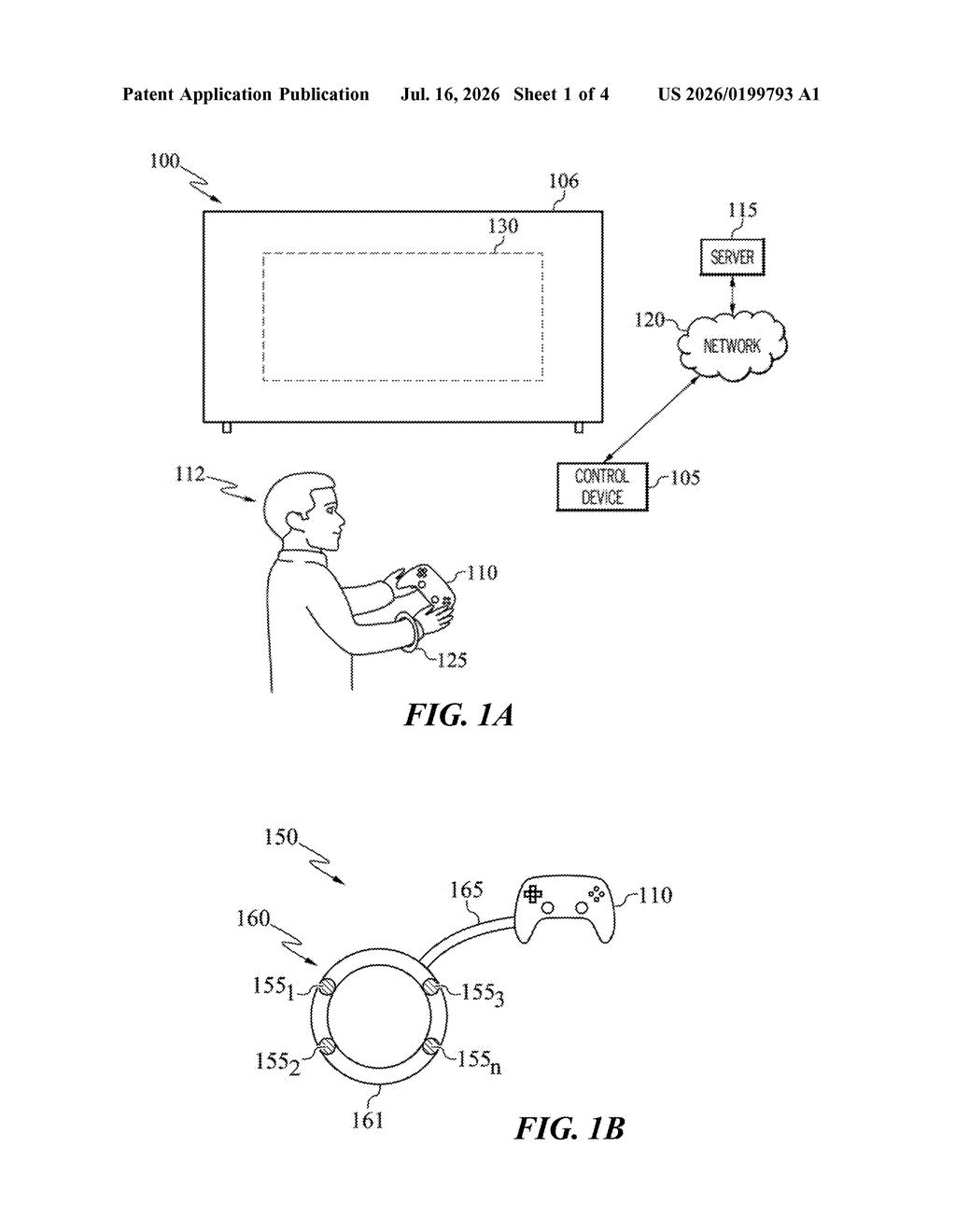
What Sony's muscle-reading controller actually does
Imagine picking up a PlayStation controller and having the console automatically load your saved games, your settings, your button layout, without you pressing a single button. That's the idea behind this Sony patent.
The system uses a sensor, possibly a wrist strap, that picks up electromyography (EMG) signals. EMG is the faint electrical activity your muscles generate every time they contract. The pattern of those signals is personal enough to your body that it can serve as a kind of biological fingerprint.
Once the system recognizes you specifically, it loads your player profile and adjusts the game accordingly. That could mean your preferred difficulty, your custom control remapping, or even personalized game content, all handed to you the moment you grip the controller.
How EMG signals become a player identity check
The patent describes a method where one or more EMG sensors (electromyography sensors, which detect the tiny electrical impulses muscles produce when they fire) capture signals from the user's body, likely via a wrist strap worn during play.
Those raw signals are then run through a machine learning model trained to distinguish one person's muscle-movement patterns from another's. The model compares live EMG data against stored recordings tied to known user profiles. Because everyone's muscle activation patterns are subtly different, the system can make a confident identification without any manual login step.
Once a profile is identified, the game presentation updates automatically. The patent specifically mentions:
- Loading personalized game elements and features tied to that user's profile
- Comparing live EMG output to previously recorded EMG data for verification
- Using machine learning training pipelines to improve identification accuracy over time
The patent's scope covers both the identification process itself and the controller hardware configurations that would house or connect to these sensors.
What this means for PlayStation profiles and accessibility
For everyday players, the most immediate payoff is convenience. If you share a console with family members or roommates, the system could automatically switch to your profile the moment you pick up a controller or strap on a sensor, no menu navigation required. That kind of frictionless switching is something console makers have chased for years with mixed results.
There's also an accessibility angle worth watching. EMG sensing is already used in medical prosthetics to translate muscle intent into movement. A controller system built on the same technology could open the door to custom control schemes driven entirely by muscle gestures, which might benefit players with limited hand mobility. Sony hasn't said this is the direction, but the underlying technology points there.
This is a genuinely interesting patent because it combines two things Sony clearly cares about, controller innovation and platform identity, into one hardware concept. EMG-based biometrics are credible technology, not speculative, and the PlayStation ecosystem already has a strong incentive to auto-load profiles fast. Whether this shows up as a peripheral or a built-in feature, it's worth tracking.
There are more where this came from
We read every patent application Big Tech publishes and send you the ones worth knowing. Plain English, free, every week.
Want this weekly breakdown for a company we don't cover? Patentlyze Pro →