
Intel Patent Uses Fading Semantic Tags to Maintain Accurate Data Relevance
Intel is patenting a system that gives data a kind of memory, one that automatically lets old descriptions fade and new ones take over, like a running average of what a file or dataset actually represents right now.
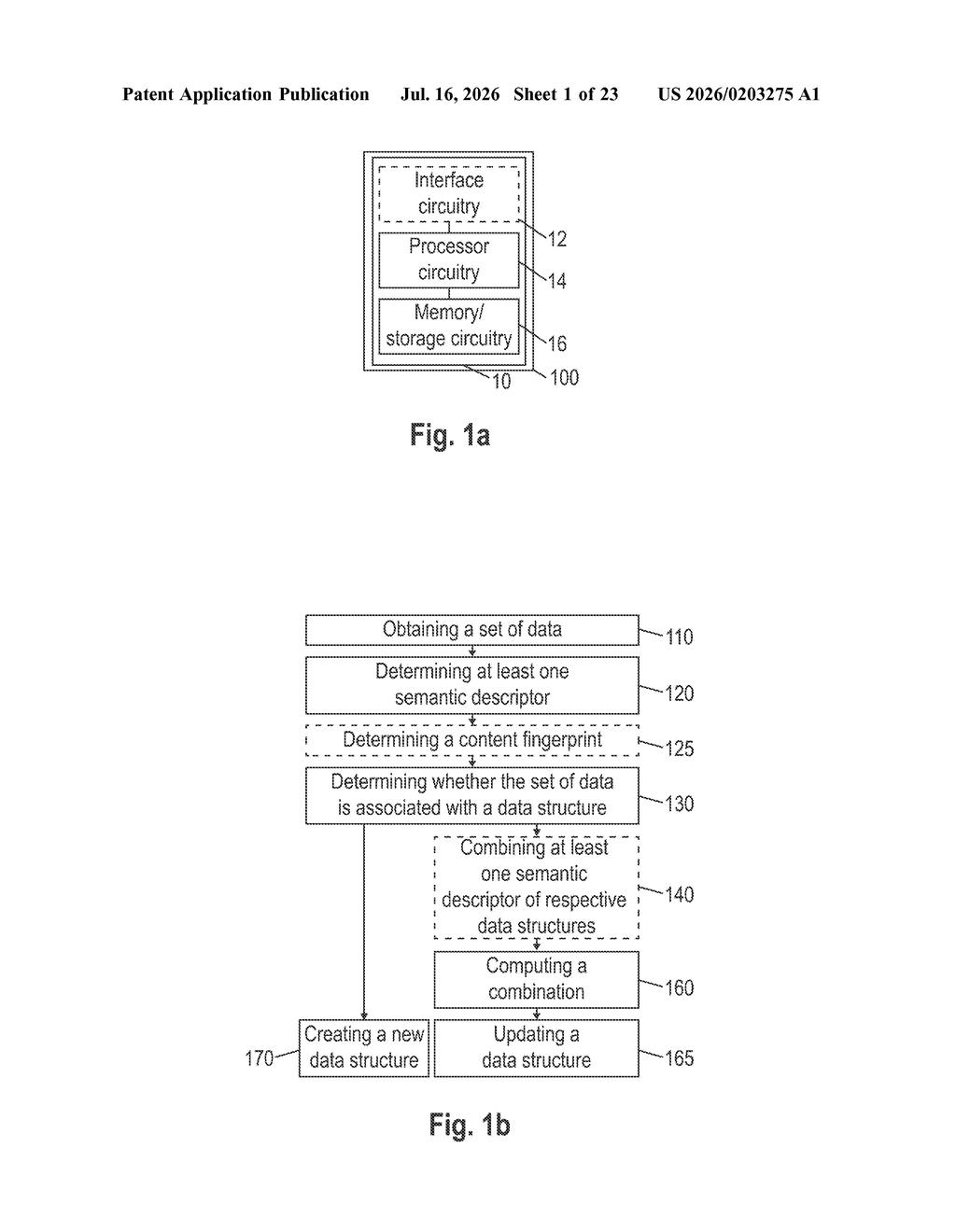
How Intel's fading data labels actually work
Imagine you have a folder of news articles. Early on, it's mostly about one topic. A few months later, the same folder fills up with articles about something completely different. Most tagging systems would slap a label on it once and call it done. Intel's patent describes a system that keeps updating the label as the contents change.
Every time the system looks at a set of data, it computes a fresh description of what that data is about right now. If that data has been seen before, the new description gets blended with the old one, but the old one is partially faded first. The older the previous description, the less weight it carries. The result is a living tag that drifts to reflect what the data currently looks like, not what it looked like months ago.
This kind of approach is useful anywhere data changes over time: search indexes, recommendation engines, or AI systems that need to understand whether a document or dataset has shifted topics. Think of it as a self-updating sticky note that slowly forgets what it used to say.
Inside Intel's decay-weighted semantic descriptor update loop
The system processes a set of data and computes what Intel calls a semantic descriptor, essentially a numerical fingerprint of what the data means or is about (similar to how an AI embedding captures the meaning of a sentence as a list of numbers).
It then checks whether a record already exists for that data. Two paths follow:
- No prior record: The system creates a new data structure and stores the fresh descriptor as-is.
- Prior record exists: The system takes the old descriptor and applies a decay function to it (reducing its weight, the way a running average lowers the influence of old readings). It then combines that decayed old descriptor with the new one and saves the blended result back.
The decay step is the key idea. Without it, you'd either overwrite old information entirely or let it sit forever unchanged. With decay, older meaning fades gracefully while fresh meaning accumulates. The math is similar to an exponential moving average, the same technique used in financial charts to smooth out noise while still tracking recent trends.
The patent is written broadly enough to cover any kind of data (files, databases, streams) and any kind of semantic descriptor, which means the technique could apply to text, images, or structured records.
What time-decaying data tags mean for AI and search systems
For AI and search systems, keeping descriptions of data current is a real problem. A product catalog, a user profile, or a document collection changes constantly, and systems that rely on stale embeddings or tags make worse decisions. Intel's approach offers a lightweight way to keep those descriptions fresh without throwing away useful historical signal entirely.
For you as a user, this kind of technology could mean recommendation systems that notice when your interests have shifted, or enterprise search tools that surface documents based on what they contain now, not what they contained when they were first indexed. It's an infrastructure-level idea, so you'd never see it directly, but it's the sort of thing that makes AI-powered tools feel less stuck in the past.
This is a quiet but sensible idea aimed squarely at a known weakness in how AI systems track changing data. The decay-and-blend mechanism is not exotic, exponential moving averages have been around for decades, but applying it systematically to semantic descriptors in a general-purpose data structure is a practical engineering move. Intel is clearly thinking about the plumbing that AI inference systems need, not just the models themselves.
Get our take in your Top Stories
Liked this breakdown? Add Patentlyze as a preferred source on Google, and our plain-English take shows up more often in your Top Stories the next time Intel patent news breaks.
There are more where this came from
We read every patent application Big Tech publishes and send you the ones worth knowing. Plain English, free, every week.
Want this weekly breakdown for a company we don't cover? Patentlyze Pro →