
Google Patent Splits How AI Networks Read and Write Their Own Memory
Most neural networks tangle their memory and their processing together. Google's new patent proposes keeping them separate, using a structured handoff system that reads, thinks, then writes at every step.
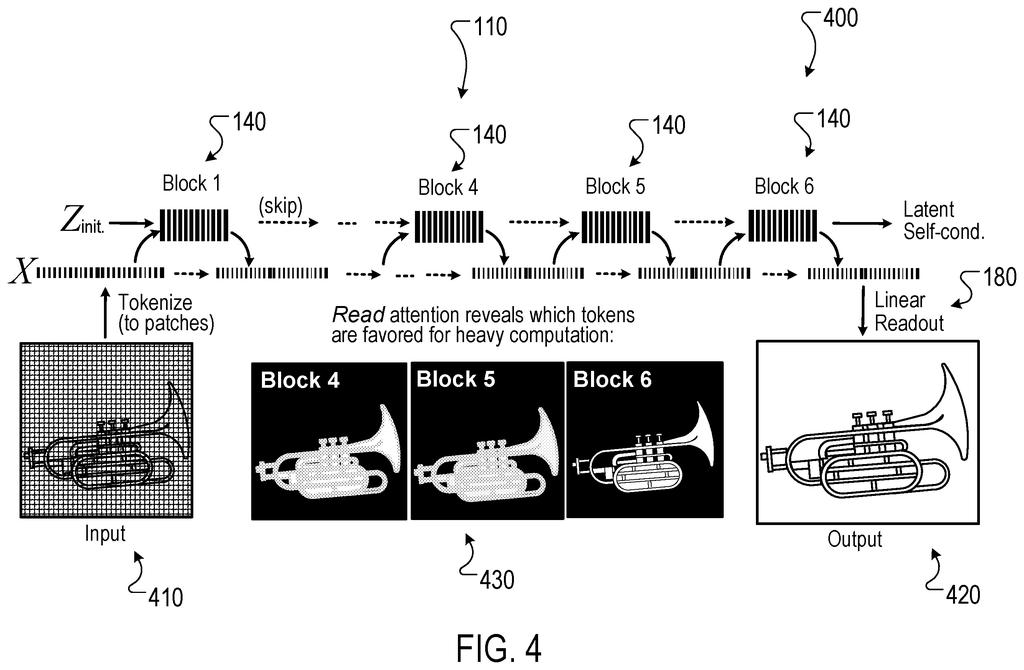
What Google's recurrent interface network actually does
Imagine a team where one person reads incoming messages, another does the thinking, and a third writes the reply, all in strict order. That's roughly the structure Google is patenting here for AI systems.
Right now, many AI models blend the job of remembering context with the job of processing new information, which can make them hard to scale or tune. Google's design separates those responsibilities into distinct stages: one part of the network reads from a shared memory space, another processes what it finds, and a third writes updated information back.
This pattern repeats at every step when the AI is working through a sequence, like frames of video or tokens in a conversation. The idea is that keeping those roles cleanly separated could make the system easier to improve and more efficient to run.
How the read-process-write cycle runs at each step
The patent describes a neural network architecture called a Recurrent Interface Network. At each point in a sequence (think: each video frame, each word, each sensor reading), the system runs through a fixed pipeline.
The pipeline maintains two pools of data:
- Interface vectors: the information that connects directly to the outside world, carrying the current input and eventually producing the output.
- Latent vectors: an internal scratchpad where the network does its deeper reasoning, invisible to the outside.
Each processing block in the network follows a strict three-step cycle. First, a read network pulls from the interface vectors to update the latent (internal) state. Then a process network works purely on those internal states, refining the reasoning without touching the outside signal. Finally, a write network pushes updated information back into the interface vectors.
After the full stack of blocks finishes, a readout network converts the final interface vectors into the actual output for that time step. The structured separation between what comes in, what gets computed internally, and what goes out is the core architectural claim here.
What this means for AI that processes sequences over time
For AI researchers, keeping the input-output pathway separated from internal computation is a long-standing design goal. When those layers are disentangled, it becomes easier to scale the internal processing (add more latent capacity) without touching the parts that interface with data. That could lower the cost of training large models that work on video, audio, or any data that unfolds over time.
For users, the downstream effect would be AI systems that handle longer sequences more efficiently, whether that's a video understanding model, a real-time speech system, or a multi-step reasoning agent. This is foundational architecture work, so don't expect to see 'Recurrent Interface Networks' written on a product box. But this kind of structural improvement is what makes the next generation of Google AI products faster and cheaper to run.
This is a serious architecture patent, not a flashy product announcement. The clean separation of read, process, and write operations is a genuine structural idea with roots in decades of memory-augmented network research. Whether it proves superior to transformer-style attention in practice is an empirical question, but Google filing this with three researchers who have strong publication records (Ting Chen co-authored SimCLR, among other notable work) suggests it's backed by real experimentation, not just a defensive filing.
There are more where this came from
We read every patent application Big Tech publishes and send you the ones worth knowing. Plain English, free, every week.
The drawings
5 drawing sheets from US 2026/0220424 A1 · click any drawing to enlarge


Want this weekly breakdown for a company we don't cover? Patentlyze Pro →
Be the first to weigh in