
New Patent Cuts Math Load on AI Models Running on Your Device
Running a trained AI model is cheaper than training one, but 'cheaper' is relative. Intel's latest patent describes a way to shrink the numbers inside a deployed model so it computes faster and uses less memory, without meaningfully degrading what it actually outputs.
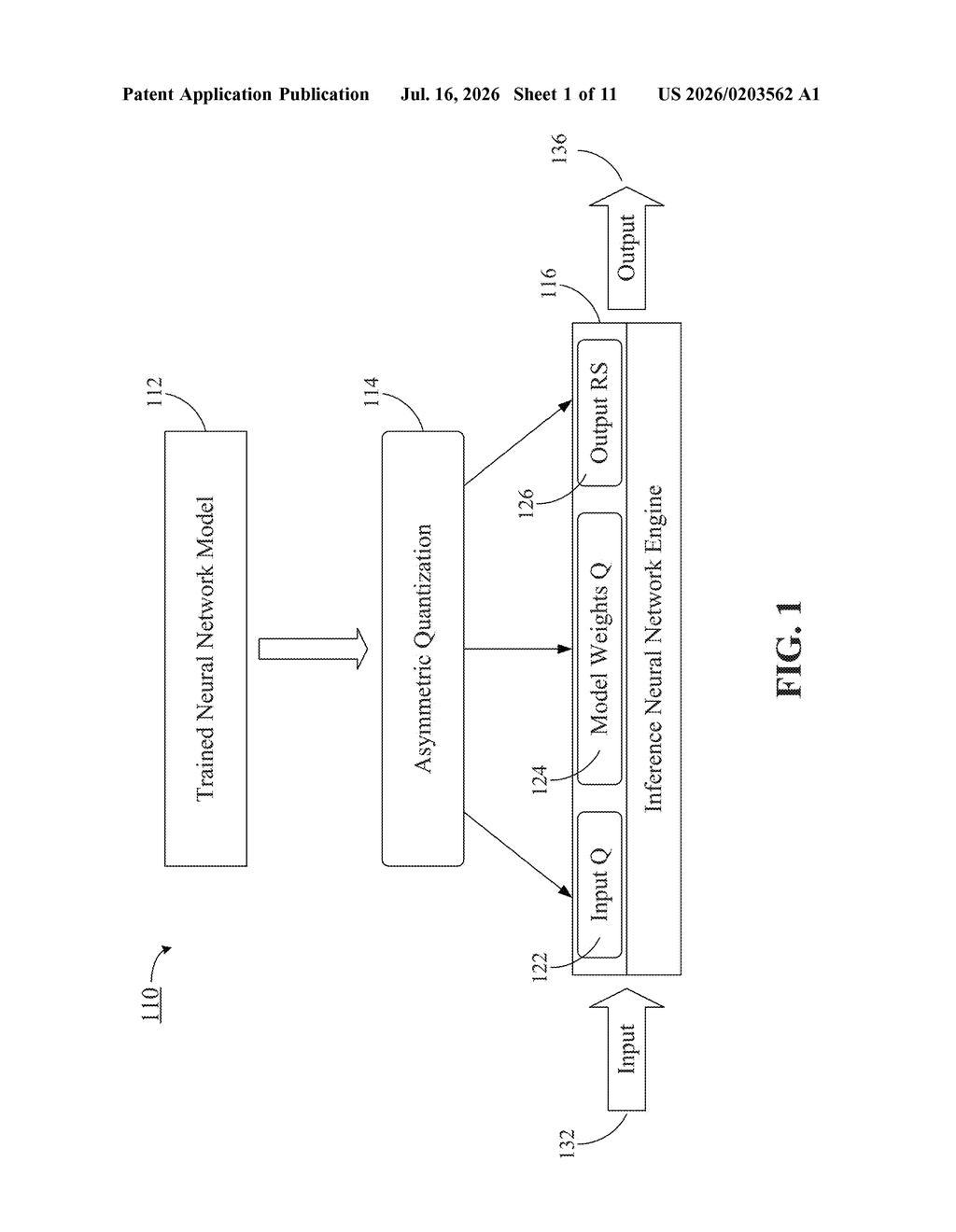
How Intel trims AI math without losing accuracy
Imagine a calculator that normally uses 64-digit numbers but could get the same answer using 8-digit numbers if you set it up carefully. That's roughly what Intel is doing here with AI models. After a neural network is trained, this system compresses the numbers it works with internally, making the model faster and lighter to run.
The tricky part is that not all numbers in a neural network behave the same way. Some values, like learned weights inside the model, can go negative. Others, like raw pixel values coming in from the outside world, are always positive. Intel's patent describes a way to use a different number format for each type, plus a lookup table to correct for any distortion that compression introduces.
On top of that, the system can automatically find the right level of compression for each part of the model, trading off speed against accuracy layer by layer. The goal is an AI model that runs well on real hardware without a human engineer babysitting every setting.
Inside Intel's asymmetric quantization and auto-tuning system
This patent describes a three-part optimization pipeline for inference models (AI models that are already trained and being used to make predictions, as opposed to models still in training).
- Asymmetric quantization: The system stores the model's internal learned values (weights) as signed integers (numbers that can be positive or negative), while input data from the outside world is stored as unsigned integers (positive only). Using the right format for each type of number avoids wasting bits and lets the hardware work more efficiently.
- Weights accumulation table: Compressing numbers introduces small errors. Intel's approach pre-computes a correction table based on the compressed weights and the size of the computation window (kernel size), then uses that table to restore accurate outputs without re-doing expensive math at runtime.
- Per-input-channel quantization: Rather than applying one compression setting to an entire layer of the network, the system can tune compression individually for each data channel, preserving more precision where the model is sensitive to it.
- Mixed-precision auto-tuning: An automated search picks different numerical precision levels for different parts of the network, balancing speed and accuracy without manual configuration.
The combination targets the gap between a model's theoretical performance and what actually runs efficiently on Intel's CPUs and accelerators in production environments.
What this means for AI running on Intel hardware
Most AI cost discussions focus on training, but inference, running a finished model millions of times a day on real traffic, is where the electricity bill and latency actually live. If Intel can make deployed models run faster on its own chips without accuracy loss, that's a direct argument for choosing Intel hardware over competitors when companies are buying servers for AI workloads.
For end users, the downstream effect could be faster responses from AI-powered services and lower costs passed along from cloud providers. The auto-tuning angle is particularly practical: right now, squeezing a model into lower precision often requires specialized engineers. Automating that step lowers the bar for any company deploying AI at scale on Intel silicon.
This is solid, unglamorous infrastructure work. Quantization optimization is a well-established field, and Intel is not the first to combine asymmetric formats with automated precision search. But the specific combination of a pre-computed correction table plus per-channel tuning is a real engineering refinement, and it signals that Intel is serious about making its hardware a competitive choice for AI inference in data centers.
Get our take in your Top Stories
Liked this breakdown? Add Patentlyze as a preferred source on Google, and our plain-English take shows up more often in your Top Stories the next time Intel patent news breaks.
There are more where this came from
We read every patent application Big Tech publishes and send you the ones worth knowing. Plain English, free, every week.
Want this weekly breakdown for a company we don't cover? Patentlyze Pro →