
AI Patent Predicts Which Readers Will Engage With Content
Microsoft is patenting an AI system that tries to predict, before anyone clicks anything, exactly which users are most likely to engage with a given piece of content. It does this by plotting both users and content as points in the same abstract mathematical space.
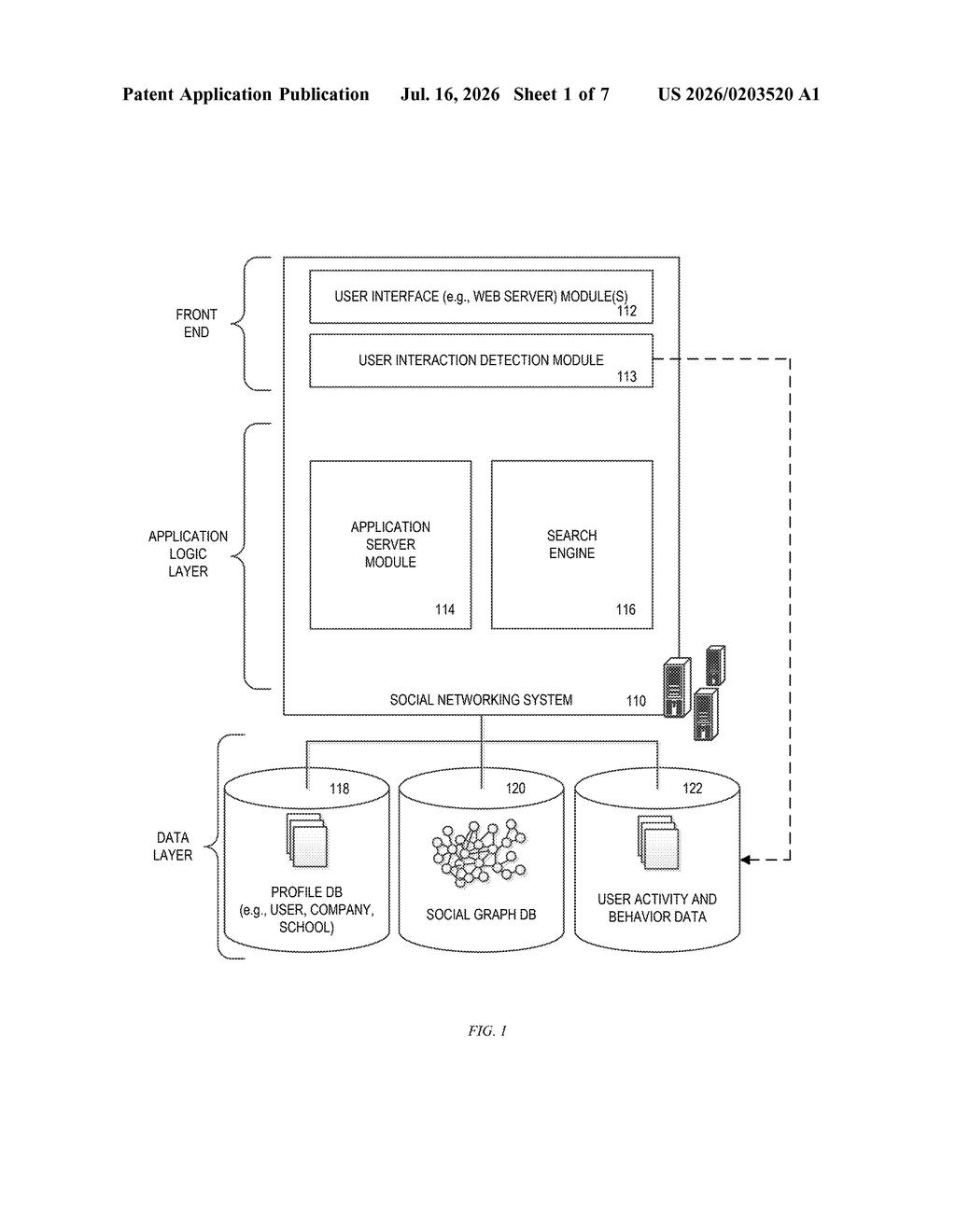
How Microsoft's audience-matching AI actually works
Imagine a library where, instead of organizing books by genre, someone placed every book and every reader on a giant map, and nearby locations meant 'this person and this book are a natural fit.' Microsoft's patent describes building exactly that kind of map, automatically, using AI.
The system takes information about a user (their interests, behavior, history) and a piece of content, then converts both into coordinates on the same invisible map. A second AI then fine-tunes those coordinates by learning from real engagement data, pulling users and content they liked closer together.
The result is a ranked list: for any given article, video, or post, the system can surface the specific users most likely to read, watch, or share it. That flips the usual recommendation logic. Instead of asking 'what should I show this user?', it asks 'who should I show this content to?'
Inside the two-tower network and shared embedding space
The system has two main stages working together.
Stage 1: Shared embedding generation. A large language model (LLM, the same category of AI that powers chatbots) reads a user profile and a piece of content separately, then converts each into a list of numbers called an embedding. Think of an embedding as a postal code for meaning: two things that are conceptually similar end up with similar codes. Critically, the user and the content are mapped into the same coordinate system, so their codes can be compared directly.
Stage 2: Two-tower fine-tuning. Those initial embeddings are fed into a two-tower deep neural network, one tower processing users, the other processing content. The towers are trained together against a shared goal (predicting whether a user will click, share, or comment), using historical interaction data. Over time, the network adjusts both sets of embeddings so the geometry reflects real-world engagement.
Stage 3: Cluster-based audience retrieval. Once the embeddings are trained, a k-nearest neighbor (kNN) search, which finds the closest points in space, identifies which users sit closest to a given piece of content. Those users become the recommended audience. The patent explicitly frames this as content-to-audience matching, not the traditional user-to-content recommendation.
What this means for content targeting and ad tech
Most recommendation systems ask 'what content fits this user?' Microsoft's patent flips the direction: 'which users fit this content?' That distinction matters enormously for content publishers, marketers, and ad platforms. If a brand publishes a new article or product page, this system could instantly identify the slice of an audience most likely to respond, without waiting for click data to accumulate.
The approach also leans on LLMs to do the heavy lifting upfront, which means it may require less hand-labeled training data than older matching methods. For Microsoft, which runs LinkedIn, MSN, and Microsoft Advertising, a better content-audience matching engine could improve engagement metrics across all three, and give advertisers sharper targeting without relying solely on behavioral tracking.
This is a real and practically useful patent, not a speculative moonshot. The two-tower architecture is a well-established pattern in recommendation research (Google has used it for YouTube), but layering an LLM as the initial embedding generator is a meaningful update that could give Microsoft an edge in cold-start situations where behavioral data is thin. The LinkedIn and Microsoft Advertising angles make it easy to see where this actually lands.
There are more where this came from
We read every patent application Big Tech publishes and send you the ones worth knowing. Plain English, free, every week.
Want this weekly breakdown for a company we don't cover? Patentlyze Pro →
Be the first to weigh in