
Sony Patents a Two-Camera 3D Scanning System That Corrects Its Own Positioning Errors
Building an accurate 3D digital copy of a real object is harder than it sounds. Sony's new patent describes a system where a second camera learns from a first camera's mistakes before it even starts scanning.
What Sony's two-camera 3D object scanning actually does
Imagine you're trying to make a perfect 3D digital copy of a sculpture or product for use in an app or game. You point a camera at it, but if the camera doesn't know exactly where it is in space, the resulting 3D model comes out warped or misaligned.
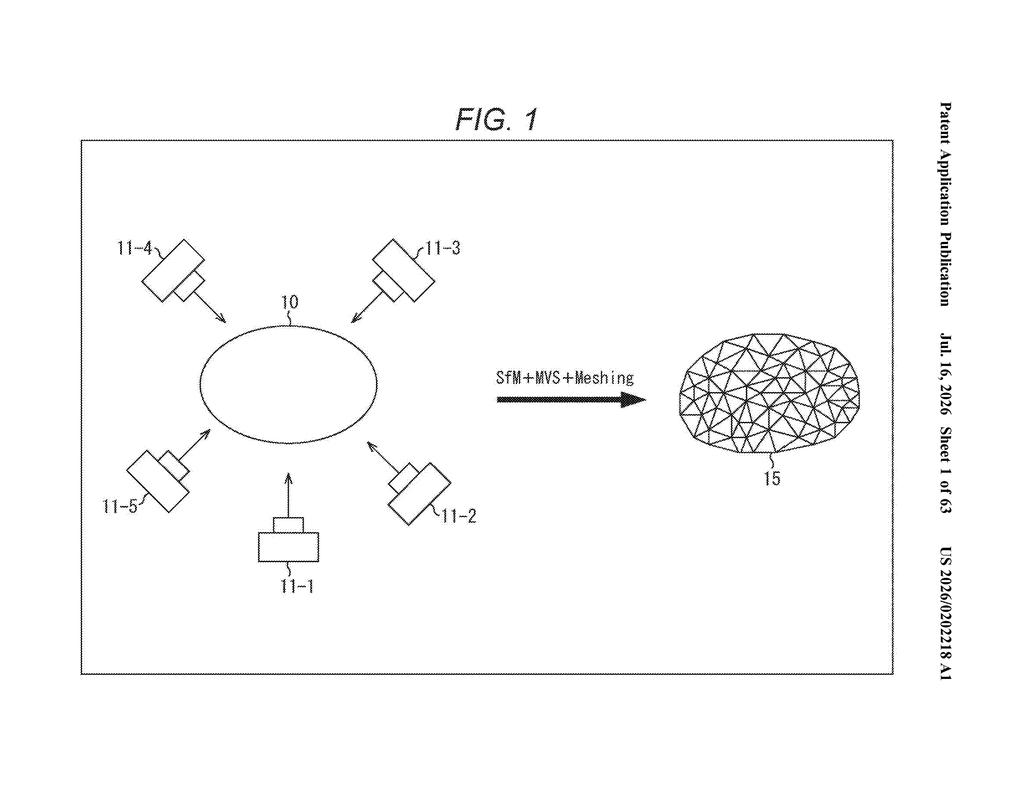
Sony's patent describes using two cameras working together. The first camera scans the object and, in doing so, figures out both the shape of the object and its own position in space. That information is then used to automatically correct the second camera's position before it takes its own scan, so the two captures line up cleanly.
The system can also guide the person doing the scanning, telling them where to point the second camera to fill in missing details. The result is a more complete and accurate 3D model without requiring the user to manually line anything up.
How Sony's system calibrates camera positions mid-scan
The patent describes an information processing device built around three main components working in sequence.
First, a 3D modeling unit takes the image from the first camera and does two things at once: it estimates the camera's position and orientation in space (called orientation information), and it builds a preliminary 3D shape model of the object being scanned.
Second, a calibration unit takes what the first camera learned about its own position and uses that as a reference to correct the second camera's position estimate. This is important because any small error in where a camera thinks it is translates directly into misaligned geometry in the final model.
Third, an imaging control unit takes the corrected position data and the first partial 3D model and uses them together to either:
- Automatically direct the second camera to capture the right angles
- Generate on-screen guidance telling a human operator where to point the second camera
The underlying approach is similar to photogrammetry systems used in professional film and product-design pipelines, but the patent focuses on making this work across two separate camera units with automatic error correction baked in.
What this means for 3D capture in consumer devices
Accurate 3D scanning today typically requires expensive dedicated hardware or careful manual setup. If Sony can make two-camera calibration work automatically, it opens the door to reliable 3D capture on consumer devices like phones, cameras, or AR headsets, where the user isn't expected to be an expert.
Sony makes cameras, PlayStation hardware, and professional imaging equipment, so this kind of technology could show up anywhere from a phone app for capturing objects in 3D to a professional scanning tool for film production. The guidance feature is particularly telling: it suggests Sony is thinking about everyday users, not just specialists.
This is solid, practical imaging engineering rather than a flashy concept. The idea of using one camera's self-localization data to calibrate a second camera is genuinely useful and addresses a real pain point in multi-camera 3D reconstruction. It's not a headline-grabbing filing, but it's the kind of foundational work that makes 3D capture usable outside a lab.
There are more where this came from
We read every patent application Big Tech publishes and send you the ones worth knowing. Plain English, free, every week.
Want this weekly breakdown for a company we don't cover? Patentlyze Pro →