
Qualcomm Patents a System for Streaming 3D Scenes That Shift With Where You're Standing
Imagine watching a live concert in VR and the audio and video automatically adjust based on exactly where you're standing in the virtual venue. That's the core idea behind Qualcomm's latest spatial media patent.
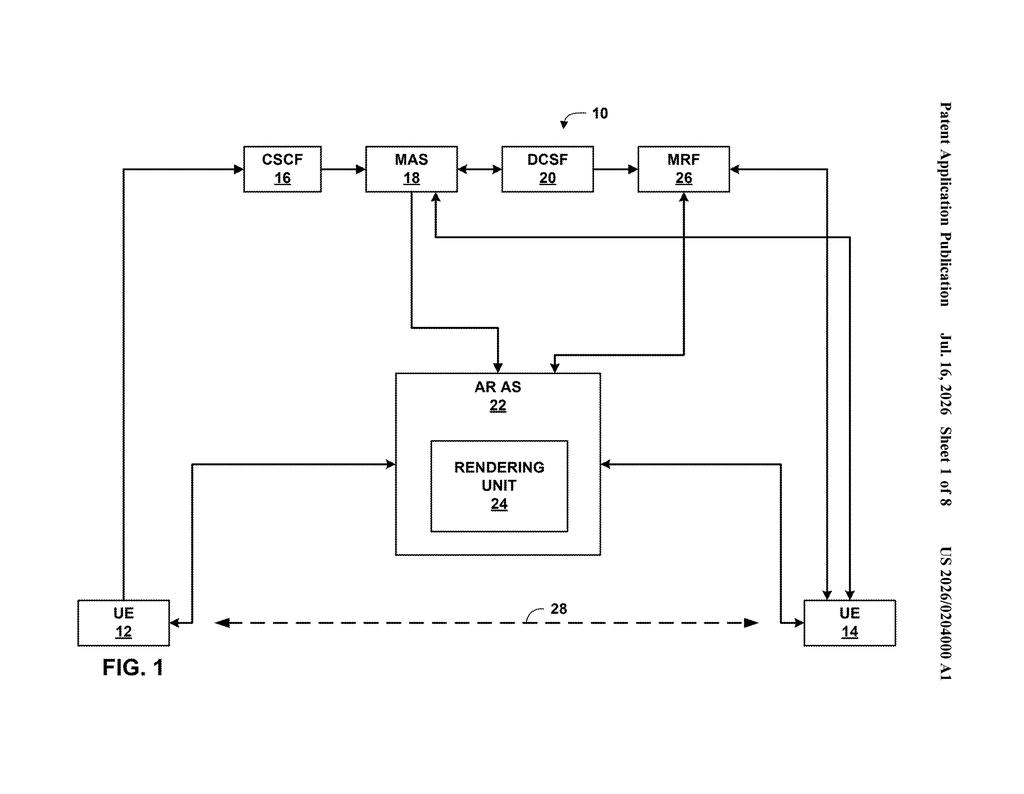
How Qualcomm's position-aware 3D streaming actually works
Think about how a regular video works: one picture, one audio track, delivered the same way to everyone watching. Now imagine a virtual reality experience where the sights and sounds are different depending on where you are standing inside the scene. If you move left, you hear the crowd from the left. If you're close to the stage, the view changes to match.
Qualcomm's patent describes a system for making that work efficiently. The idea is to package a 3D scene with multiple "channels" of spatial data, each representing a slightly different vantage point or audio perspective, along with a kind of instruction sheet called a scene description that tells the receiving device how all those pieces fit together.
When you put on a headset (or use whatever device is receiving the stream), the system checks your position inside the virtual scene and serves up only the channels that match where you are. You get a personalized slice of a much bigger spatial experience, without the sender having to transmit everything to everyone at once.
How the scene description groups and routes spatial channels
The patent describes a two-sided pipeline: a sender side that packages the media, and a receiver side that presents it.
On the sender side, the system takes spatial media data made up of two or more channels, where each channel contains data tied to a distinct position or angle in the scene (think of them as multiple camera or microphone feeds placed around a virtual space). The sender then generates a scene description, which is essentially a metadata wrapper that:
- Describes the geometry and layout of the virtual scene
- Groups the spatially distinct channels together so they are understood as parts of a whole
- Records the characteristics of each channel, such as its position, angle, or audio directionality
Both the scene description and the raw spatial media are transmitted to the receiving device.
On the receiver side, the device determines the user's position within the virtual scene (using head tracking, controller data, or similar input) and selects which channel or channels are appropriate for that position. Only the relevant spatial data is rendered and presented to the user.
This approach lets a single stream support many viewers at different positions simultaneously, without each viewer needing to download the entire multi-channel dataset.
What this means for VR headsets and spatial video streaming
VR and spatial video are increasingly mainstream, but the infrastructure for delivering truly position-aware 3D content at scale is still being built. Today most spatial video is pre-rendered from a fixed viewpoint. A system like this would let content creators publish one multi-channel spatial stream and have it adapt to wherever each viewer happens to be, which is a meaningful step toward VR experiences that feel genuinely live and interactive.
For Qualcomm, which supplies the chips inside many of the leading standalone VR headsets (including Meta Quest hardware), owning intellectual property in the spatial media delivery stack positions the company squarely in the path of a streaming ecosystem that has not yet standardized. If spatial video takes off the way ordinary video did, the patents governing how that content gets packaged and routed could matter a great deal.
This is solid infrastructure-layer work rather than a flashy consumer feature, but it addresses a real gap: the industry does not have a settled standard for how to package and stream position-aware spatial content efficiently. Qualcomm filing here, rather than a streaming platform, signals that the chip layer wants to own the delivery spec before the app layer locks it in. Worth watching.
Get our take in your Top Stories
Liked this breakdown? Add Patentlyze as a preferred source on Google, and our plain-English take shows up more often in your Top Stories the next time Qualcomm patent news breaks.
There are more where this came from
We read every patent application Big Tech publishes and send you the ones worth knowing. Plain English, free, every week.
Want this weekly breakdown for a company we don't cover? Patentlyze Pro →