
Samsung Patents a System That Turns Your Voice Into Full-Body Avatar Movements in Real Time
What if your 3D avatar could wave its hands, tilt its head, and shift its weight just by listening to you talk? Samsung has filed a patent for exactly that, a system that generates full-body avatar gestures from your voice alone, running entirely on your device.
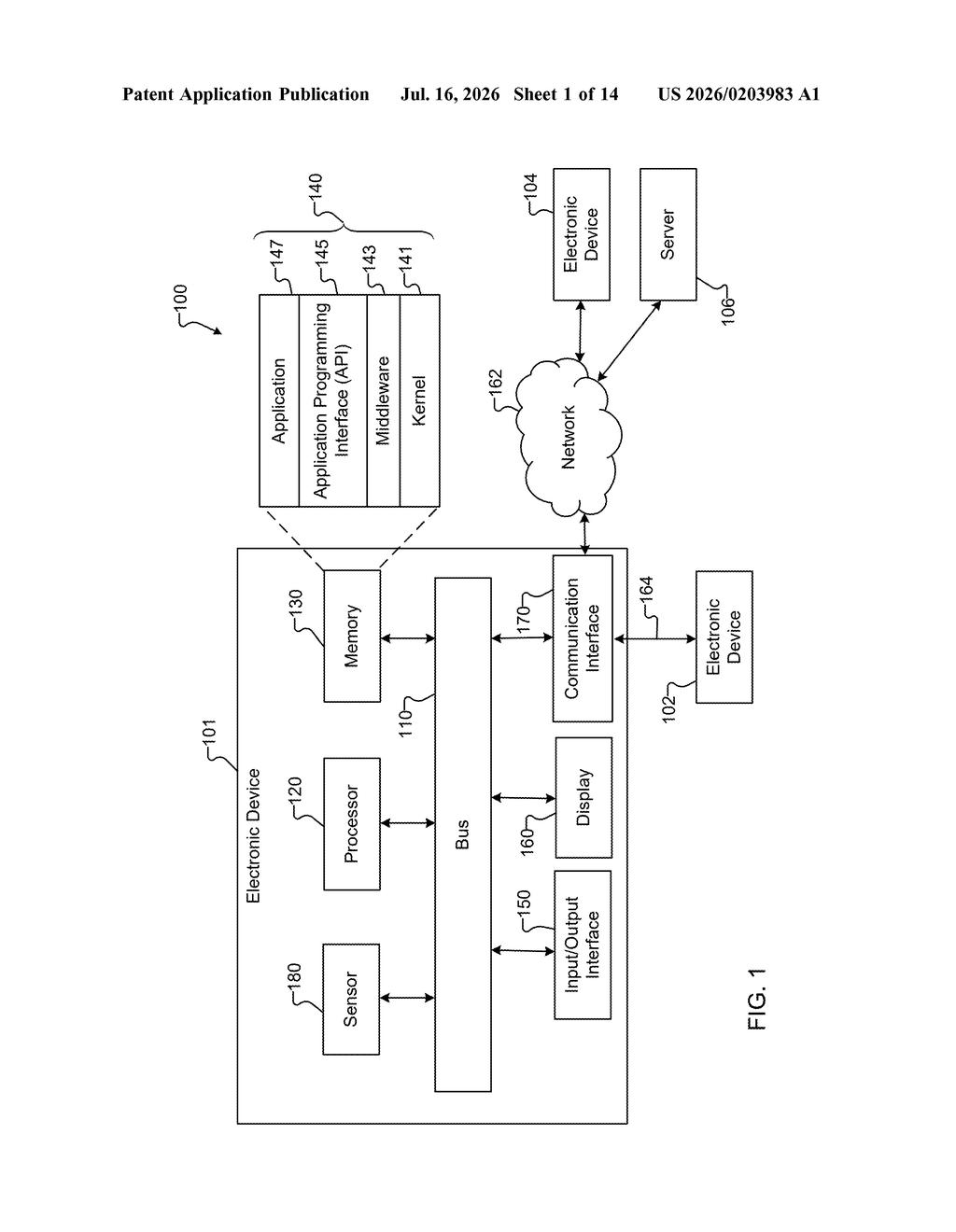
How Samsung's voice-to-avatar animation actually works
Imagine you're on a video call but instead of your face on camera, you're represented by a 3D character. Right now, most avatar systems either freeze in place or loop generic animations. Samsung's patent describes a way to make that avatar actually move the way a real person would while talking, nodding, gesturing, shifting posture, all driven by your voice.
The system listens to your audio in small chunks, extracts patterns from your speech (things like rhythm, emphasis, and tone), and feeds those into a model that predicts how a body would naturally move while saying those words. It then generates animation frames that are played in sync with your actual audio, so the avatar's movements match when you speak.
All of this runs on your device, not on a remote server. That means your voice data doesn't have to travel anywhere, and the whole process can happen fast enough to feel live.
How the on-device model predicts joints from speech
The patent describes a pipeline that processes incoming audio in real time, split into short sequential chunks stored in audio buffers (think of them as brief recording windows that refresh continuously).
For each chunk, an audio encoder (a model trained to read speech signals) pulls out speech features, not the words themselves, but acoustic properties like cadence, stress, and intonation. These features are handed off to a gesture generation model, which has been trained to predict two things:
- The 3D position of the body's center (where the torso is in space)
- The orientation of every body joint (how the head, neck, shoulders, elbows, wrists, and so on are angled)
From those predictions, the system generates animation keyframes (the specific poses an animation engine uses to smoothly draw motion between points in time). Those keyframes are stored in memory and played back in sync with the original audio so lip movement, head nods, and hand gestures all line up with what the speaker is actually saying.
Critically, the claim specifies an on-device model, meaning the inference runs locally. This keeps latency low and avoids sending raw audio to the cloud.
What this means for video calls and virtual presence
For video calls, virtual meetings, or social apps built around avatars, the difference between a talking head that loops the same idle animation and one that actually moves naturally is the difference between something you tolerate and something that feels like real presence. Your avatar looking alive without needing a camera pointed at your body is a meaningful quality-of-life shift for anyone who prefers not to be on camera.
Running the model on-device rather than in the cloud also matters for privacy. Your voice is the input, but it never has to leave your phone or headset. For Samsung, this fits a broader pattern of pushing AI processing onto its own hardware, which keeps users inside its ecosystem and reduces dependence on external services.
This is a genuinely practical patent, not a moonshot. Audio-driven avatar animation is a real problem in video calling and social apps, and doing it on-device is the right architectural call. The interesting question is whether Samsung ships this in Galaxy AI features or something like its video call apps, the patent is specific enough that it reads like something already in development, not just a defensive filing.
Get our take in your Top Stories
Liked this breakdown? Add Patentlyze as a preferred source on Google, and our plain-English take shows up more often in your Top Stories the next time Samsung patent news breaks.
There are more where this came from
We read every patent application Big Tech publishes and send you the ones worth knowing. Plain English, free, every week.
Want this weekly breakdown for a company we don't cover? Patentlyze Pro →