
Microsoft Patents a System That Uses AI to Rewrite a Game's Story Around You
What if a video game's story reshaped itself based on every choice you made, so that no two players ever experienced quite the same arc? That's exactly what Microsoft is patenting.
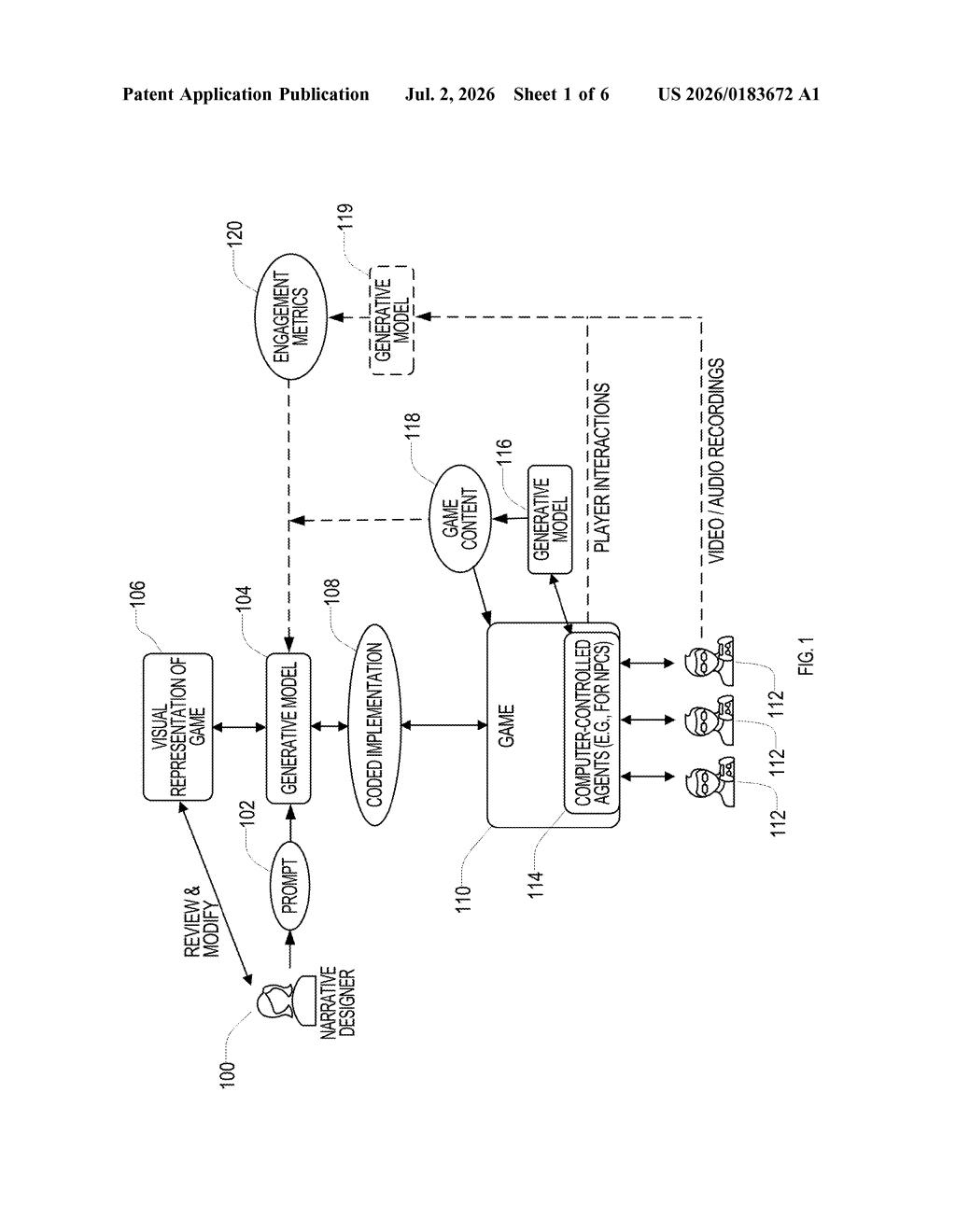
What Microsoft's AI-driven game storytelling actually does
Imagine playing a story-driven game and noticing that it seems to know what you find interesting. You keep avoiding combat and talking your way through problems, and suddenly the game starts offering you more of those moments. That's the core idea here: the game watches how you play and uses AI to generate new story content that fits your patterns.
Most narrative games today are built on a fixed map of choices and outcomes. Microsoft's patent describes a system that can bend that map in real time, adding new story branches or adjusting existing ones based on what individual players actually do, not what designers assumed they would do.
The AI doing the rewriting comes from the same family of models as ChatGPT, so it can generate dialogue, plot beats, and events that feel coherent, not just random. Think of it as a storytelling system that treats your play style as ongoing feedback.
How the system tracks choices and rewrites the story map
The patent describes a system built around what it calls a narrative state graph, a structured map of all the possible events, choices, and outcomes in a game. Each point in the story is a node; the connections between them are the paths a player can take.
The system does three things simultaneously:
- Tracks the player's path through the graph, logging which branches they take and which they skip.
- Monitors interactions with game assets, meaning it watches how players engage with characters, objects, and story moments, measuring things like time spent, choices made, and actions taken.
- Uses a generative model (such as a GPT-style large language model) to modify the graph itself based on that data, creating new nodes or adjusting existing ones to better match what each player seems to respond to.
The engagement tracking piece is important: the system isn't just reacting to explicit choices. It's also inferring what a player finds compelling based on behavioral signals, then using that to guide the AI's content generation. The result is a story structure that evolves around individual play patterns rather than presenting every player with the same fixed experience.
What this means for the future of narrative games
For players, this could mean story-driven games that feel genuinely personal rather than branching in the same two or three ways for everyone. A player who gravitates toward exploration might get a richer world to investigate; a player obsessed with a minor character might find that character's role expanded. The game adapts to your behavior, not a designer's prediction of it.
For Microsoft, this fits squarely into its broader AI strategy. The company owns both a major AI research arm and Xbox, one of the largest gaming platforms in the world. A patent like this suggests Microsoft is thinking about how to apply its generative AI investments directly inside games, not just in the tools developers use to build them.
This is one of the more genuinely interesting patents Microsoft has filed in the gaming space in years. Procedural generation in games isn't new, but applying a large language model to dynamically restructure a story graph based on real player behavior is a meaningful step beyond 'random dungeon layouts.' Whether it ships in a real game anytime soon is another question, but the technical ambition here is real.
Get our take in your Top Stories
Liked this breakdown? Add Patentlyze as a preferred source on Google, and our plain-English take shows up more often in your Top Stories the next time Microsoft patent news breaks.
There are more where this came from
We read every patent application Big Tech publishes and send you the ones worth knowing. Plain English, free, every week.
Want this weekly breakdown for a company we don't cover? Patentlyze Pro →