
Sony Patent Stacks Photon Counting Stages to Sharpen Low-Light Images
Sony is patenting a way to add up light readings from multiple rows of image sensor pixels before the data ever leaves the chip, which could make cameras far better at capturing fast-moving objects in dim conditions.
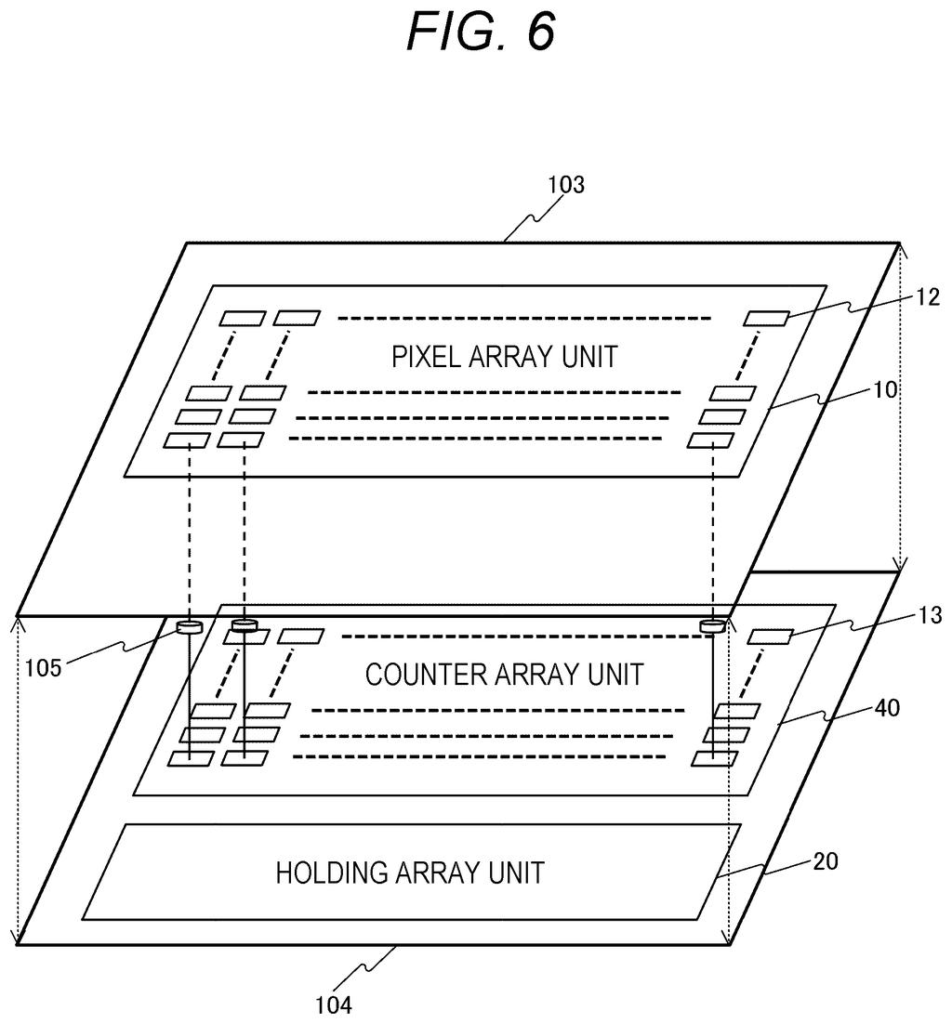
How Sony's multi-row light stacking actually works
Imagine trying to photograph a fast-moving conveyor belt under dim factory lighting. A regular camera either blurs the image or cranks up the sensitivity so high that the picture looks grainy. One classic fix is a technique called time-delay integration (TDI), where a sensor reads the same moving object across several rows of pixels and adds the readings together, almost like exposing the same frame multiple times without the blur.
Sony's patent pushes that idea further. Instead of just stacking readings within a single bank of pixel rows, it builds a system that can chain multiple banks together, accumulating light counts across a longer stretch of the sensor. Each bank hands its running total to the next one, and extra math circuits outside the main pixel grid make sure the additions stay accurate.
The result is a sensor that can gather significantly more light data from a passing subject without slowing down or sacrificing sharpness. That matters most in places where lighting is controlled but limited, like medical scanners, satellite imaging, or high-speed industrial inspection lines.
Inside Sony's cascading TDI counter architecture
The patent describes a photodetection apparatus built around pixels that each contain two things: a photon detection unit (a tiny detector that fires a pulse every time a single photon of light hits it) and a counter (a small register that tallies those pulses during an exposure).
The pixels are organized in columns, and every N rows of a column form a pixel unit, one building block of the TDI chain. The sensor's control unit runs a shift operation: before each new line of exposure starts, it copies the count from one row's counter into the counter of the row below it, like passing a baton. That way the accumulated total travels through the sensor in sync with a moving image.
The new wrinkle Sony is patenting is a holding array unit that sits outside the main pixel grid and lets the system span M pixel units at once instead of just one. It contains:
- (M-1) holding units, each with N stages that temporarily store the running count from one pixel unit
- (M-1) addition circuits that take the stored total from the last stage of one holding unit and add it to the incoming count from the next pixel unit down the chain
This chained accumulation means light data from a much larger portion of the sensor contributes to each final reading, multiplying the effective exposure without introducing motion blur.
What this means for industrial and scientific cameras
TDI sensors are the workhorses of industrial machine vision, medical imaging, and earth-observation satellites, anywhere a subject moves steadily past a fixed camera. The more rows you can stack, the better your signal relative to noise, which means you can either run the line faster or work under dimmer light. Sony's architecture lets designers scale that stacking depth well beyond what a single pixel-array bank allows, without redesigning the pixel itself.
For Sony, this reinforces its position as the dominant image sensor supplier for demanding non-smartphone applications. The back-side illuminated and single-photon avalanche diode (SPAD) sensor markets are growing fast in automotive, robotics, and life sciences, and patents like this one protect the architectural innovations that separate premium sensors from commodity ones.
This is a focused, well-scoped engineering patent aimed squarely at Sony's industrial and scientific sensor business, not the smartphone camera market. It solves a real architectural bottleneck in TDI imaging and the approach is concrete enough that it could plausibly appear in a next-generation line-scan sensor within a few product cycles. Not headline news for consumers, but genuinely meaningful for engineers designing inspection or imaging systems.
There are more where this came from
We read every patent application Big Tech publishes and send you the ones worth knowing. Plain English, free, every week.
The drawings
20 drawing sheets from US 2026/0214349 A1 · click any drawing to enlarge


Want this weekly breakdown for a company we don't cover? Patentlyze Pro →
Be the first to weigh in