
Samsung Patents a Spring-Loaded Internal Connector Support for Electronics
Loose internal connectors are one of the quieter causes of electronics failures. Samsung is filing a patent for a physical support structure that uses spring-like ribs to keep those connectors locked firmly in place.
What Samsung's internal connector support actually does
Imagine the inside of your phone or tablet as a city of tiny plug-in connections. Each one links a cable to a socket on the main circuit board. Over time, vibration, drops, and heat cycles can cause those connections to work loose, which leads to glitchy behavior or outright failures.
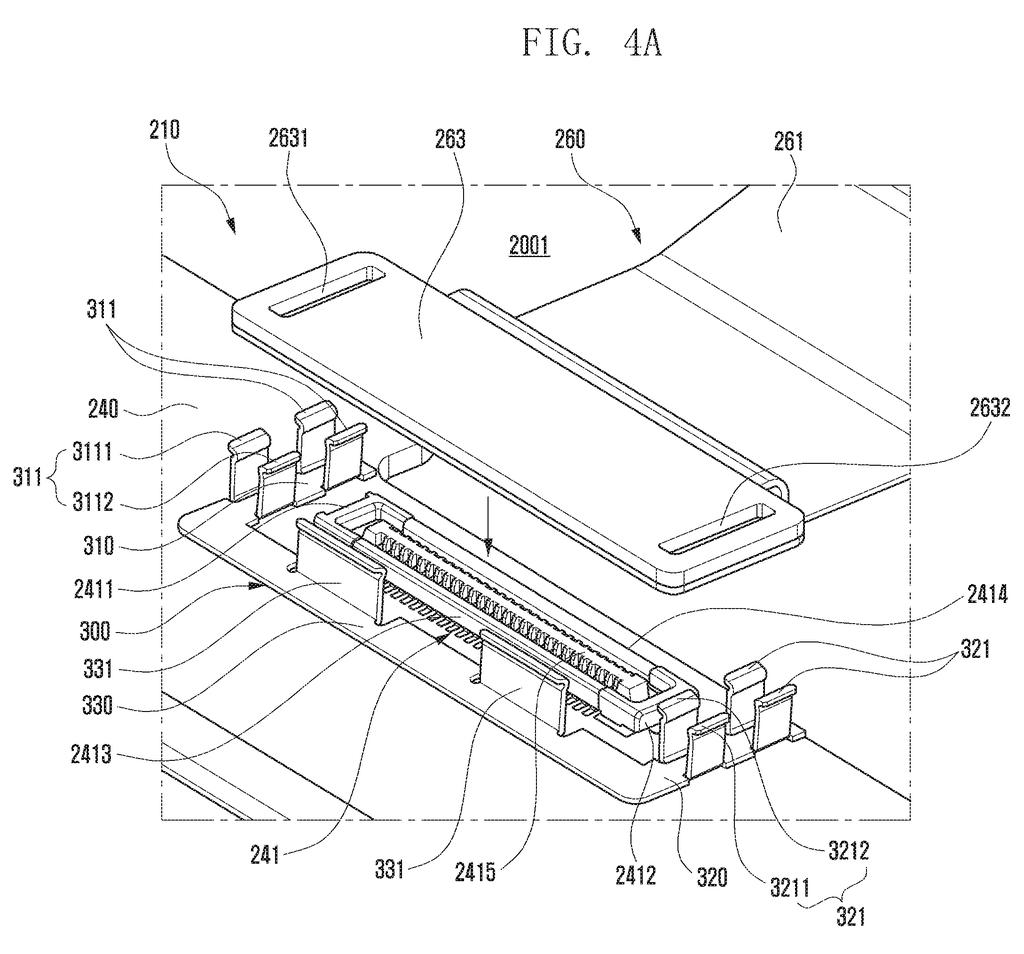
Samsung's patent describes a small support structure built directly onto the circuit board, surrounding the socket on both sides. Two spring-like "tension ribs" squeeze against a metal reinforcement piece on the cable's connector, holding everything snugly in place even when the device takes a knock.
Think of it like a retaining clip on a garden hose nozzle: the hose clicks in and stays put instead of slowly working itself loose. The idea is that this built-in support reduces stress on the connection point and keeps the electrical contact reliable for longer.
How the tension ribs grip and hold the connector
The patent covers an internal connector support structure designed to live on a device's main circuit board (the substrate) right next to a standard plug-in socket (the receptacle). The socket has two facing side walls with the electrical pins sitting between them.
The cable assembly that plugs into the socket includes two parts:
- A connector, the plug itself that mates with the socket's pins.
- A reinforcement member, a rigid or semi-rigid bracket around the connector that gives it structural support.
The support structure Samsung is patenting sits around the outside of the socket. It has two sections, one on each side, each containing a tension rib (a small spring-like protrusion). When the cable is plugged in, those ribs press against the reinforcement member and push back elastically, meaning with a controlled spring force rather than a rigid clamp. This keeps the connector from rocking, tilting, or pulling away from the socket.
The key claim is the elastic, or spring-loaded, nature of the support: it gives slightly under stress rather than creating a hard point that could crack the circuit board or damage the connector's housing.
What this means for device durability over time
Internal connector failures are a common but invisible cause of device repairs. A connection that works loose inside a phone or laptop can cause intermittent charging problems, display glitches, or audio dropouts that are hard to diagnose. A physical support structure built onto the board at the factory is a cheaper fix than adding more solder or using bulkier connectors.
For Samsung's device lineup, which spans phones, tablets, laptops, and wearables, this kind of incremental durability improvement can matter at scale. It's not the sort of feature that shows up in a spec sheet, but it's exactly the type of engineering that affects whether a device still works reliably two or three years after purchase.
This is quiet, unglamorous engineering work, and that's not a knock on it. Connector reliability is a real problem in consumer electronics, and a spring-loaded board-level support structure is a sensible, low-cost approach to it. Whether Samsung actually ships this in volume production is the more interesting question.
There are more where this came from
We read every patent application Big Tech publishes and send you the ones worth knowing. Plain English, free, every week.
The drawings
19 drawing sheets from US 2026/0213446 A1 · click any drawing to enlarge


Want this weekly breakdown for a company we don't cover? Patentlyze Pro →