
New Nvidia Patent Teaches Vehicles to Spot Threats Before Heavier Sensors Wake Up
Most vehicle safety systems blast every sensor at once, draining power constantly. Nvidia's new patent describes a layered approach: start with a single camera doing light math, and only switch on the expensive hardware when something actually looks dangerous.
How Nvidia's camera-first threat detector works
Imagine a security guard who doesn't call for backup every time someone walks past the building, only when someone is actually heading for the door. Nvidia's patent works on a similar idea, but for vehicles.
The system watches camera footage continuously, using a low-power technique to spot objects that are moving closer. As long as something stays far away, the vehicle uses very little processing power to track it. The moment that object gets close enough to raise a flag, the vehicle activates additional sensors and a more demanding analysis to figure out what the object is and what it intends to do.
The result is a risk score. If that score crosses a threshold, the vehicle can respond, whether that means alerting a driver, slowing down, or taking another action. The key selling point is efficiency: you're not burning energy on full threat analysis every second, only when it genuinely matters.
Inside the optical-flow depth and intent pipeline
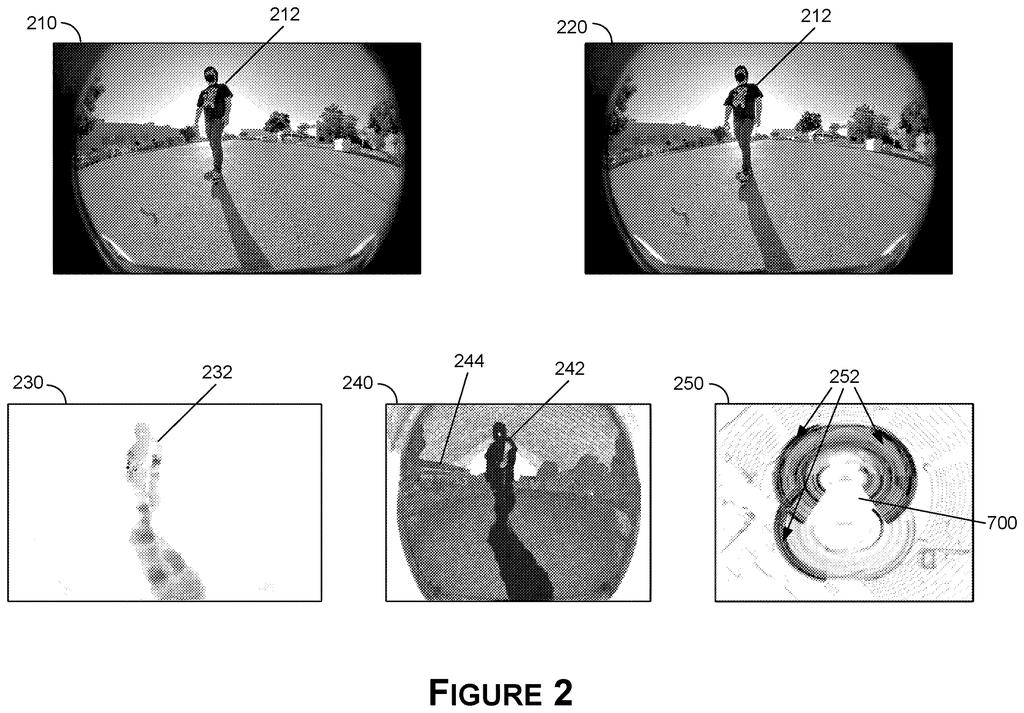
The patent describes a tiered detection framework built around optical flow, a computer-vision technique that measures how pixels shift between consecutive camera frames to estimate motion and relative depth without needing a dedicated depth sensor like lidar.
Here's how the stages break down:
- Stage 1 (low power): Camera image data is processed to generate optical flow, which lets the system estimate how fast an object is growing in the frame, a proxy for how quickly it's approaching. This runs cheaply and constantly.
- Stage 2 (elevated attention): When an object crosses a proximity threshold, the system computes scaled depth data from the optical flow to pin down its distance more precisely, and additional sensors come online.
- Stage 3 (classification and intent): A classification model takes the camera images plus distance data and predicts both what the object is (person, vehicle, animal) and what it is likely to do next, described in the patent as intent prediction.
The final output is a risk score. If that score clears a configurable threshold, the vehicle's threat response system acts. The whole chain is designed to keep power and compute costs low during calm conditions while remaining responsive when something actually warrants attention.
What this means for autonomous vehicle safety systems
Autonomous and semi-autonomous vehicles already carry a lot of sensors, but running all of them at full tilt all the time is expensive in both power and compute. A system that idles at low cost and escalates only when needed is a meaningful engineering goal, especially for vehicles that need to operate for long shifts or on battery power.
The intent-prediction piece is also notable. Knowing that a pedestrian is moving toward a vehicle is more useful than simply knowing a pedestrian is nearby. That distinction, encoded into a risk score, lets the vehicle calibrate its response rather than treating every detected object as equally alarming. For Nvidia, which supplies the compute platforms inside many autonomous vehicle programs, this kind of patent reinforces its position as a full-stack contributor to vehicle AI, not just a chip vendor.
This is serious, practical engineering work, not a flashy concept. The tiered wake-up idea is the most defensible part: it directly addresses a real cost problem in always-on sensor stacks. The intent-prediction layer is the more ambitious claim, and how well that actually generalizes to real traffic will matter a lot. Worth watching as Nvidia pushes deeper into the autonomous vehicle software stack.
There are more where this came from
We read every patent application Big Tech publishes and send you the ones worth knowing. Plain English, free, every week.
The drawings
12 drawing sheets from US 2026/0212684 A1 · click any drawing to enlarge


Want this weekly breakdown for a company we don't cover? Patentlyze Pro →
Be the first to weigh in