
New Tesla Patent Lets One System Both Absorb Bumps and Read Road Conditions
Most car suspensions make a trade-off: tune them for comfort and they feel floaty at speed, tune them for sport and every pebble rattles your teeth. Tesla's new patent describes a suspension that tries to handle both extremes at the same time, by stacking active and passive components that each tackle a different type of road input.
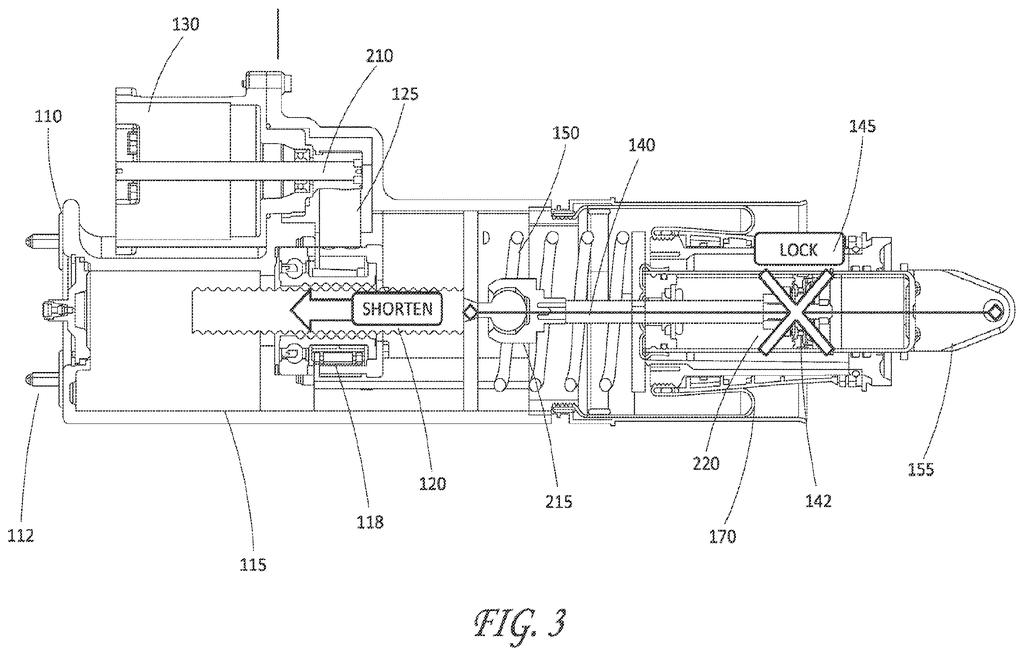
What Tesla's layered suspension system actually does
Imagine driving over a road with two problems at once: a slow, deep pothole and a rapid series of tiny ripples. A normal shock absorber can't fix both, it's built for one or the other. Tesla's patent describes a suspension system that splits those two jobs between different components, so each one handles what it's best at.
The system has a motorized actuator (think of it as a powered piston) that actively reads road conditions and moves the wheel up or down in response. Sitting alongside it are traditional springs that absorb the fast, small vibrations the motor can't react to quickly enough. A special lockable damper acts like a switch: in normal driving it keeps things flexible, but during big moves like a hard turn or a sudden pothole, it locks up so the motor can take full, direct control of the wheel position.
The result is a suspension that can be both comfortable on a bumpy highway and precise when the car needs to respond to something dramatic, without the two systems fighting each other.
How the active element, springs, and lockable damper work together
The patent describes a four-part suspension architecture where each component handles a specific range of road inputs:
- Active control element: A motor-driven actuator connected to the vehicle's suspension control computer. It reads road conditions and physically repositions the wheel to smooth out bumps or improve handling in real time.
- Series passive element: A conventional spring or damper mounted in-line with the active actuator. Because the motor can't react fast enough to very high-frequency vibrations (think fine road texture or tiny gravel), this passive element absorbs those inputs before they can disturb the car body.
- Parallel passive element: A second spring or damper mounted alongside the active element, providing a baseline load path and supporting the vehicle's weight independently of the motor.
- Adaptive damper: A lockable damper also in series with the active element. Normally it stays compliant, letting the passive series element do its job. When the system detects a large motion event, it locks rigid, effectively bypassing the passive element so the active motor has a direct, stiff connection to the wheel and can command its exact position.
The key engineering insight is that locking the adaptive damper during big maneuvers prevents the passive spring from partially canceling out the motor's commanded movement. When unlocked, the passive element is free to absorb the small, fast inputs the motor would otherwise miss.
What this means for Tesla ride quality and future vehicles
Active suspension has existed in high-end and racing cars for decades, but cost and mechanical complexity have kept it off most consumer vehicles. Tesla's approach of combining an active element with tunable passive components is a way to get most of the benefit without requiring a motor powerful enough to handle every road input on its own. The lockable damper is the clever part: it means the motor only needs to take full authority when it actually needs to, saving energy and reducing wear.
For Tesla owners, this kind of system could mean a car that feels genuinely comfortable on a rough interstate and stays flat and planted through hard cornering, without the driver adjusting anything. Given that Tesla has been building out its own vehicle platforms and has a Cybertruck that already uses independent air suspension, a patent like this fits a clear direction toward more software-controlled vehicle dynamics.
This is a genuinely interesting mechanical architecture, not just a software tweak. The lockable adaptive damper solving the 'motor fighting the spring' problem is a real engineering idea, not a patent placeholder. Whether it shows up in a near-term Tesla product or stays on the shelf, it signals that Tesla's suspension engineering team is thinking carefully about the gap between active and passive systems.
There are more where this came from
We read every patent application Big Tech publishes and send you the ones worth knowing. Plain English, free, every week.
The drawings
3 drawing sheets from US 2026/0208548 A1 · click any drawing to enlarge


Want this weekly breakdown for a company we don't cover? Patentlyze Pro →