
Qualcomm Patents Technology That Predicts Head Movement to Display Virtual Images Sooner
Motion sickness in VR headsets is largely a timing problem: the image arrives a few milliseconds too late for what your eyes expect to see. Qualcomm's new patent attacks that gap by guessing where your head is going before it gets there, then rendering the picture early.
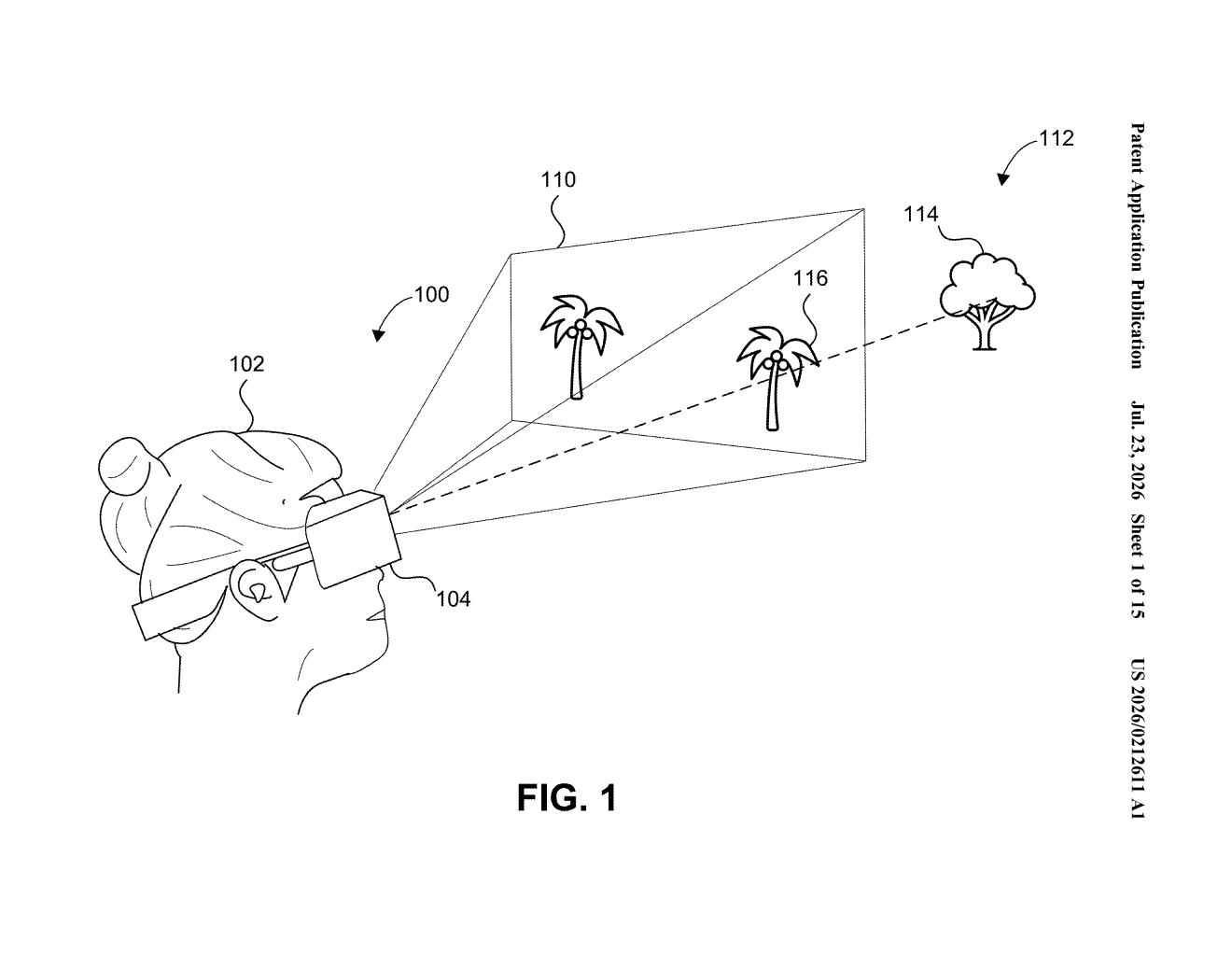
What Qualcomm's head-prediction rendering actually does
Imagine watching a movie where the subtitles appear a half-second after the spoken line. Your brain notices the mismatch and it's annoying. In VR and AR headsets, something similar happens: the headset tracks where you're looking and then asks a remote computer to draw the right image. By the time the image arrives, your head has already moved a little further, so the picture is slightly stale. That delay is a major reason people feel queasy wearing headsets for long periods.
Qualcomm's patent describes a system that tries to fix this by predicting where your head will be pointing in the near future, then rendering the frame for that future position rather than the current one. Crucially, the system also calculates how confident it is in that prediction, and uses that confidence score to decide how aggressively to render ahead.
The idea is that if the system is very sure you're continuing to turn right, it draws the rightward view early. If it's unsure, it plays it safer. The goal is a headset image that always feels locked to where your eyes actually land, not where they were a moment ago.
How the probability score shapes what gets rendered early
The patent describes an apparatus (a chip or server in a cloud-gaming or wireless XR setup) that handles image generation for a headset worn by a user. The pipeline works in a few steps:
- Pose capture: The system receives data describing the device's current orientation and position in 3D space (called a "pose").
- Pose prediction: It extrapolates a predicted future pose based on recent movement history, essentially asking, "given how the head has been moving, where will it be in the next render cycle?"
- Probability scoring: The system assigns a confidence value to that prediction. High confidence means the motion is steady and predictable; low confidence means the movement is erratic or stopped suddenly.
- Probability-weighted rendering: The virtual scene is drawn from the viewpoint of the predicted pose, with the confidence score influencing how far ahead the system dares to render.
- Transmission: The finished frame is sent back to the headset.
This matters most in remote rendering setups, where the heavy graphics work happens on a nearby server or in the cloud rather than on the headset itself. In those scenarios, transmission time is unavoidable, so rendering for a predicted future position is one of the few ways to keep the image feeling real-time.
What this means for comfort in future XR headsets
The biggest barrier to everyday VR and AR adoption isn't display resolution or battery life, it's the nausea and eye strain that come from even small mismatches between head movement and image update. Qualcomm's approach is a direct engineering attack on that problem at the rendering layer, which is where the most latency is introduced in cloud or wirelessly streamed XR systems.
For Qualcomm specifically, this fits a clear strategic direction: the company supplies the chips inside many standalone and tethered XR headsets, and it has been pushing "extended reality" as a major growth market. A patented rendering technique that demonstrably reduces sickness-inducing lag would be a selling point for future Snapdragon XR chipsets, particularly as headset makers compete on comfort rather than raw specs.
This is a real problem patent, not a defensive filing. Display lag is the single most cited reason people stop using VR headsets, and tackling it at the prediction and rendering stage is a legitimate approach. Whether Qualcomm's probability-weighting technique proves meaningfully better than existing reprojection methods in practice is the real question, but the problem it's solving is exactly the right one to solve.
There are more where this came from
We read every patent application Big Tech publishes and send you the ones worth knowing. Plain English, free, every week.
The drawings
15 drawing sheets from US 2026/0212611 A1 · click any drawing to enlarge


Want this weekly breakdown for a company we don't cover? Patentlyze Pro →
Be the first to weigh in