
Qualcomm Patent Addresses VR Display Warping Through Head Movement Prediction
If you've ever worn a VR headset and noticed the edges of the image look slightly bent or off, that's lens distortion at work. Qualcomm's latest patent targets that exact problem, with a system that tries to correct the warping before it even hits your eyes.
How Qualcomm's headset distortion fix actually works
Imagine putting on a VR headset and turning your head quickly. The lenses in those headsets bend light in ways that warp the image, and if the headset's processor can't keep up with your movements, you get visual glitches or a slightly "off" picture that can make you feel sick.
Qualcomm's patent describes a dedicated engine that handles this correction more efficiently. Instead of fixing distortion after the fact, the system predicts where your head is starting and ending a movement, then pre-calculates the image adjustments needed for those positions. That way, the correction is ready before the frame is drawn.
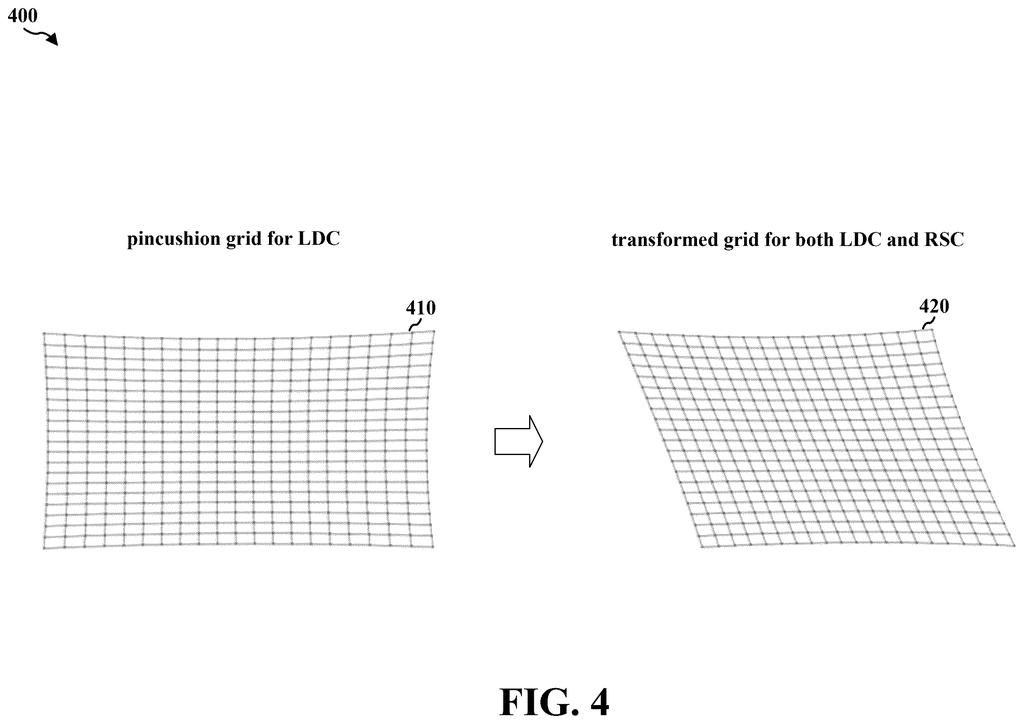
The key trick is working from a simplified map of distortion points rather than recalculating every single pixel every frame. It's a bit like using a handful of GPS waypoints to estimate a route instead of tracking every inch of road. The result should be less processing work and a cleaner, more stable image in AR and VR headsets.
How the correction engine builds a sparse distortion grid
The patent describes a raster scan correction engine, a dedicated hardware block designed to handle the geometric distortion that VR and AR lenses introduce into images.
At its core, the system works like this:
- A tracking unit provides predictions for where the user's head is at the start and end of each frame's display period.
- The engine also receives a representation of optical distortion, essentially a map of how the headset's lenses bend and warp light.
- From these two inputs, the engine builds a sparse distortion grid, a lightweight grid of correction values at select points (rather than every pixel), which is much cheaper to compute.
- That grid is then passed to a geometric correction engine (GCX), which uses it to warp the rendered image so it looks correct when viewed through the lenses.
The system is designed to sit between the main CPU or digital signal processor (DSP) that handles tracking logic, and the GPU that renders the final image. By offloading the distortion math to a specialized block, the patent aims to reduce the time and processing power needed to deliver each corrected frame.
What this means for next-gen AR and VR headsets
VR and AR headset quality lives or dies on how fast and accurately the device can correct for its own lens distortion, especially during fast head movements. If corrections lag even slightly behind real movement, the visual mismatch can cause nausea. A dedicated, efficient engine that pre-computes corrections based on predicted head pose is a meaningful step toward headsets that feel more natural.
Qualcomm supplies chips to a wide range of headset makers, including Meta. A more efficient distortion correction pipeline could translate to either better image quality at the same power budget, or the same quality at lower power, which matters enormously for untethered headsets where battery life is a constant constraint.
This is a focused, incremental engineering improvement rather than a headline feature, but it targets one of the real pain points in VR hardware. Qualcomm's position as the dominant chip supplier for standalone VR headsets makes even incremental display pipeline improvements worth watching.
There are more where this came from
We read every patent application Big Tech publishes and send you the ones worth knowing. Plain English, free, every week.
The drawings
9 drawing sheets from US 2026/0212467 A1 · click any drawing to enlarge


Want this weekly breakdown for a company we don't cover? Patentlyze Pro →
Be the first to weigh in