
Patent: Knowing Where You Look Puts Sound in the Right Place
Nvidia is patenting a way to use a camera to figure out which direction your head is pointing, then adjust audio in 3D space to match. It's the kind of tech that makes virtual sound sources feel physically anchored to the world around you.
How Nvidia's head-tracking audio system works for you
Imagine you're wearing a headset playing a game, and a monster growls to your left. If you turn your head, that growl should stay locked in place in the real world rather than spinning with you. That's the core idea here.
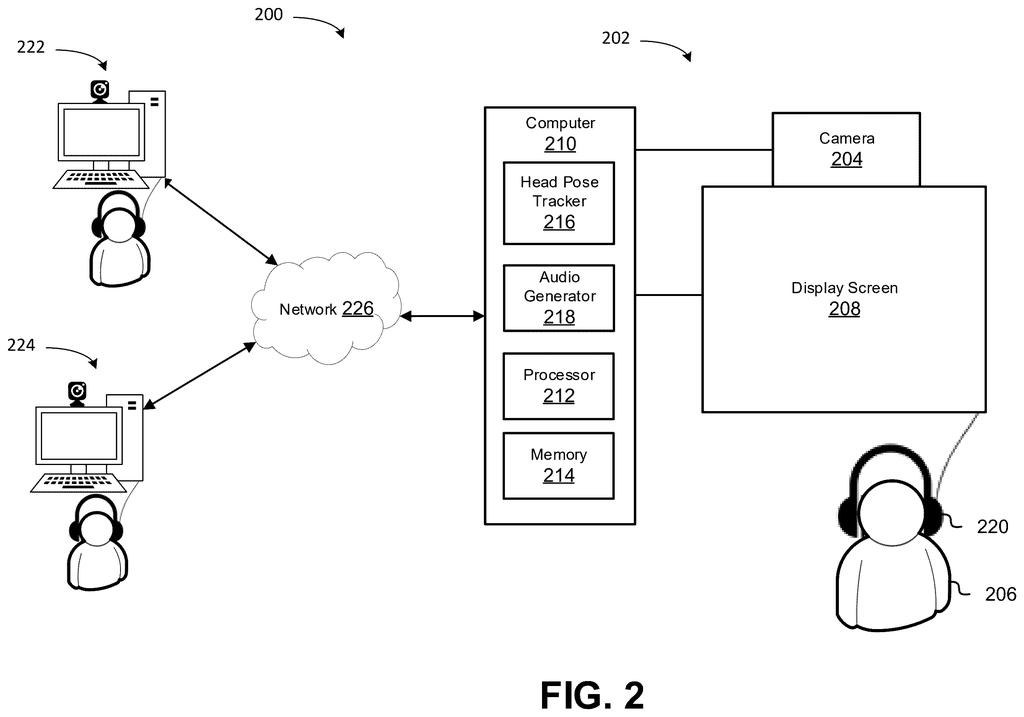
Nvidia's patent describes a system that watches where your head is pointing, using camera footage, and then continuously reshapes the audio you hear to reflect that orientation. The result is spatial audio that feels genuinely three-dimensional, not just stereo left-and-right but actually in front, behind, above, and below you.
The key difference from older approaches is that the system pulls its positioning data from a camera rather than relying on gyroscopes or other motion sensors. In theory, that gives it more accurate, richer information about exactly how your head is tilted and turned.
How camera frames drive Nvidia's spatial audio output
The patent describes a pipeline with two main stages: head pose estimation and audio signal generation.
Head pose estimation means figuring out the position and orientation of a person's head from camera frames. Rather than a gyroscope telling you the headset is tilted 15 degrees, this uses visual data from a camera feed to compute where the head is pointing in 3D space. That pose information is then fed into an audio processing step.
Audio signal generation takes that pose data and applies what audio engineers call HRTF (Head-Related Transfer Function) filtering. An HRTF is essentially a mathematical model of how your ear shape, head, and shoulders naturally color sounds coming from different directions. By continuously updating the HRTF parameters as your head moves, the system keeps virtual sound sources fixed in space even as you turn.
The claim structure covers both the hardware apparatus (the chip or device doing the work) and the broader system tying camera input to audio output. It is designed to work with users plural, suggesting it could serve multi-user scenarios like shared VR spaces or teleconferencing setups.
What this means for VR headsets and PC gaming audio
Spatial audio is already a feature in consumer products from Apple, Sony, and Microsoft. The interesting angle in Nvidia's filing is the emphasis on camera-based head tracking rather than inertial sensors. Cameras can potentially capture more nuanced pose data and could also support multiple users in a shared scene, which is relevant as Nvidia pushes deeper into the VR rendering and AI-driven graphics space.
For you as an end user, better head-pose data means audio that feels more convincingly locked to the physical or virtual world around you. It also opens the door to setups where your PC or a cloud GPU handles all the spatial audio math, offloading that work from a lightweight headset.
The independent claims were all canceled, which is a real flag. A patent publication without live independent claims is a thin foundation, and it's possible this filing represents an early draft or a continuation strategy rather than a fully examined, granted set of rights. The underlying concept is genuinely interesting for Nvidia's GPU and VR ambitions, but this particular document doesn't tell us much about what they actually secured.
There are more where this came from
We read every patent application Big Tech publishes and send you the ones worth knowing. Plain English, free, every week.
The drawings
58 drawing sheets from US 2026/0214405 A1 · click any drawing to enlarge


Want this weekly breakdown for a company we don't cover? Patentlyze Pro →
Be the first to weigh in