
Google Patents a Variable Aperture That Controls Light in Phone Cameras
Google is working on a camera aperture mechanism that lets phones control how much light hits the sensor while taking up less physical space inside the device. The goal is adjustable exposure without adding thickness to your phone.
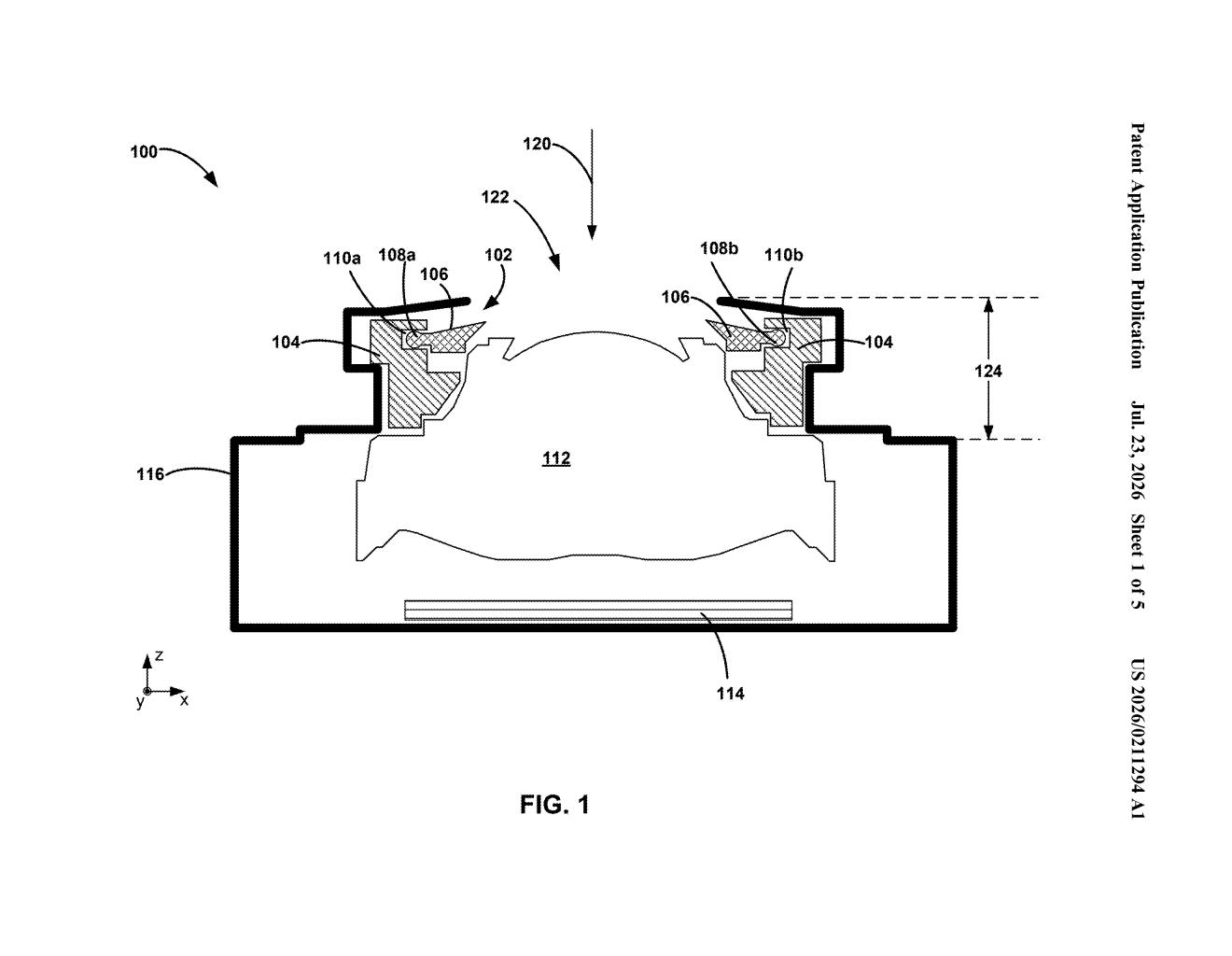
What Google's variable aperture actually does for your camera
Imagine the iris of your eye: it opens wide in a dark room and narrows in bright sunlight. High-end cameras work the same way, using a mechanical "aperture" made of overlapping blades that expand or contract to control how much light reaches the sensor. Most smartphone cameras skip this entirely because the mechanical parts take up too much room.
Google's patent describes a new way to build that iris mechanism so it fits inside a thinner phone. The key innovation is in how the blades move: instead of a bulky linear actuator pushing them, a low-profile rotating ring drives the blades along a curved path, guided by small projections that slide inside curved slots built into the base.
The result is a variable aperture that should take up less vertical space (the "z-height" in engineering speak, meaning how tall the stack of parts is inside the phone). For you, that could mean a phone that's physically thinner but still capable of the kind of exposure control you'd expect from a camera with swappable lenses.
How the rotating blade-and-recess system controls light
The patent describes a variable aperture assembly designed to minimize how much height it adds to a phone's camera stack. It has three main parts:
- Aperture blades: A set of overlapping flat blades arranged in a ring around the lens opening. Moving them inward or outward changes the size of the hole light passes through.
- Rotator: A ring-shaped component that spins to drive the blades. Because it rotates rather than slides linearly, it can be made flatter. The rotator has small projections (think of tiny pegs) on its underside.
- Base: The housing that holds the rotator. The base has a series of curved slots ("circumferentially distributed recesses") arranged around its circumference. The rotator's pegs ride inside these slots as the ring turns.
When a motor spins the rotator, its pegs trace the curved paths of the slots, which constrains and guides the rotation precisely. That guided rotation simultaneously moves all the aperture blades in sync, opening or closing the aperture. The elegance here is that the peg-in-slot guidance eliminates the need for a separate, bulky guide track, keeping the whole assembly thin.
What this means for thinner phones with better cameras
Variable apertures in phones are rare precisely because they add thickness and mechanical complexity. Samsung shipped a dual-aperture camera in the Galaxy S9 back in 2018, then quietly dropped it, partly because the mechanism ate space. Google has never put one in a Pixel. A thinner aperture assembly could make an adjustable aperture practical for a Pixel, or let the camera module sit more flush with the back of the phone.
For you as a user, variable aperture means the camera can let in more light for night shots and narrow the opening for bright outdoor scenes without relying entirely on software tricks. Getting that flexibility in a slimmer package is the engineering tradeoff this patent is trying to solve.
This is solid, unglamorous camera hardware work. Variable aperture is a real differentiator in phone photography, and the size constraint is a genuine engineering problem. Google filing a patent specifically about reducing z-height suggests the aperture mechanism on current Pixel hardware is still fatter than the team wants it to be, and they're looking for ways to fix that without sacrificing the feature.
Get our take in your Top Stories
Liked this breakdown? Add Patentlyze as a preferred source on Google, and our plain-English take shows up more often in your Top Stories the next time Google patent news breaks.
There are more where this came from
We read every patent application Big Tech publishes and send you the ones worth knowing. Plain English, free, every week.
The drawings
5 drawing sheets from US 2026/0211294 A1 · click any drawing to enlarge


Want this weekly breakdown for a company we don't cover? Patentlyze Pro →