
New Google Patent Reveals AI Model Updates Through Merged Data Signals
Google has patented a method for updating a trained AI model by converting multiple data inputs into compact numerical representations and then fusing them into a single combined signal. It's a fairly foundational technique, and the patent stakes a claim on a general version of the process.
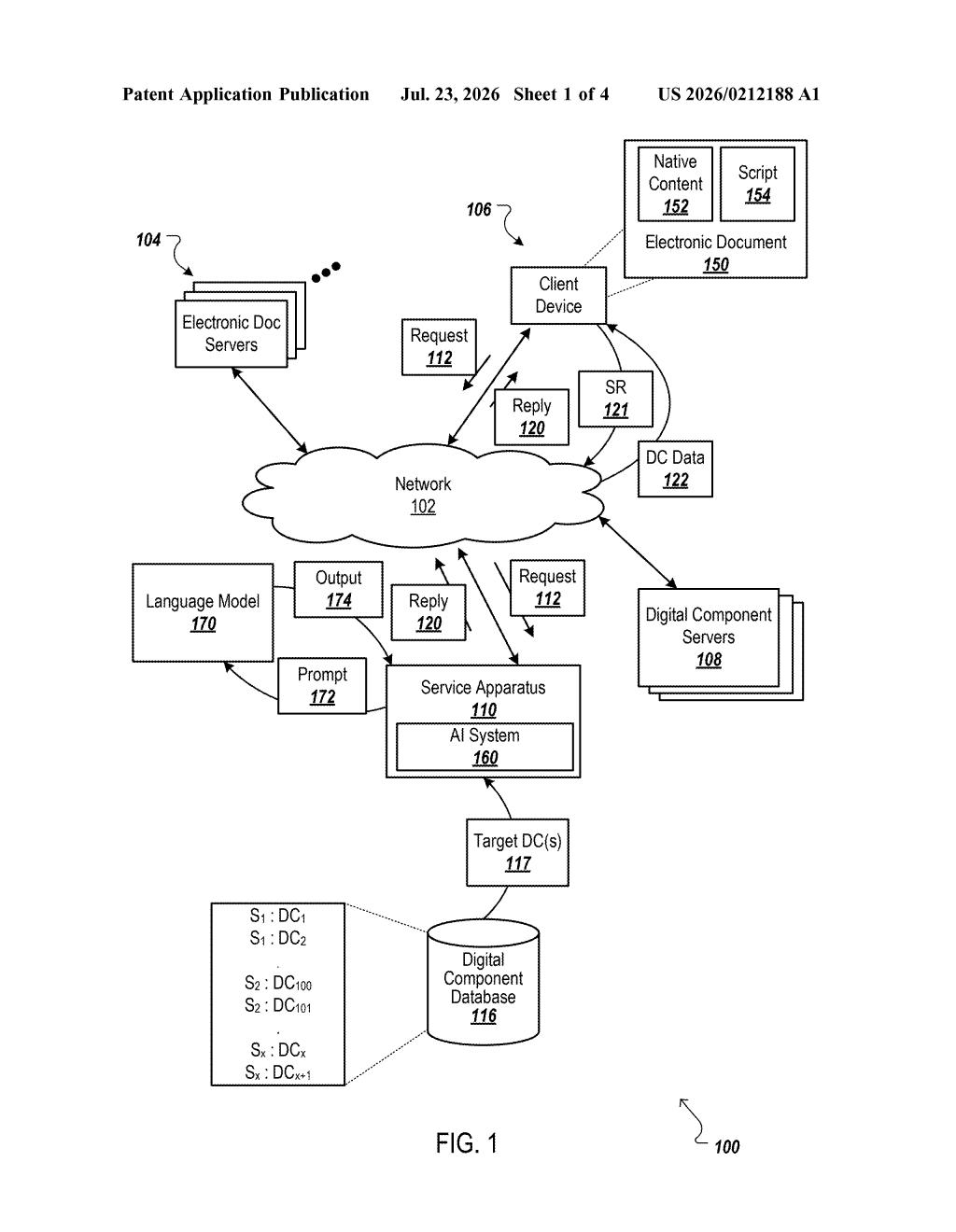
What Google's model-augmentation method actually does
Imagine you're trying to give a coworker a quick briefing before a big meeting. Instead of handing them ten separate documents, you write one concise summary that captures all the key points. That's roughly what this Google patent describes doing for an AI model.
When an AI model needs to be updated or fine-tuned, this method takes a collection of data inputs (like a user's preferences, recent activity, or content signals) and converts each one into a compact numerical form. It then merges all those compact forms into a single combined representation.
That merged representation is then used to update the AI model directly, rather than feeding the model each input one by one. The idea is to give the model a cleaner, more consolidated picture of what it needs to learn.
How features get compressed and merged into one signal
The patent describes a four-step pipeline for modifying an existing machine learning model using a group of input features.
- Feature collection: The system gathers two or more features, which can be any kind of structured data input (think: search history, content categories, behavioral signals).
- Embedding generation: Each feature is converted into an embedding (a fixed-size list of numbers that represents the feature in a form the model can process mathematically).
- Aggregation: All the individual embeddings are combined, or aggregated, into a single unified embedding that represents the entire feature set as one object.
- Model augmentation: That aggregated embedding is then used to update, fine-tune, or otherwise modify the machine learning model's parameters.
The core insight is that by condensing multiple features into one aggregated representation before touching the model, the update step becomes more controlled. Rather than the model processing each feature independently during training, it receives a pre-merged signal.
The claim is written broadly, covering any feature types, any aggregation method, and any form of model augmentation, which is notable.
What this means for how Google trains its AI systems
For Google, which runs AI models across Search, Ads, YouTube recommendations, and dozens of other products, the ability to efficiently update models with new feature sets is a constant engineering challenge. A generalized method for doing this in a structured, aggregation-first way could apply to personalization systems, ranking models, or any service that needs to incorporate new signals without retraining from scratch.
For everyday users, the downstream effect would be AI-driven features that adapt more reliably to new data. But the patent itself is abstract enough that it's more of a technical building block than a product announcement. It reads like a foundational claim Google wants on record.
This is a broad, foundational patent on a technique that experienced ML engineers would recognize as fairly standard practice. The claim language is wide enough to cover a lot of ground, which is likely the point. It's not describing a specific product feature or a novel research breakthrough; it's staking a general claim on a common pattern in model updating pipelines. Worth noting as a legal positioning move, but not a signal of something new shipping soon.
Get our take in your Top Stories
Liked this breakdown? Add Patentlyze as a preferred source on Google, and our plain-English take shows up more often in your Top Stories the next time Google patent news breaks.
There are more where this came from
We read every patent application Big Tech publishes and send you the ones worth knowing. Plain English, free, every week.
The drawings
4 drawing sheets from US 2026/0212188 A1 · click any drawing to enlarge


Want this weekly breakdown for a company we don't cover? Patentlyze Pro →