
Google Patents Software That Stops Duplicate AI Processes From Overloading Weak Chips
Running multiple AI perception tasks on a weak chip is a bit like trying to stream three movies on a slow connection at once. Google's new patent describes a coordinator that makes sure those tasks don't step on each other.
What Google's AI task-sharing system actually does
Imagine your smart doorbell is trying to recognize faces, read package labels, and detect motion all at the same time. On a powerful server, that's fine. On the small chip inside the doorbell itself, that's a recipe for overload.
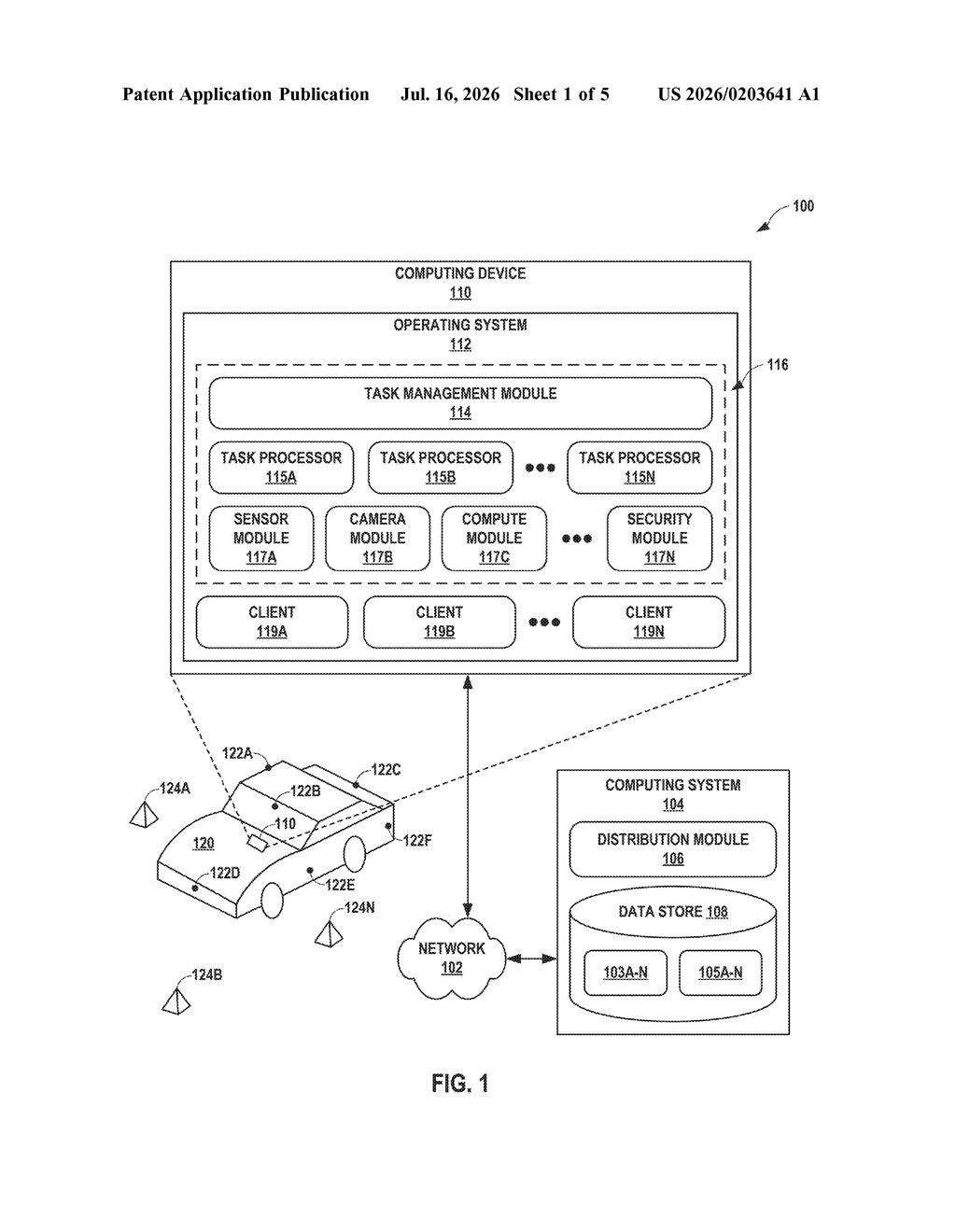
Google's patent describes a system that acts like a traffic controller for these AI jobs. It keeps a list of every AI model available on the device and what each one is trained to look for. When an app asks for a specific type of visual information, say, "is there a person in front of the camera?" the system checks whether the right AI model is already running. If it is, the app just taps into that existing feed instead of starting a duplicate. If not, the system boots the model up.
The practical effect is that you avoid running the same AI twice, which saves processing power and memory. On devices where those resources are tight, that efficiency difference can be the gap between something that works and something that crashes.
How the registry routes sensor data to the right AI model
The system centers on a registry, a lookup table that maps every available AI model (called an ML task processor) to a description of what it outputs. For example, one model might output "person detected," another might output "text on package," and a third might output "license plate number." These outputs are called semantic outputs, meaning the results have a defined meaning, not just raw pixel data.
When an app on the device needs a particular type of information, it sends a request to a task management module, the coordinator. The module consults the registry to find the right model, then checks whether that model is already running.
- If the model is already executing, the system skips loading it again and connects the requesting app directly to the live output stream.
- If the model is idle, the system starts it and then creates that same connection.
All of this runs on-device, processing sensor data (camera, microphone, and so on) locally rather than sending it to a cloud server. The design is specifically aimed at hardware-constrained environments, where memory and compute are limited, making duplicate model loads expensive or impossible.
What this means for AI running on cheap or small hardware
Most AI perception work today either runs in the cloud or on dedicated high-end chips. As Google (and the rest of the industry) push AI into smaller, cheaper devices, such as home sensors, wearables, and embedded cameras, the engineering challenge shifts from "can the AI do this?" to "can it do this without melting the hardware?"
This patent addresses that second question directly. By preventing duplicate AI models from loading, the system could let a low-power device handle several perception jobs simultaneously that it otherwise couldn't. For you as a user, that could mean faster, more reliable AI features on devices you already own, without needing an expensive chip upgrade.
This is unglamorous infrastructure work, but it's the kind of patent that actually ships. The core idea, a shared registry that prevents redundant AI model loading, is practical, well-scoped, and directly applicable to the on-device AI push Google is already making with Pixel phones and Nest devices. Don't expect a press release, but do expect to see this logic baked into Android or ChromeOS device frameworks within a few years.
Get our take in your Top Stories
Liked this breakdown? Add Patentlyze as a preferred source on Google, and our plain-English take shows up more often in your Top Stories the next time Google patent news breaks.
There are more where this came from
We read every patent application Big Tech publishes and send you the ones worth knowing. Plain English, free, every week.
Want this weekly breakdown for a company we don't cover? Patentlyze Pro →