
Samsung Patents a Way to Mix Two AI Training Styles Across 5G Networks
Samsung is filing for the right to combine two distinct ways of teaching AI models across a 5G network, all without pooling raw user data in one place.
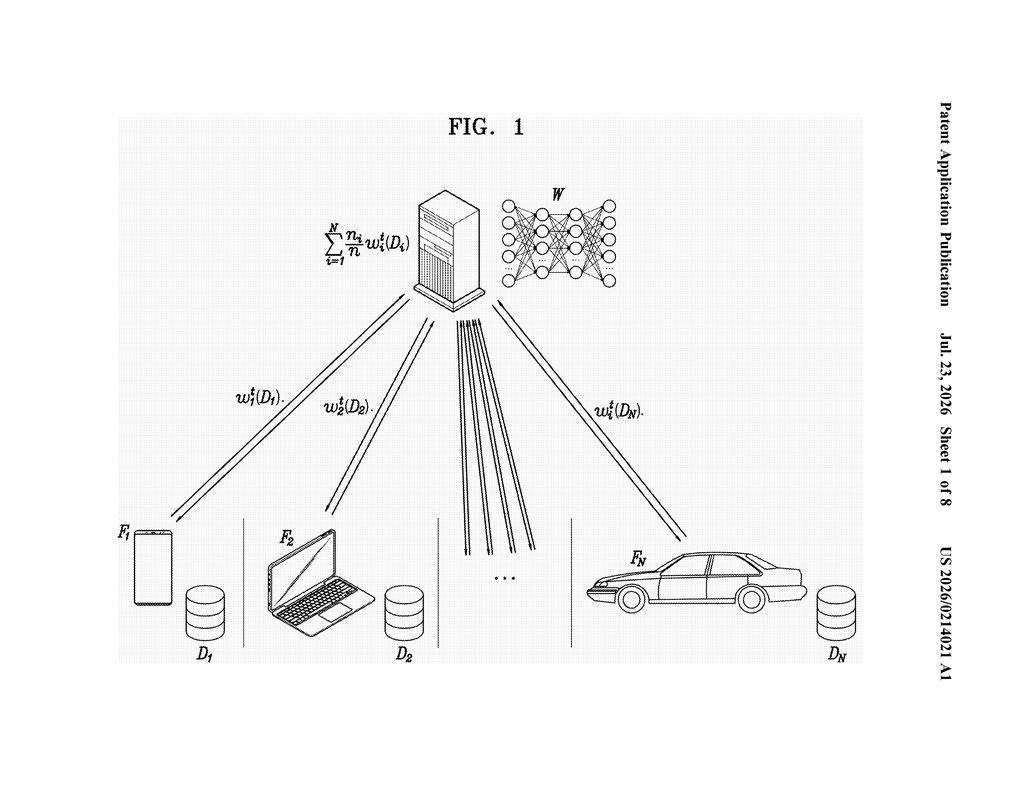
How Samsung wants to train AI without moving your data
Imagine your phone, your neighbor's phone, and a cell tower each knowing different things about how people use their devices. Normally, to train an AI on all that information, you'd have to send everything to one central server. That's a privacy problem and a bandwidth headache.
Samsung's patent describes a way to let AI models learn from data spread across many devices and locations, then combine what they've learned into one result. It mixes two existing approaches: one where many devices each train a full model on their own slices of data (horizontal), and one where different devices each handle a different part of the same model (vertical).
The goal is to get a more capable, well-rounded AI without anyone having to hand over their raw data. That matters in telecommunications, where network operators are sitting on mountains of user behavior data they can't easily centralize.
How HFL and VFL models get combined in the network
The patent covers federated learning (FL) model aggregation, specifically the ability to combine outputs from two historically separate approaches within the same system.
- Horizontal Federated Learning (HFL): Multiple devices each train an identical model architecture on their own local data, then send only the model updates (not the data itself) to be averaged together. Think of it like every branch of a library each cataloging books independently, then sharing only their index updates.
- Vertical Federated Learning (VFL): Different participants each hold different features or layers of the model. One device might handle user location data, another handles signal strength data, and together they compute a result without either seeing the other's inputs.
The claimed method allows a system (likely an AI server or base station in a 5G network) to combine outputs from both HFL and VFL pipelines into a single aggregated model. The first independent claim is broad, covering the act of combining one or more models from either or both paradigms.
This sits within 5G's ongoing effort to run AI natively inside the network, a direction 3GPP standards bodies have been formalizing over recent release cycles.
What this means for AI privacy in mobile networks
For mobile network operators, this is about making AI training practical at scale without centralizing sensitive traffic data. 5G networks generate enormous amounts of behavioral and signal data across millions of endpoints, and regulators in many regions restrict where that data can go. A hybrid federated approach lets operators train useful models inside the network boundary.
For you as a user, the implication is that network-side AI features (think predictive handoffs, interference reduction, or personalized quality-of-service) could improve without your device ever sending raw data to Samsung or a carrier's cloud. The privacy pitch is real, even if the engineering details here are thin.
This patent is extremely broad, bordering on a placeholder. The first independent claim is essentially 'combine HFL and VFL models,' which describes a category of research rather than a specific invention. Samsung is clearly staking out territory in 5G-native AI standards work, but the filing as published doesn't reveal much about how the combination actually happens. Worth tracking as a signal of strategic direction, not as a technical disclosure.
Get our take in your Top Stories
Liked this breakdown? Add Patentlyze as a preferred source on Google, and our plain-English take shows up more often in your Top Stories the next time Samsung patent news breaks.
There are more where this came from
We read every patent application Big Tech publishes and send you the ones worth knowing. Plain English, free, every week.
The drawings
8 drawing sheets from US 2026/0214021 A1 · click any drawing to enlarge


Want this weekly breakdown for a company we don't cover? Patentlyze Pro →