
Google Patent Reveals Nearby Phones Jointly Training a Shared AI Model
Google has filed a patent describing a system where a group of phones teach each other how to handle wireless signals better, without any of the private data ever leaving the device. It's federated learning applied directly to the radio layer, handled phone-to-phone.
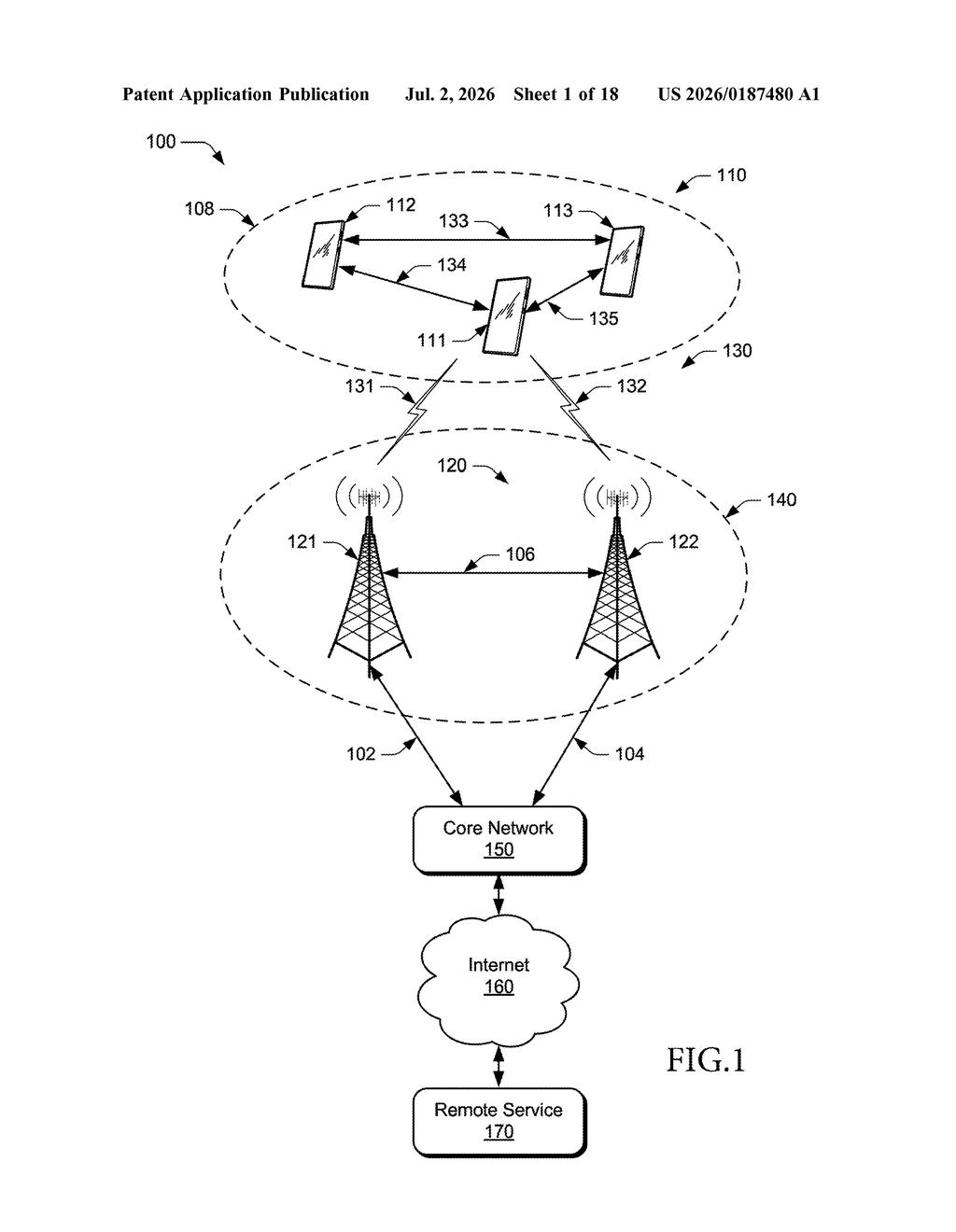
How Google's phone-to-phone AI training actually works
Imagine your phone getting better at picking up weak Wi-Fi signals, not because Google pushed a software update, but because your phone learned from its own experience and then pooled that knowledge with nearby phones. That's roughly the idea here.
Google's patent describes a setup where one phone (the "coordinator") tells a group of nearby phones when to run a local training session on their own data. Each phone trains a small AI model using only its own signal data, then sends back a summary of what it learned, not the raw data itself. The coordinator combines all those summaries into a shared AI model and sends it back out.
The AI models in question handle the low-level work of sending and receiving wireless signals, things like filtering out interference or decoding a compressed signal. The whole point of training them on-device and then merging the results is that no raw data leaves your phone, but all the phones still benefit from each other's experience.
How the coordinating device merges each phone's local updates
The patent describes a User Equipment-Coordination Set (UECS), which is a group of devices (phones, tablets, or other wireless gear) that collaborate over direct device-to-device links called side links (a 5G feature that lets devices talk to each other without routing through a cell tower).
One device in the group is designated the coordinating UE. It sends out "update conditions" to the other devices, essentially instructions like "retrain your model when signal quality drops below a threshold." Each device then runs a local training session on its own data and sends back a report containing updated ML configuration information (the trained weights and parameters of its neural network).
The coordinator applies federated learning (a technique where a central party combines model updates from many devices without ever seeing their underlying data) to merge all the individual reports into a single common UECS ML configuration. It then pushes that merged model back to the relevant devices in the group.
The neural networks being trained handle transmitter and receiver processing, the core signal-processing work that determines how well a device encodes outgoing data and decodes incoming data. Improving these with learned models, rather than fixed algorithms, is the core technical bet the patent makes.
What this means for AI-powered wireless connections
Today, the signal-processing algorithms inside phones are largely static. A manufacturer ships a device with fixed rules for handling interference, signal decoding, and compression. This patent describes a path toward those algorithms adapting continuously based on real-world conditions, and doing it in a way that keeps your data on your device.
For Google, this fits into a broader effort to bring on-device AI deeper into the radio layer, an area where Qualcomm and other chip vendors currently hold most of the cards. If this kind of federated, phone-coordinated training ever ships in a real product, it could mean meaningfully better call quality and data speeds in dense environments like stadiums or transit stations, exactly the places where today's fixed algorithms struggle most.
This is a technically specific patent in a genuinely active research area. Federated learning for radio signal processing is real work happening across academia and industry, and Google filing here suggests it wants a stake in how that gets standardized in 5G and eventually 6G. It's not flashy consumer tech, but the underlying idea, phones collaborating to improve their own wireless performance without sharing private data, is worth tracking.
Get our take in your Top Stories
Liked this breakdown? Add Patentlyze as a preferred source on Google, and our plain-English take shows up more often in your Top Stories the next time Google patent news breaks.
There are more where this came from
We read every patent application Big Tech publishes and send you the ones worth knowing. Plain English, free, every week.
Want this weekly breakdown for a company we don't cover? Patentlyze Pro →