
Microsoft Patents Speech-to-Text Alignment Technology Supporting Multiple Languages and Accents
Getting an AI to understand what you said is one problem. Getting it to line up your words with the right text, in real time, across different accents and languages, is a much harder one. Microsoft has filed a patent for an engine designed to do exactly that.
What Microsoft's speech-to-text alignment engine actually does
Imagine you're on a call with someone who speaks a different language, and your phone is trying to transcribe and translate what they say in real time. The tricky part isn't just recognizing the words, it's making sure the AI knows which spoken sounds map to which written words, especially when the speaker has a strong accent or switches languages mid-sentence.
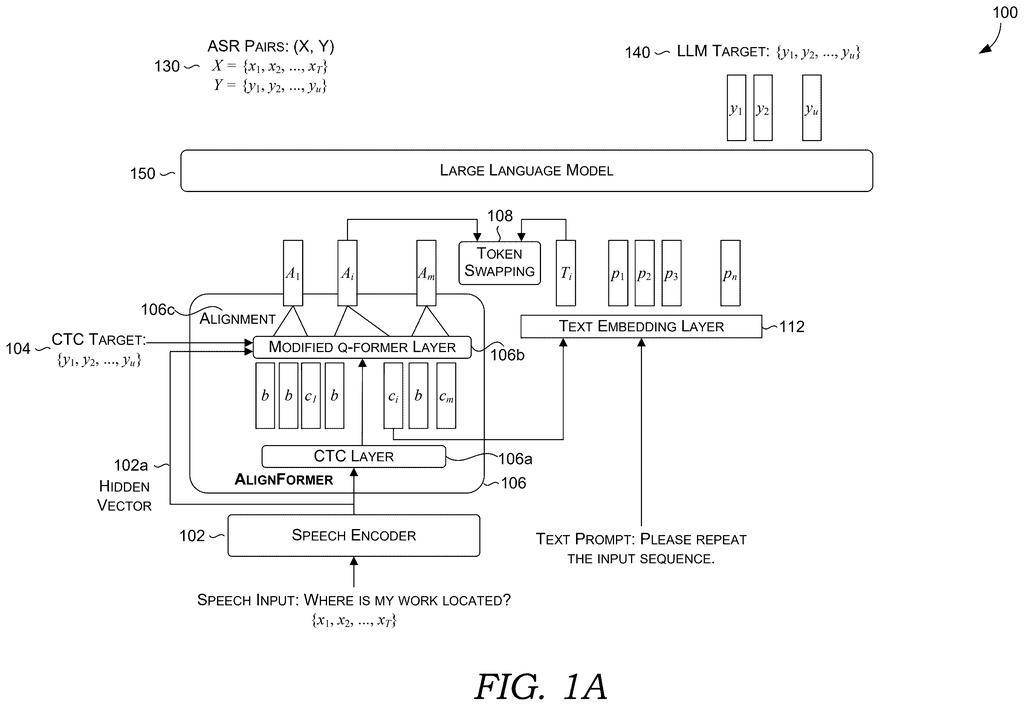
Microsoft's patent describes an alignment engine that sits between the audio coming in and the language model trying to make sense of it. Its job is to take the raw sound, convert it into a kind of digital fingerprint, and then reshape that fingerprint so it looks like the kind of input a large language model (like the kind that powers ChatGPT) expects to receive.
The system also includes a feature called "token swapping" that helps it adapt to different speech patterns and accents on the fly. The goal is transcription and translation that doesn't make you wait, processing spoken language without noticeable delay.
How the CTC layer and q-former bridge audio and language models
The patent describes a speech processing engine built around three core components working in sequence:
- Speech encoder: Converts raw audio into "embeddings", numerical representations of the acoustic features of what was said (think of it as the AI's way of hearing).
- CTC layer (Connectionist Temporal Classification): A technique that handles the fact that spoken words don't have neat boundaries between them. It aligns the audio signal with a text sequence even when the timing is irregular, which is almost always.
- Modified q-former layer: A neural-network component that reshapes the audio embeddings so they fit the "latent space" of a large language model. In plain terms, it translates the AI's hearing into the same format the AI's reading comprehension expects.
Once these steps are complete, the system passes the resulting aligned embeddings into an LLM as a normal input sequence. The LLM then generates the final output, a transcription, a translation, or an answer to a spoken question.
The patent also highlights token swapping, a mechanism for substituting speech-derived tokens with their text equivalents to better handle accents and varied speech patterns. This is the part that makes the system more flexible than a fixed vocabulary approach.
What this means for real-time transcription and translation tools
Real-time speech transcription and translation are already in products like Microsoft Teams, Azure AI Speech, and Windows Narrator. The bottleneck in these systems is often the handoff between the audio processing layer and the language model, they were designed separately and speak different internal languages. This patent targets that exact gap.
If this alignment engine works as described, it could mean more accurate live captions in Teams meetings with international participants, faster and more reliable Azure transcription APIs, and better voice input for Copilot. The accent-handling piece is particularly practical, most commercial transcription systems still struggle noticeably with non-standard accents, and that's a real barrier for a lot of users.
This is solid, focused engineering work on a known weak point in AI voice systems. It won't make headlines on its own, but the q-former alignment idea, reshaping audio representations to match what an LLM already expects, is a genuinely useful architectural choice that Microsoft could ship into Teams or Azure Speech within a year or two.
There are more where this came from
We read every patent application Big Tech publishes and send you the ones worth knowing. Plain English, free, every week.
The drawings
10 drawing sheets from US 2026/0220386 A1 · click any drawing to enlarge


Want this weekly breakdown for a company we don't cover? Patentlyze Pro →
Be the first to weigh in