
Sony Patents Screen Technology That Stops Harsh Eye Strain From Flickering Displays
Screen flicker is one of those things you might not consciously notice, but your eyes definitely do. Sony is patenting a way to stop it by teaching each pixel to vary how long it stays lit within a single frame.
What Sony's per-pixel flicker fix actually does
Imagine a strobe light flickering faster than you can consciously see. That's basically what happens inside many modern screens: pixels flash on and off many times per second to control brightness, and if that rhythm is uneven, it can cause eye strain or headaches even when the picture looks fine to you.
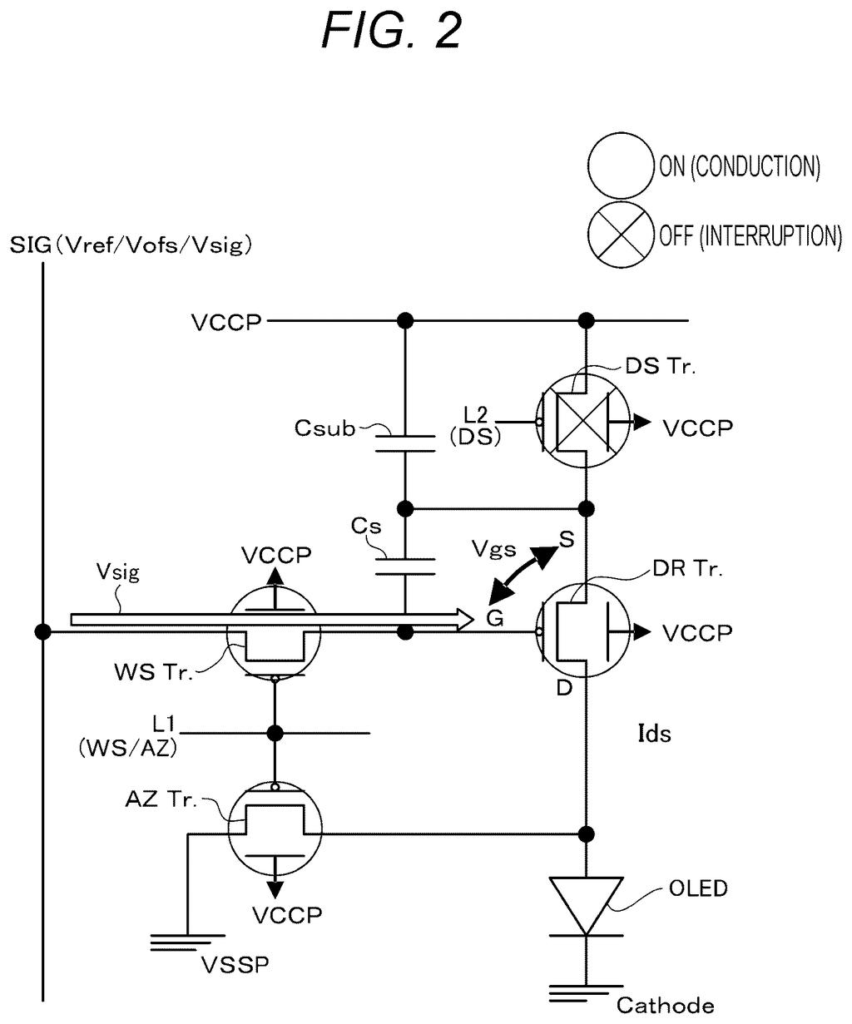
Sony's patent describes a display system that fights this problem by breaking each video frame into several smaller time slots and carefully adjusting how long each pixel stays lit in each slot. Instead of letting the pixel flash at whatever timing the raw electrical current demands, the system watches the shape of that current and compensates: if the current is peaking (which would cause an over-bright flash), it shortens the lit period; if the current is drooping, it lengthens it.
The result is a more even, consistent light output from frame to frame, which is the core recipe for eliminating flicker. This kind of control is especially relevant for OLED and similar self-emissive screens, where each pixel is its own light source.
How the light emission control unit reshapes each frame
The patent centers on a light emission control unit that manages when individual pixels turn on and off within a single display frame.
Rather than treating a frame as one continuous lit period, the system divides it into multiple sub-periods (think of slicing a second of video into several thinner slices). Within each slice, the control unit checks the shape of the input drive current, which is the electrical signal telling the pixel how bright to be. That current is not perfectly flat; it has peaks (moments of excess) and blunted regions (moments where it sags).
The system then does two things:
- Shortens the pixel's lit time during slices where the drive current is at its peak, preventing over-bright flashes.
- Lengthens the pixel's lit time during slices where the drive current has drooped, compensating for under-brightness.
By continuously nudging these on/off windows, the display maintains a more uniform average brightness across the whole frame. This is distinct from simple PWM dimming (pulse-width modulation, the common on/off flickering used for brightness control), because here the adjustments are tied to the actual electrical waveform rather than a fixed clock, giving the driver far finer control over what the eye ultimately perceives.
What this means for OLED screens and eye strain
Flicker is a real usability problem, not just an engineering footnote. Studies have linked high-frequency screen flicker to eye fatigue and headaches, and it shows up as a common complaint with OLED phones and laptops used at low brightness. If Sony can bake this kind of adaptive per-frame compensation into its display driver silicon, screens built on its technology could genuinely be more comfortable to use for long stretches.
Sony Semiconductor Solutions supplies display components to a wide range of device makers, so a fix at the chip level would propagate across many products rather than requiring each manufacturer to solve it independently. That makes this a potentially practical improvement rather than a theoretical one.
This is a focused, well-scoped patent tackling a real problem that actual users complain about. It is not a flashy concept, but flicker reduction in OLEDs is something display buyers genuinely care about, and solving it in the driver hardware rather than in software is the right place to address it. Worth keeping an eye on as Sony's display components show up in more premium devices.
There are more where this came from
We read every patent application Big Tech publishes and send you the ones worth knowing. Plain English, free, every week.
The drawings
21 drawing sheets from US 2026/0221093 A1 · click any drawing to enlarge


Want this weekly breakdown for a company we don't cover? Patentlyze Pro →
Be the first to weigh in