
Samsung Patents Technology That Smooths Blurry Edges Between Video Frames
When a video codec mixes two different compression strategies in neighboring image blocks, ugly artifacts can appear along the border. Samsung's new patent targets exactly that seam.
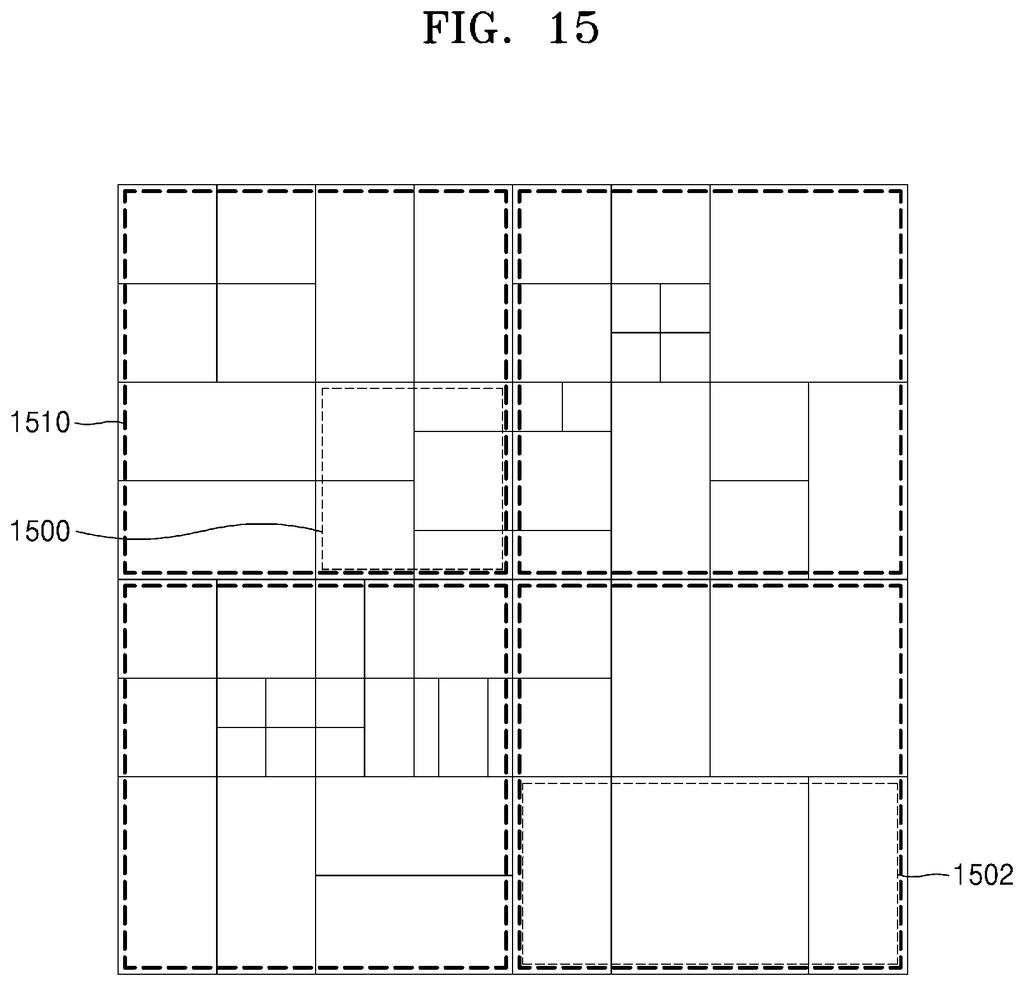
How Samsung's decoder handles mismatched video blocks
Imagine a video compressed in two different ways right next to each other, like two jigsaw puzzle pieces that almost fit but leave a visible gap. Modern video codecs chop each frame into small blocks and compress each block differently. Some blocks use a technique that looks only at surrounding pixels within the same frame (called intra prediction), while others use motion from previous frames (inter prediction). When those two types sit next to each other, the edge between them can look blocky or blurry.
Samsung's patent describes a decoder that notices when this mismatch is happening and fills in a calculated stand-in value at the border, then runs a smoothing filter over the affected block before the final cleanup pass. The result is that the artifact at that seam gets softened without needing extra data from the encoder.
This is the kind of plumbing-level work that happens inside your TV, phone, or streaming device, mostly invisible to you until it's missing and the picture looks rough.
… performing post-reconstruction filtering on the reconstructed samples of the current block using the padding value to generate updated reconstructed samples of the current block …
Translation: Applying a special filter to clean up the edges of the video block after initial reconstruction.
How the padding value and Hadamard filter work together
The patent covers a video decoding pipeline with a specific focus on what happens when constrained intra prediction (CIP) mode is active. CIP is a rule that says: when predicting a block using only intra methods, don't borrow pixel data from neighboring blocks that were compressed with inter prediction (motion-based). That keeps intra blocks self-contained, which matters for error resilience and parallel processing.
The problem is that after reconstruction, those intra blocks still sit right next to inter-predicted blocks, and the boundary can show artifacts. The patent's solution works like this:
- The decoder identifies when a decoded block (the "current block") is in CIP mode and its neighbor used inter prediction.
- Instead of borrowing the neighbor's real pixel values for filtering, it derives a padding value from the current block's own reconstructed pixels at the boundary.
- It then runs a post-reconstruction filter using a Hadamard transform (a mathematical tool that spreads pixel information across a block to reduce sharp edges) over the current block using that padding value.
- Finally, standard in-loop filters like deblocking and Adaptive Loop Filtering (ALF) run on top of those updated samples.
The sequencing matters: the new padding-and-filter step sits between raw reconstruction and the existing cleanup filters, adding a targeted correction layer without changing the rest of the pipeline.
… determining a padding value corresponding to a neighboring sample adjacent to outside of a boundary between the current block and the neighboring block, by using the reconstructed samples of the current block …
Translation: Filling in missing pixel data at frame borders by borrowing from the pixels inside the current block.
What this means for video quality in streaming and playback
Video codecs underpin virtually every streaming service, video call, and broadcast on the planet. Standards like VVC (H.266) and HEVC already use constrained intra prediction in specific scenarios, and any improvement to how decoders handle CIP-to-inter boundaries can show up as measurably better image quality at the same bitrate. For Samsung, which makes both consumer displays and the chips inside them, owning this kind of decoding IP has direct commercial value.
For you as a viewer, this is the difference between a streaming movie that holds together at a tricky compression boundary and one that shows a thin line of blockiness during a fast-moving scene. It's not a flashy improvement, but it's the kind of thing that accumulates into noticeably cleaner video.
This is a narrow but legitimate codec engineering patent. It solves a real artifact problem that occurs specifically at CIP-to-inter block boundaries, and the three-stage approach (padding, Hadamard filter, then standard in-loop filters) is well-motivated. It's not the kind of patent that signals a major product shift, but Samsung filing in this space confirms they're actively working on next-generation decoder IP, likely aimed at VVC-class hardware.
There are more where this came from
We read every patent application Big Tech publishes and send you the ones worth knowing. Plain English, free, every week.
The drawings
31 drawing sheets from US 2026/0230612 A1 · click any drawing to enlarge


Want this weekly breakdown for a company we don't cover? Patentlyze Pro →
Be the first to weigh in