
Microsoft Patent Targets Dynamic Screen Dimming Precisely Where Your Eyes Look
Most screens dim everything or nothing. Microsoft is patenting a display that tracks exactly where your eye is pointing and dims only that precise zone, adjusting in real time as you look around.
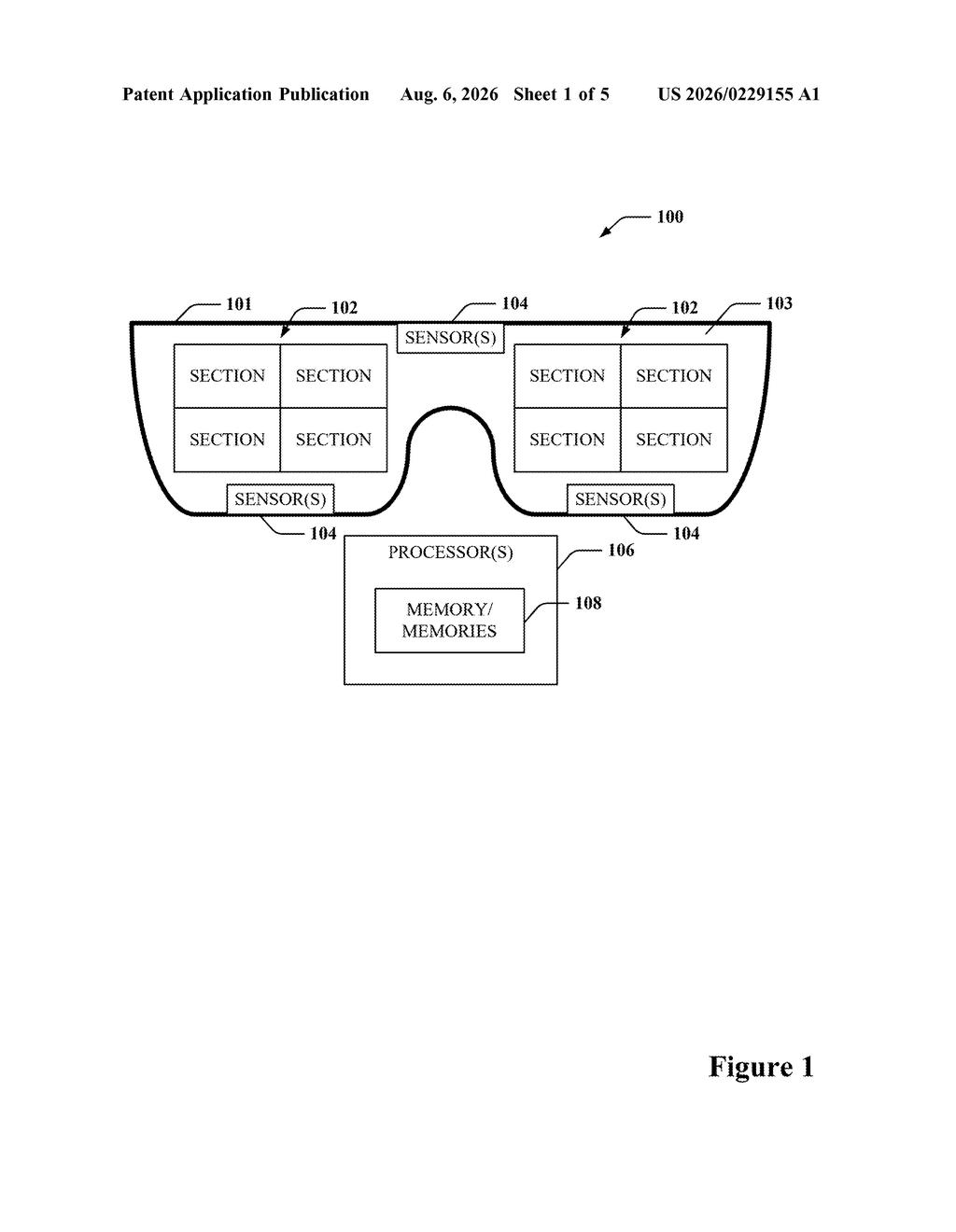
How Microsoft's gaze-based screen dimming actually works
Imagine your laptop screen automatically darkening just the corner you're reading in a bright café, while the rest stays normal. That's the core idea in this Microsoft patent.
The system combines two inputs: a sensor that measures how bright the room is, and an eye-tracker that detects exactly where on the screen you're currently looking. Once it knows both, it sends a signal to a special dimming panel layered over the display, which dims only the section that lines up with your gaze.
The dimming layer is made of liquid crystals, the same material in many laptop and phone screens. By applying a small voltage to a specific zone of that layer, the screen can darken just that patch without touching the rest. Think of it like a tiny, invisible pair of sunglasses that follows your eyes around the screen.
… receive a second indication of a location on the display device at which an eye is gazing; select, based on the location on the display device, a section from multiple sections of the dimming panel; and modify a light transmittance in the section …
Translation: The system tracks where you are looking and targets that specific area of the screen for dimming.
Inside the liquid crystal dimming panel and eye-tracking loop
The patent describes a display stack with a separate dimming panel sitting in front of (or integrated with) the main screen. That panel is divided into a grid of independently controllable sections, each filled with liquid crystal material that can be made more or less transparent by changing the voltage applied to it.
Two data streams feed into the control system:
- Ambient light sensor: measures how bright the environment is, so the system knows whether dimming is needed at all.
- Eye tracker: identifies the specific location on the display where your eye is currently focused, updated continuously as your gaze moves.
The processor takes that gaze coordinate, maps it to the corresponding section of the dimming panel, and applies a voltage to the liquid crystals in that zone only. The result is localized darkening right where you're looking, while adjacent sections stay at their normal transmittance.
The ambient light reading acts as a trigger or scaling factor: in a dark room, little or no dimming may be applied; in bright sunlight, the same gaze position might trigger a stronger dimming effect. The two signals work together rather than independently.
A power control signal can be transmitted to a section of the dimming panel that corresponds to the location to facilitate activating dimming in the section of the dimming panel.
Translation: Electricity is sent to the panel area matching your gaze to darken it.
What this means for AR glasses and next-gen Microsoft displays
The most obvious application is AR or mixed-reality headsets, where controlling how much real-world light reaches the eye is a core engineering challenge. Microsoft's HoloLens line has grappled with washout in bright conditions for years, and a gaze-driven dimming layer could fix that problem precisely where it counts without blacking out the entire field of view.
For conventional monitors and laptops, the same idea could reduce eye strain in variable lighting without the flat, one-size dimming of today's adaptive brightness. It could also cut power draw by only activating dimming hardware in the section you're actually using rather than across the whole panel.
This is a focused, practical patent rather than a conceptual moonshot. Gaze-contingent rendering is already well-studied in VR headsets, and Microsoft is applying the same logic to the physical light layer rather than the rendered image. Whether it ships in a headset or a Surface display, the engineering here is tractable and the user benefit is real.
There are more where this came from
We read every patent application Big Tech publishes and send you the ones worth knowing. Plain English, free, every week.
The drawings
5 drawing sheets from US 2026/0229155 A1 · click any drawing to enlarge


Want this weekly breakdown for a company we don't cover? Patentlyze Pro →
Be the first to weigh in