
Nvidia Patents an AI System That Watches Datacenter Hardware for Physical Problems
Most datacenter monitoring software watches logs and network traffic. This Nvidia patent watches the hardware itself, using cameras and AI to spot physical problems the software would never see.
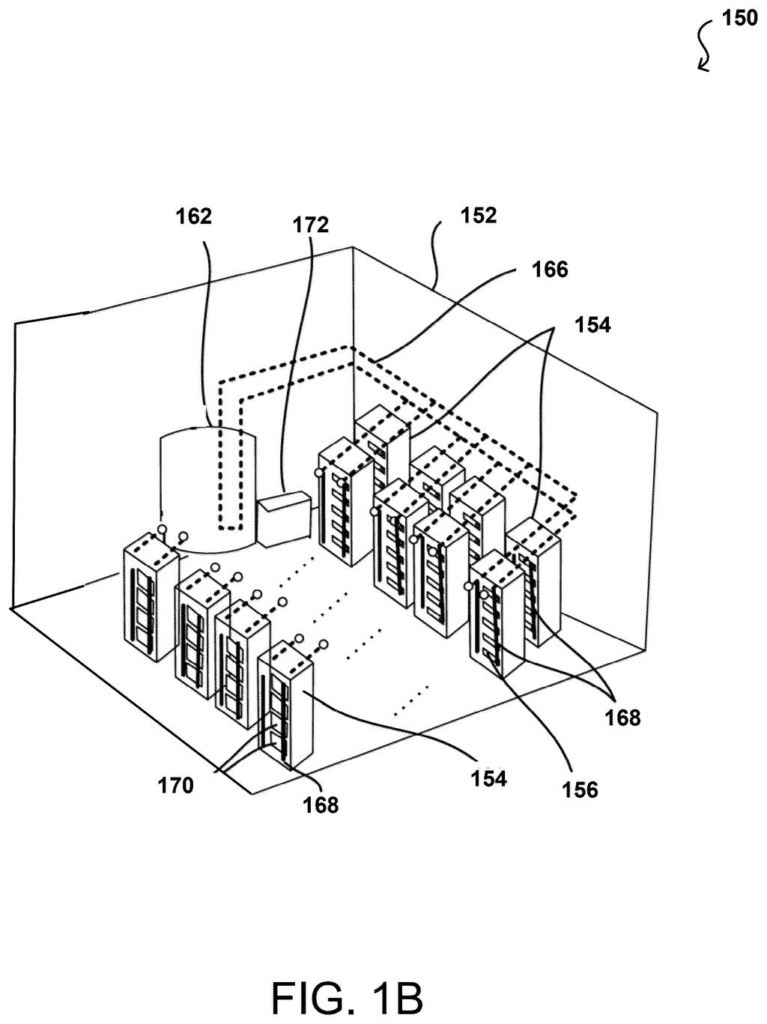
What Nvidia's camera-based datacenter watchdog actually does
Imagine a warehouse full of thousands of servers, switches, and cables. A fan stops spinning, a cable works loose, or a status light turns red. Nobody notices for hours, and a small problem becomes a big outage. That's the kind of thing this patent is designed to catch.
Nvidia's system uses cameras (and potentially robots that roll between the racks) to take pictures of datacenter hardware. An AI model looks at those images, figures out the physical condition of each component, and writes a plain-language description of what it sees. A second AI model then reads those descriptions alongside the normal operational data for each component and produces a report flagging anything that looks wrong.
The result is a system that can notice a physical anomaly, like a missing drive, a bent component, or a blinking warning light, automatically, without a human having to walk the floor and check.
How two AI models turn camera images into fault reports
The patent describes a two-stage AI pipeline built on top of camera or sensor data collected inside a datacenter.
Stage one is a vision model (what the patent calls a "first machine learning model") that ingests raw image data and determines the physical state of whatever components appear in the frame. It then generates a textual description of that state, essentially converting a photo into a written summary like "Drive bay 3 in rack 12 has no drive installed" or "Indicator light on switch port 7 is amber."
Stage two is a reasoning model (the "second machine learning model") that receives that text description alongside operational data for the same components, things like expected configurations, performance telemetry, and historical baselines. By comparing what the camera sees against what the system expects to see, this model identifies anomalies and generates a formal report.
The patent also describes an optional robotic assembly that can move autonomously through a datacenter, pointing sensors at different racks and components to collect the visual data in the first place. This would allow continuous or scheduled physical inspections without any human walking the floor.
The core design choice is the bridge between vision and language: by converting image observations into text before passing them to the second model, Nvidia can use large language-style reasoning to catch problems that pure visual pattern-matching might miss.
What this means for datacenter uptime and maintenance costs
Datacenters are enormous, and physical inspections are slow and expensive. A misconfigured cable, a failed cooling fan, or a dislodged component can cause serious downtime, but today those problems are often caught only after they show up in performance data, which means something has already gone wrong. A system that watches the hardware directly and flags issues before they cascade into outages would have real operational value.
For Nvidia specifically, this patent makes sense given the company's growing stake in running and selling infrastructure for AI training. Nvidia already sells the chips that power most large AI clusters, and a system that keeps those clusters physically healthy extends its footprint further into the datacenter operations space. If this ships as a product, you'd expect it to appear as part of Nvidia's broader datacenter management software offerings.
This is a practical, well-scoped idea that addresses a real gap in datacenter monitoring. The two-model architecture, where a vision model describes what it sees and a language model reasons about whether that's a problem, is a sensible design. Whether Nvidia ships this as a product or it stays internal infrastructure tooling, the underlying approach is solid and worth tracking.
There are more where this came from
We read every patent application Big Tech publishes and send you the ones worth knowing. Plain English, free, every week.
The drawings
15 drawing sheets from US 2026/0220757 A1 · click any drawing to enlarge


Want this weekly breakdown for a company we don't cover? Patentlyze Pro →
Be the first to weigh in