
Google Patents a Light-Splitting Layer That Could Make AR Glasses Displays Thinner
Getting a bright, clear image into the lens of a pair of AR glasses is harder than it looks. Google's latest patent describes a small optical component that splits a single beam of light into several precise beams, each one routed to exactly the right spot on the lens.
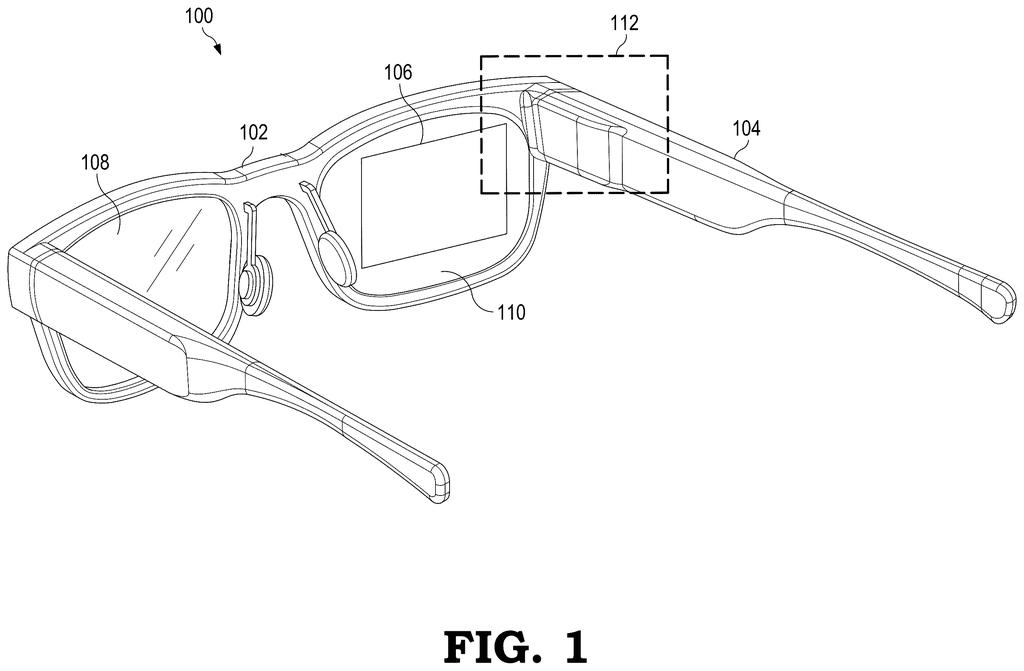
How Google wants to rethink the light path in AR glasses
Imagine trying to light up several different windows in a house using a single flashlight. You'd need some way to split and aim that light so each window gets exactly the right amount. AR glasses face a similar challenge: a tiny projector has to send light into a thin piece of glass (called a waveguide) through multiple entry points at once.
Google's patent describes adding a small diffractive element, basically a precisely etched optical surface, between the projector and the waveguide glass. This component splits the incoming light into several beams and steers each one toward its own dedicated entry point on the lens. Think of it like a prism, but engineered to deliver beams to specific addresses.
The goal is a more efficient, compact display system inside AR glasses. By handling the beam-splitting before the light ever touches the waveguide, Google may be able to simplify the lens itself and reduce how bulky the whole display assembly needs to be.
How the diffractive element splits and routes each light beam
The patent describes a three-part optical stack inside an eyewear display:
- Light engine: the tiny projector that generates the image, similar to what's inside a miniature cinema projector.
- Diffractive element: a structured optical surface placed between the projector and the lens. It intercepts the projected light and uses diffraction (the bending of light waves around microscopic features) to split that light into multiple beams called diffraction orders, each traveling at a slightly different angle.
- Waveguide with multiple incouplers: the thin glass lens that carries light across your field of view. It has several entry points, called incouplers, each designed to accept a beam arriving from a specific angle and then guide it toward your eye.
The key idea is the diffractive element acting as a traffic director before the light hits the waveguide. Each split beam is aimed at one specific incoupler. This means the waveguide itself doesn't have to do all the work of splitting and distributing light, which can simplify its design.
The claim is intentionally broad: it covers any eyewear display using this pre-incoupling diffractive approach, regardless of the specific wavelengths or diffraction grating geometry used.
What this means for the future of Google's AR eyewear
AR glasses live or die on optics. The waveguide, the piece of glass that carries the projected image to your eye, is the hardest component to get right, and adding more functionality to it (like beam-splitting) makes it more expensive and harder to manufacture at scale. By moving the beam-splitting job to a separate element before the waveguide, Google's approach could make individual components simpler and potentially improve manufacturing yield.
Google has been working on AR glasses under projects like Project Iris and has shown renewed public interest in smart eyewear. A thinner, more efficient display system is exactly the kind of engineering work that has to happen before a product can reach a price point real people will pay.
This is unglamorous but genuinely important optics work. AR glasses have failed in the consumer market partly because the display systems are too thick, too dim, or too expensive to make at scale. A pre-waveguide diffractive splitter is a real engineering approach to at least one of those problems, and the fact that Google filed this in mid-2025 suggests the hardware team is still actively iterating on display architecture.
There are more where this came from
We read every patent application Big Tech publishes and send you the ones worth knowing. Plain English, free, every week.
The drawings
7 drawing sheets from US 2026/0219503 A1 · click any drawing to enlarge


Want this weekly breakdown for a company we don't cover? Patentlyze Pro →
Be the first to weigh in